Requirements & scope
Problem Statement & Requirements
Design a distributed message queue system that decouples producers from consumers, enables asynchronous processing, guarantees message delivery, and scales to handle millions of messages per second — similar to Apache Kafka, AWS SQS, or RabbitMQ.
Functional Requirements
- Producers publish messages to named topics
- Consumers subscribe to topics and receive messages in order
- Support consumer groups — multiple consumers sharing the load of a topic, each message delivered to exactly one consumer in the group
- Messages are persisted on disk, not lost on broker failure
- Support at-least-once, at-most-once, and exactly-once delivery semantics (configurable)
- Consumers can replay messages from a specific offset (time-travel)
- Support message retention by time (e.g., 7 days) or size (e.g., 1 TB per topic)
- Ordering guarantees within a partition (not across partitions)
- Dead letter queue (DLQ) for messages that fail processing after N retries
Non-Functional Requirements
- High throughput — handle millions of messages/second per cluster
- Low latency — end-to-end publish-to-consume in < 10 ms (p99) for real-time use cases
- Durability — zero message loss once acknowledged by the broker
- High availability — survive broker failures, rack failures, even AZ failures
- Horizontal scalability — add brokers to increase throughput linearly
- Fault tolerance — automatic leader election and partition rebalancing on failure
Out of Scope
- Complex message routing (fanout, topic exchanges like RabbitMQ — simplified to topic-partition model)
- Message transformation / stream processing (that's Kafka Streams / Flink territory)
- Multi-tenancy and authentication (simplify for interview)
Scale estimations
Scale Estimations
Traffic
| Metric | Value |
|---|---|
| Messages produced / second | 1M (peak: 3M) |
| Average message size | 1 KB |
| Messages consumed / second | 3M (each message consumed by ~3 consumer groups on average) |
| Number of topics | 10,000 |
| Number of partitions (total) | 100,000 |
| Number of producers | 50,000 |
| Number of consumer groups | 5,000 |
Storage
| Metric | Value |
|---|---|
| Data ingested / second | 1M × 1 KB = 1 GB/s |
| Data ingested / day | 1 GB/s × 86,400 = ~86 TB/day |
| Retention period | 7 days |
| Raw storage (7 days) | 86 TB × 7 = ~600 TB |
| Replication factor | 3 |
| Total storage (with replication) | 600 TB × 3 = ~1.8 PB |
| Storage per broker (50 brokers) | 1.8 PB / 50 = ~36 TB per broker |
Bandwidth
| Metric | Value |
|---|---|
| Incoming (produce) | 1 GB/s |
| Outgoing (consume, 3 consumer groups avg) | 3 GB/s |
| Replication traffic (2 replicas × 1 GB/s) | 2 GB/s |
| Total network throughput | ~6 GB/s cluster-wide |
| Per broker (50 brokers) | ~120 MB/s per broker |
Hardware Estimate (per broker)
| Component | Spec |
|---|---|
| CPU | 16-24 cores (mostly I/O bound) |
| RAM | 64-128 GB (OS page cache is critical) |
| Disk | 8× 4 TB NVMe SSDs in JBOD (32 TB usable) |
| Network | 10 Gbps NIC (25 Gbps preferred) |
| Brokers in cluster | 50-100 |
Layered architecture
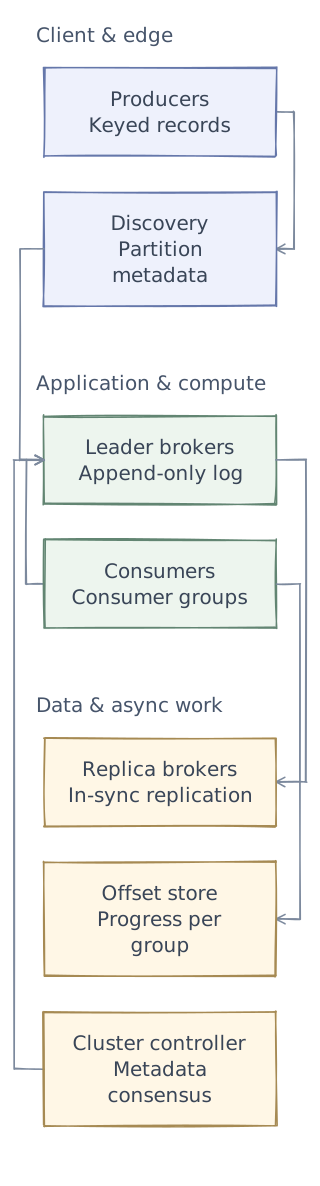
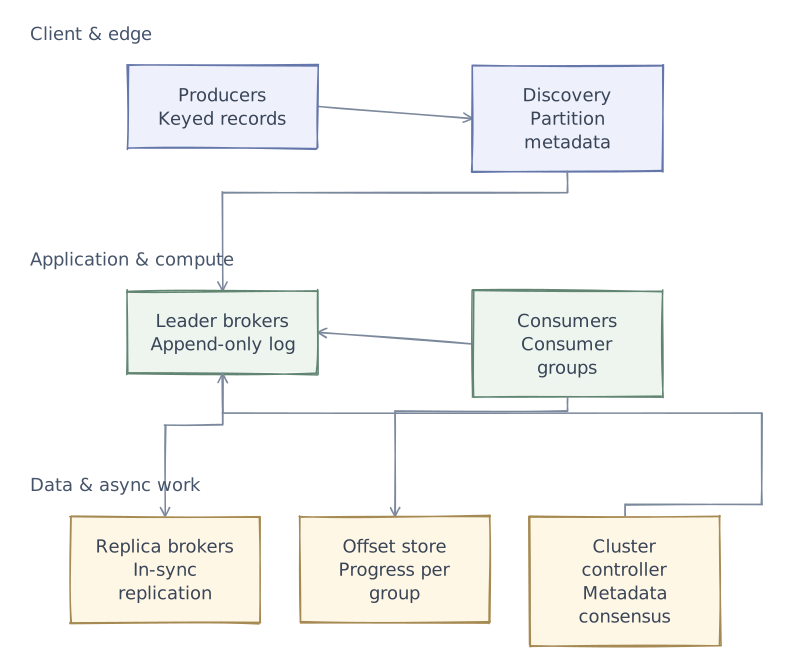
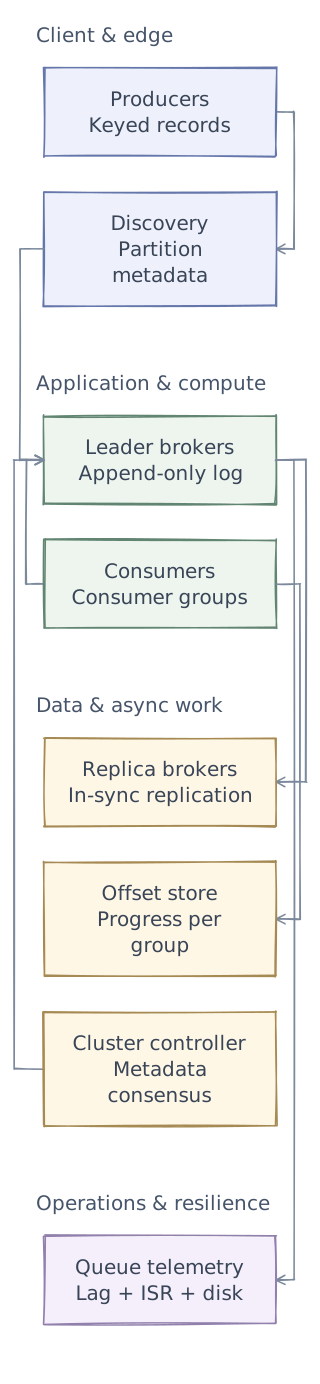
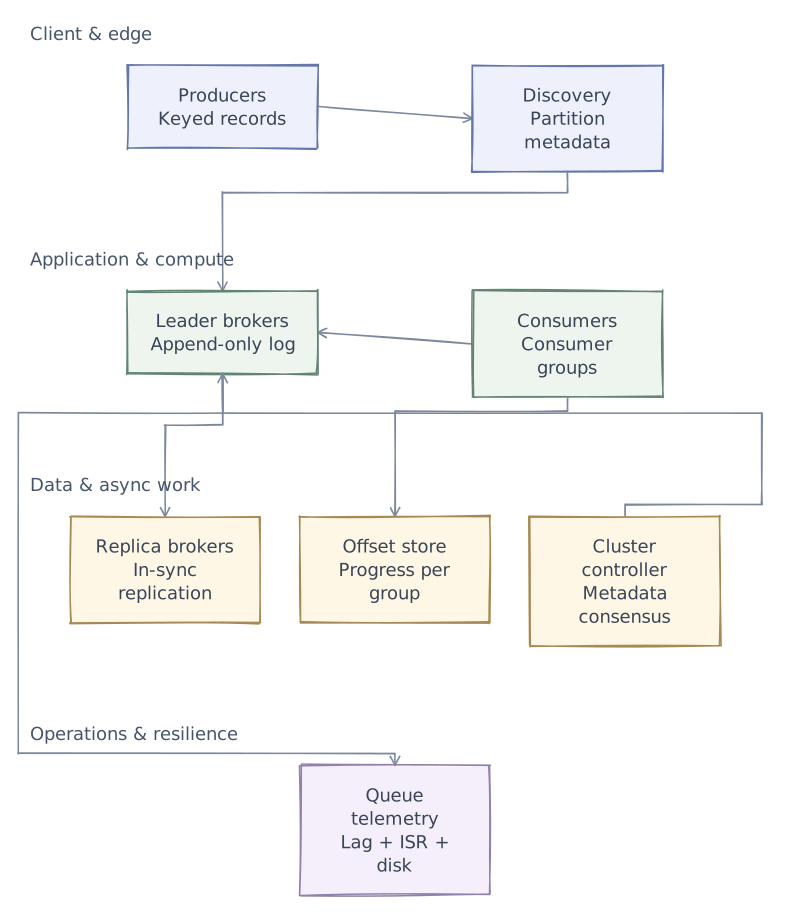
Phase 1 of 4 · Client & edge
Start with the entry points
First, define who uses the system and where requests enter. This is the boundary of the design, not yet a complete request path.
- Producers
- Choose a partition key that captures the ordering boundary your application actually needs.
- Discovery
- Locate each partition leader and refresh metadata when leadership changes.
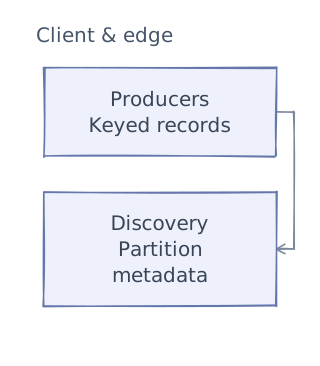
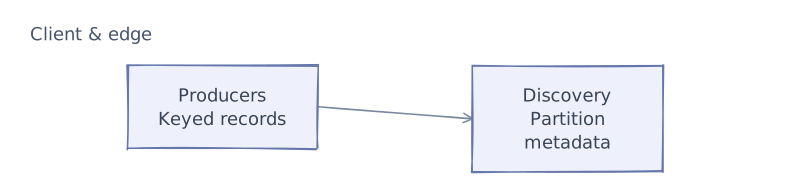
This first layer defines the system boundary. The next chapters add application logic and data dependencies. After examining the request paths and tradeoffs, we will add operational safeguards and bring the complete architecture together.
API & contracts
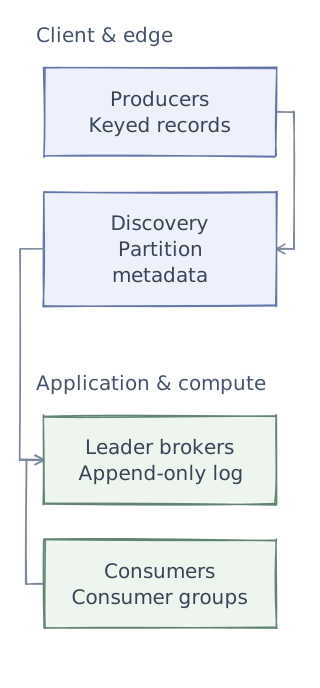
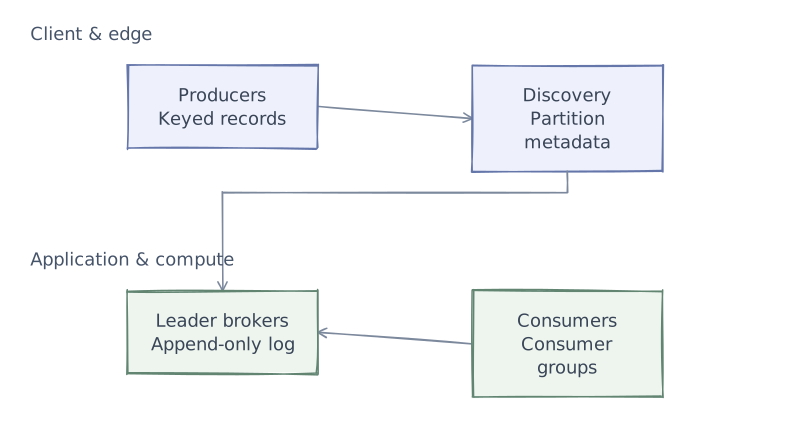
Phase 2 of 4 · Application & compute
Add the application logic
Keep the entry points and add the services that do the work. Give each service a clear responsibility before defining its contracts. Storage and background dependencies come next.
- Leader brokers
- Append batches sequentially and acknowledge according to the selected durability policy.
- Consumers
- Assign each partition to one active group member while allowing independent subscriber groups.
API Design
Producer API
POST /api/v1/topics/{topic_name}/messages
Content-Type: application/json

Request:
{
  "key": "user-123",                    // partition key (optional — null = round-robin)
  "value": "base64-encoded-payload",     // the message body
  "headers": {                           // optional metadata
    "correlation-id": "req-abc",
    "content-type": "application/json"
  },
  "partition": 3,                        // optional — explicit partition override
  "timestamp": 1712150400000             // optional — defaults to broker time
}

Response (202 Accepted):
{
  "topic": "user-events",
  "partition": 3,
  "offset": 847291,
  "timestamp": 1712150400000
}
Consumer API
GET /api/v1/topics/{topic_name}/messages?group_id=analytics-pipeline
    &max_messages=500
    &timeout_ms=5000

Response (200 OK):
{
  "messages": [
    {
      "key": "user-123",
      "value": "base64-encoded-payload",
      "headers": {"correlation-id": "req-abc"},
      "partition": 3,
      "offset": 847291,
      "timestamp": 1712150400000
    },
    ...
  ]
}
Commit Offset (Acknowledge)
POST /api/v1/topics/{topic_name}/offsets
Content-Type: application/json

Request:
{
  "group_id": "analytics-pipeline",
  "offsets": [
    {"partition": 0, "offset": 12345},
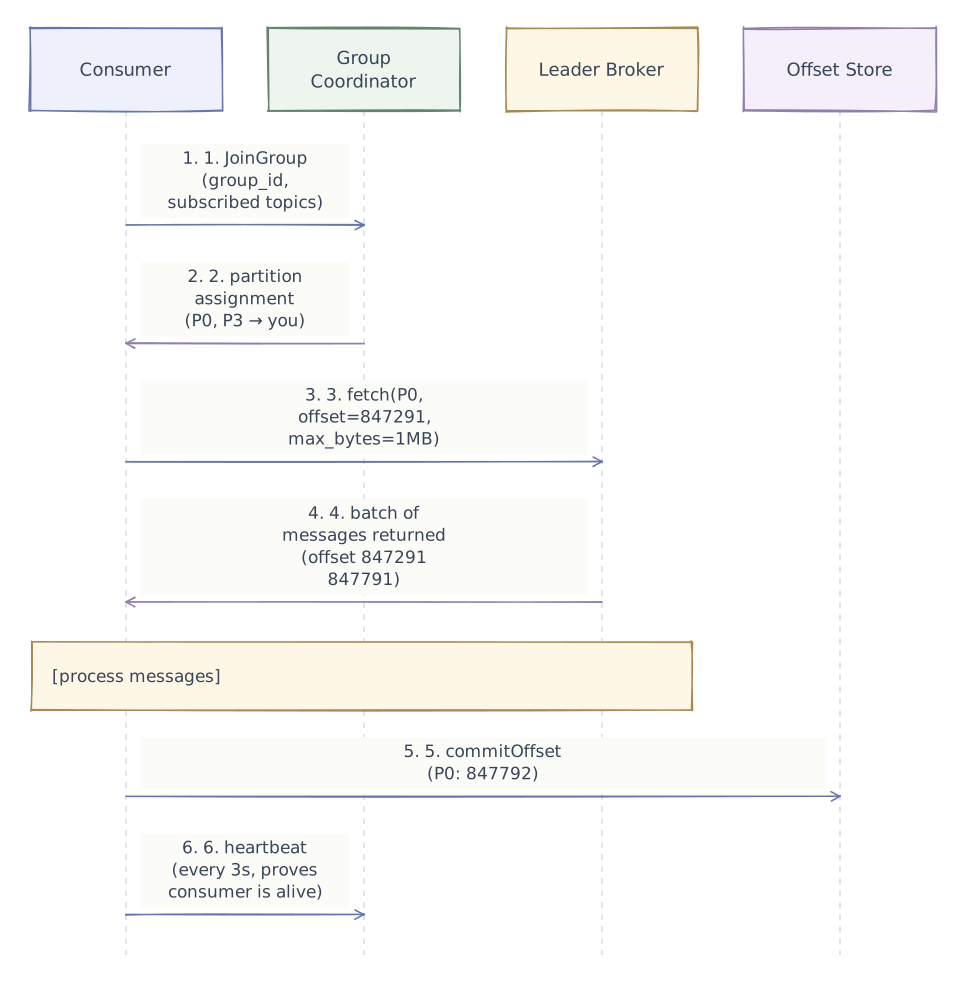
    {"partition": 3, "offset": 847292}
  ]
}

Response: 204 No Content
Admin API
POST   /api/v1/topics                     — Create topic (name, partitions, replication_factor, retention)
DELETE /api/v1/topics/{topic_name}        — Delete topic
PUT    /api/v1/topics/{topic_name}/config — Update retention, compaction, etc.
GET    /api/v1/topics/{topic_name}/info   — Topic metadata (partitions, leaders, ISR)
POST   /api/v1/topics/{topic_name}/partitions — Add partitions (cannot decrease)
SDK-Level API (Internal Binary Protocol — High Performance)
// Producer (batch-oriented)
producer.send(topic, key, value, headers) → Future<RecordMetadata>
producer.flush()                          → blocks until all buffered messages sent

// Consumer (poll-based)
consumer.subscribe(topics, group_id)
records = consumer.poll(timeout_ms)       → batch of ConsumerRecords
consumer.commitSync(offsets)              → block until offsets durably stored
consumer.commitAsync(offsets, callback)   → fire-and-forget with callback
consumer.seek(partition, offset) → rewind/fast-forward to specific offsetData model
Phase 3 of 4 · Data & async work
Connect data and background work
The services now need their dependencies: durable state, fast lookups, or work that continues outside a request. Separate these responsibilities rather than treating every component as a database.
- Replica brokers
- Replicate logs and restrict safe leader election to replicas with the required committed history.
- Offset store
- Track committed consumer progress; application effects need idempotency or transactions on replay.
- Cluster controller
- Coordinate partition placement and leader changes using a quorum-backed metadata plane.
Data Model
Core Abstractions
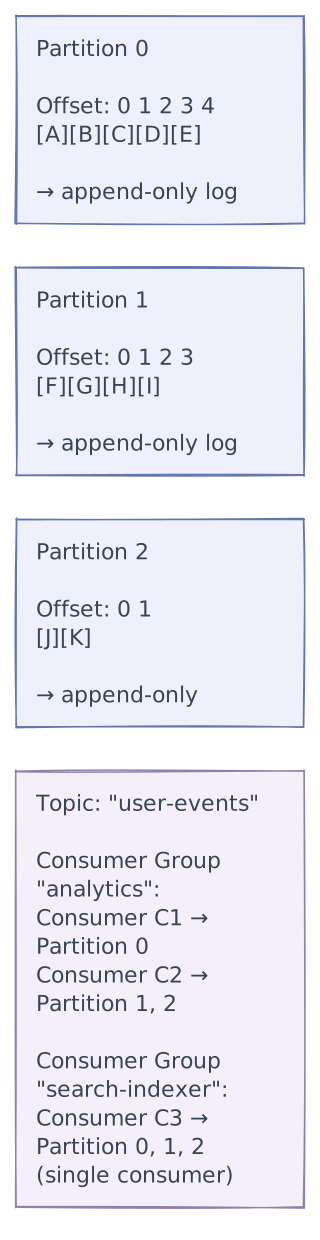
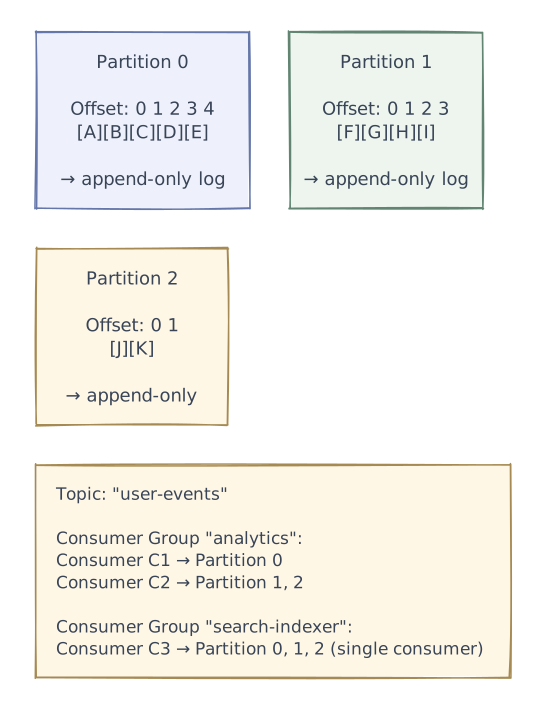
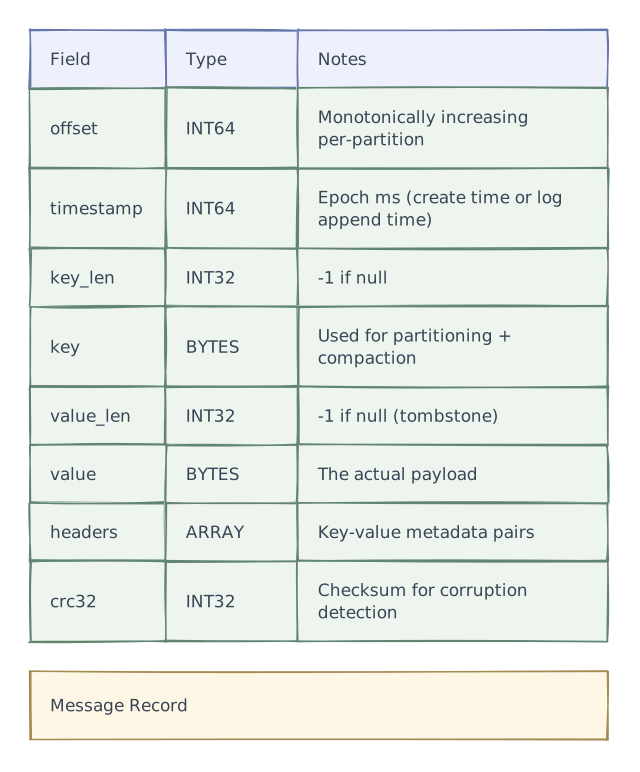
Message Record (On-Disk Format)

Log Segment (On-Disk Storage Unit)
Partition Directory: /data/user-events-0/

  00000000000000000000.log      ← active segment (append-only)
  00000000000000000000.index    ← sparse offset → file position index
  00000000000000000000.timeindex← timestamp → offset index
  00000000000065536000.log      ← rolled segment (immutable)
  00000000000065536000.index
  00000000000065536000.timeindex

Segment rolls when:
  - Size exceeds segment.bytes (default 1 GB)
  - Time exceeds segment.ms (default 7 days)
  - Index file is full
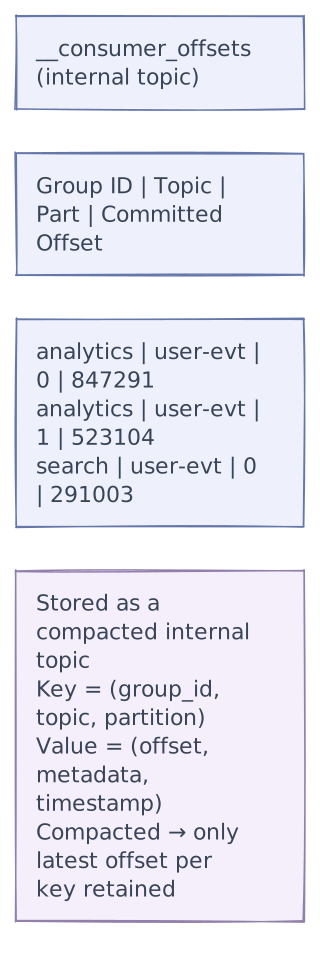
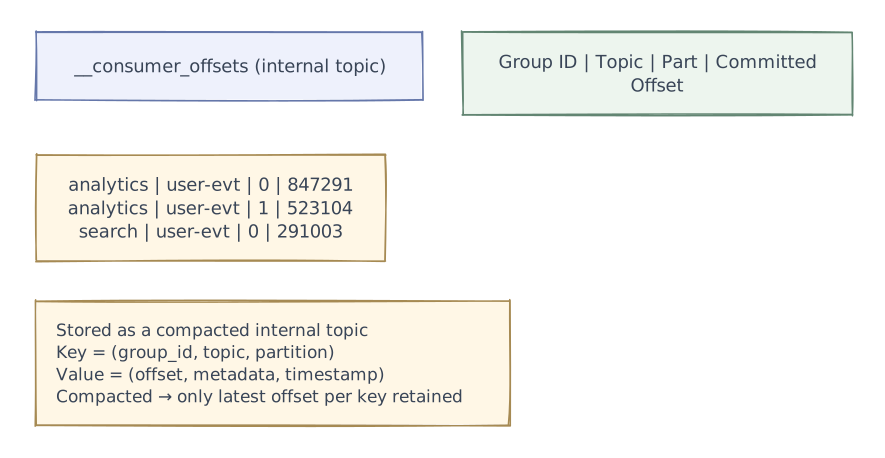
Offset Storage
Core Design Decisions — The Storage Engine
The most critical design decision in a message queue is how messages are stored and retrieved. This determines throughput, latency, durability, and operational complexity.
Option 1: Append-Only Log on Disk (Kafka's Approach)
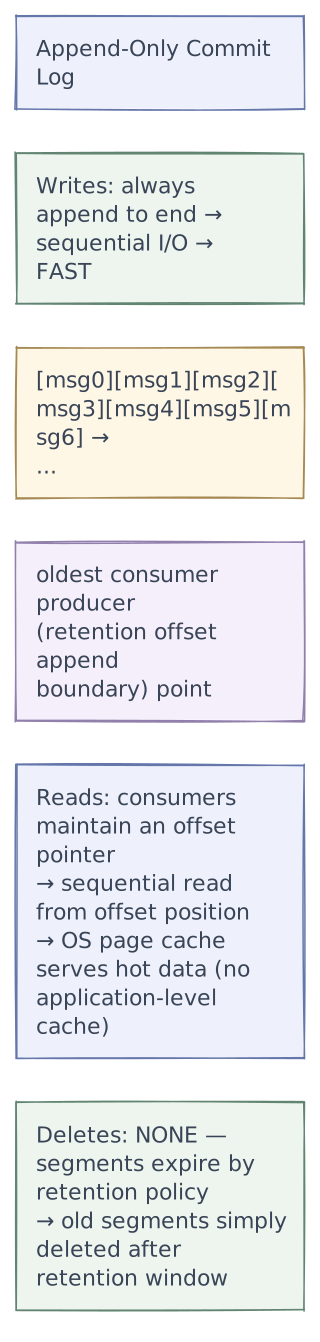
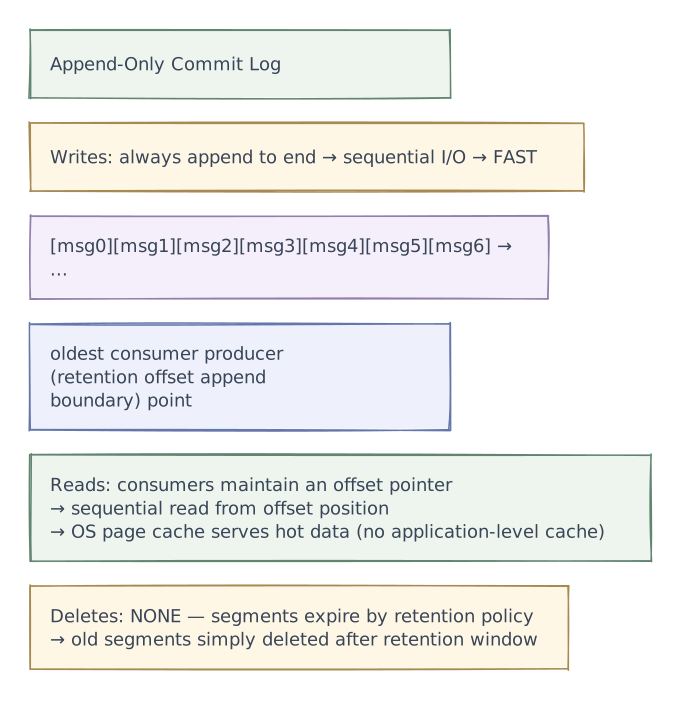
Why sequential I/O matters:
| I/O Pattern | HDD | SSD |
|---|---|---|
| Sequential write | 100-200 MB/s | 500-3000 MB/s |
| Random write | 0.1-1 MB/s | 50-200 MB/s |
| Sequential read | 100-200 MB/s | 500-3000 MB/s |
| Random read | 0.1-1 MB/s | 50-200 MB/s |
Sequential I/O is 100-1000× faster than random I/O. By only appending, Kafka achieves disk throughput that rivals network throughput.
Zero-copy transfer (sendfile):
Traditional path:                    Zero-copy path:
Disk → Kernel buffer                 Disk → Kernel buffer
Kernel buffer → User buffer             ↓  (sendfile syscall)
User buffer → Socket buffer          Kernel buffer → NIC buffer
Socket buffer → NIC buffer

4 copies, 4 context switches         2 copies, 2 context switches
~60% of CPU on data copies ~0% CPU on data copies| Pros | Cons |
|---|---|
| Extremely high throughput (millions msg/sec) | No per-message deletion (retention-based only) |
| Sequential I/O leverages OS page cache | Messages are immutable once written |
| Zero-copy transfers to consumers | Consumer must track own offset |
| Simple — append + read, no complex data structures | Ordering only within a partition |
Option 2: In-Memory Queue with WAL (RabbitMQ-style)
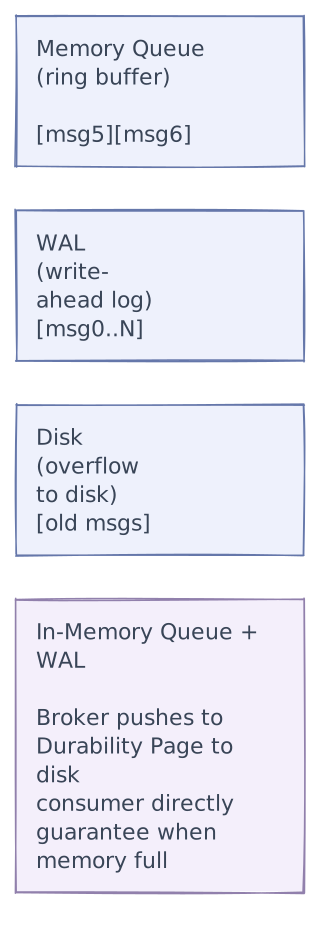
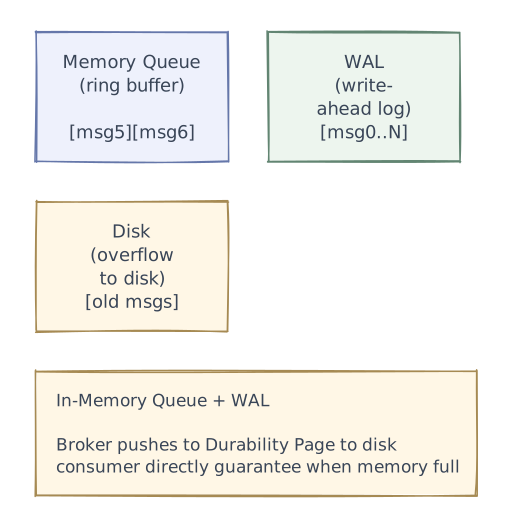
| Pros | Cons |
|---|---|
| Very low latency (microsecond for in-memory) | Memory-limited — can't buffer large backlogs |
| Per-message ACK and deletion | Complex — memory management, overflow to disk |
| Flexible routing (exchanges, bindings) | Lower throughput at scale vs log-based |
| Push-based delivery | No message replay after consumption |
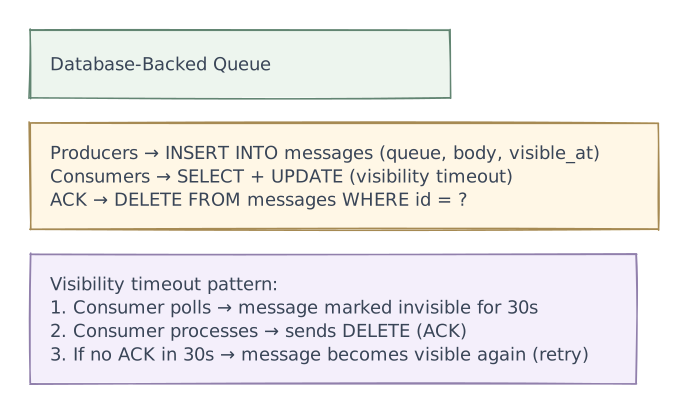
Option 3: Database-Backed Queue (SQS-style)
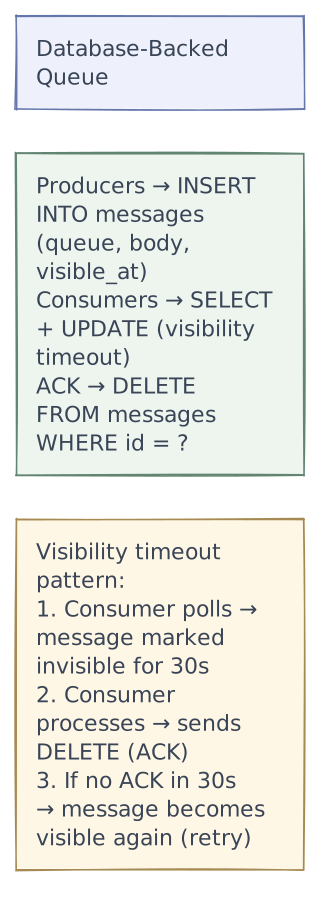
| Pros | Cons |
|---|---|
| Fully managed (SQS), no operations | Lower throughput (1000s msg/s vs millions) |
| At-least-once with visibility timeout | No ordering guarantees (SQS standard) |
| Per-message deletion | Higher latency (database round-trips) |
| Simple operational model | No replay capability |
Recommendation
Use Option 1 (Append-Only Log) for a high-throughput, scalable message queue:
- Sequential I/O + zero-copy = unmatched throughput
- Persistent storage = unlimited retention and replay
- Simple broker logic = operational simplicity
- Consumer offset tracking = flexible consumption patterns
Core design decisions
Choose the ordering boundary before choosing the partition count. Events for one business key can share a partition, but separate partitions progress independently. A consumer acknowledgement says how far processing has advanced under its contract; it does not make an external database write and an offset commit automatically atomic.
Request flows
Detailed Flow Diagrams
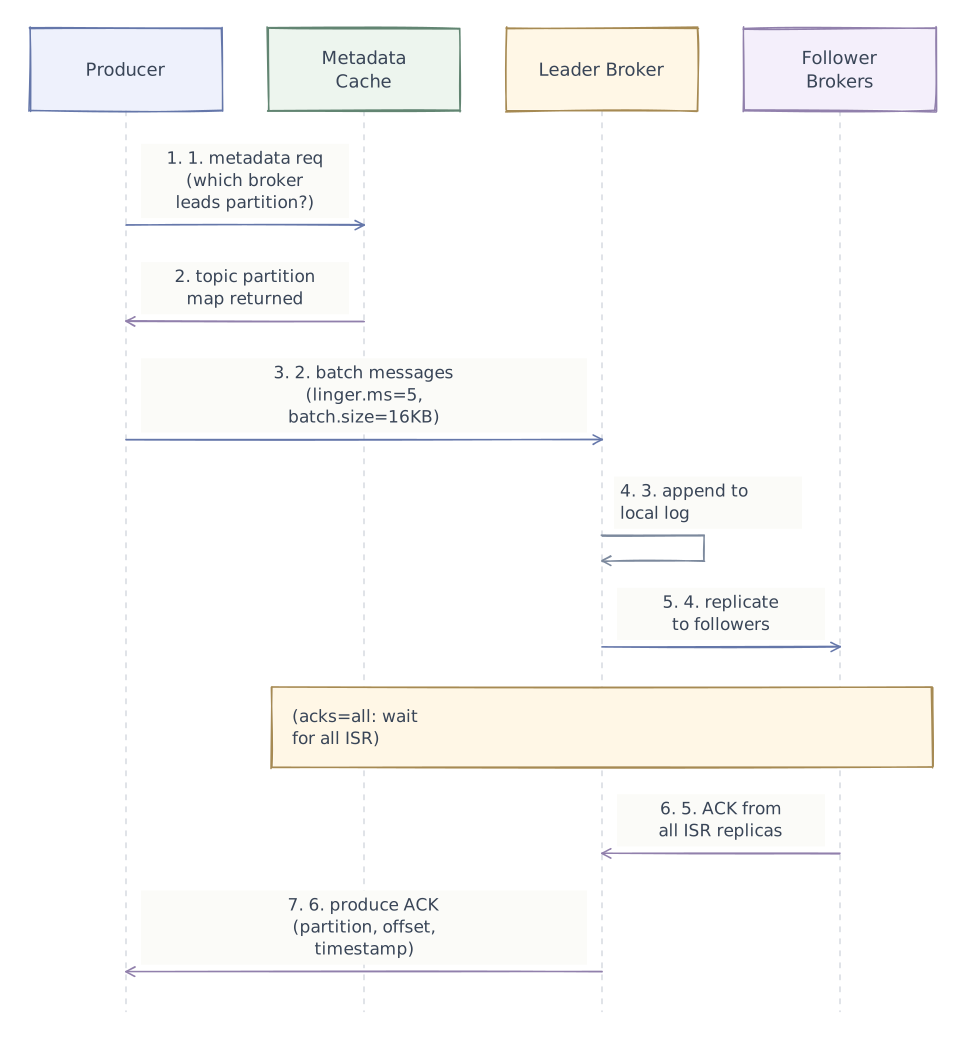
Produce Flow

Consume Flow (Pull-Based)

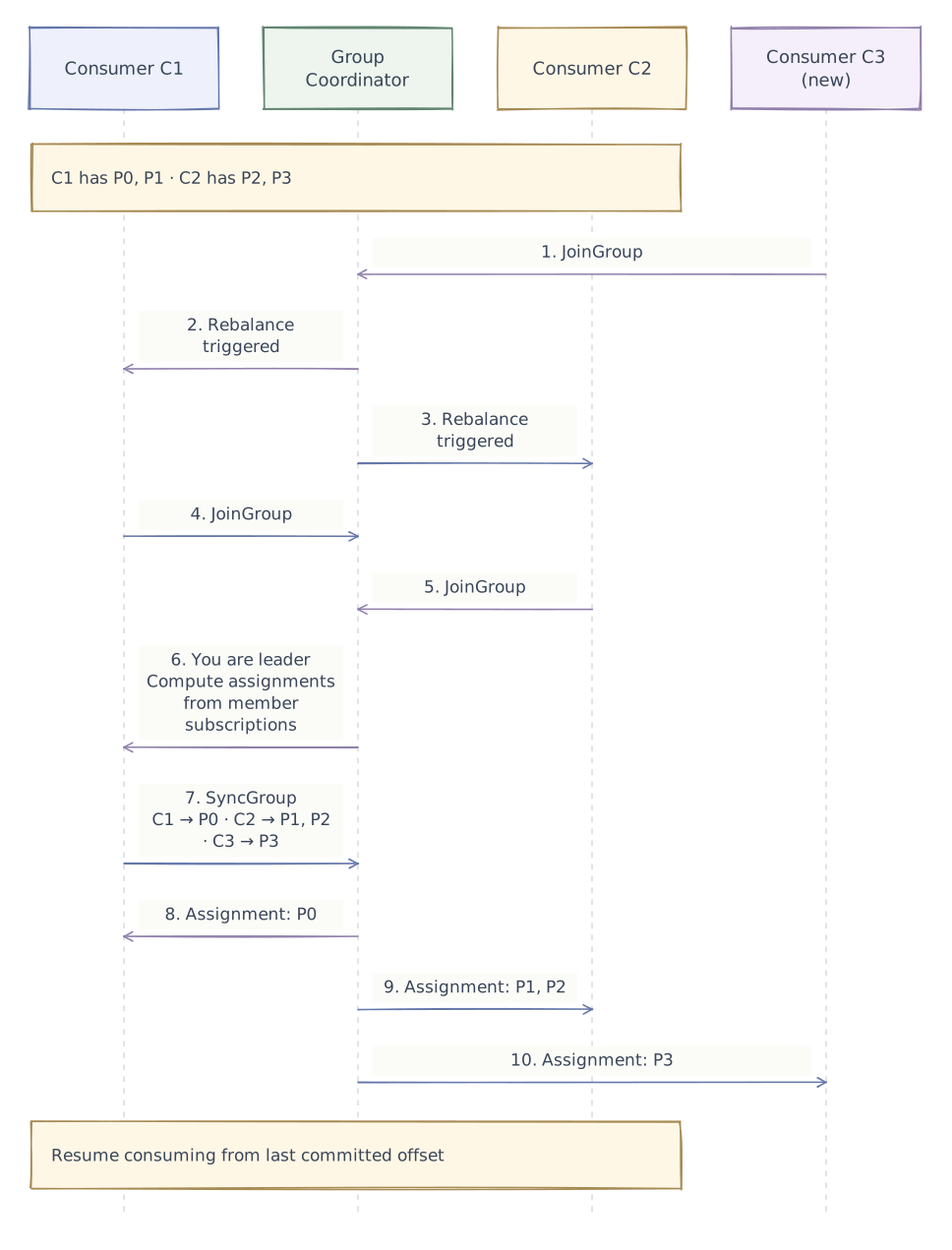
Consumer Rebalance Flow

Performance & caching
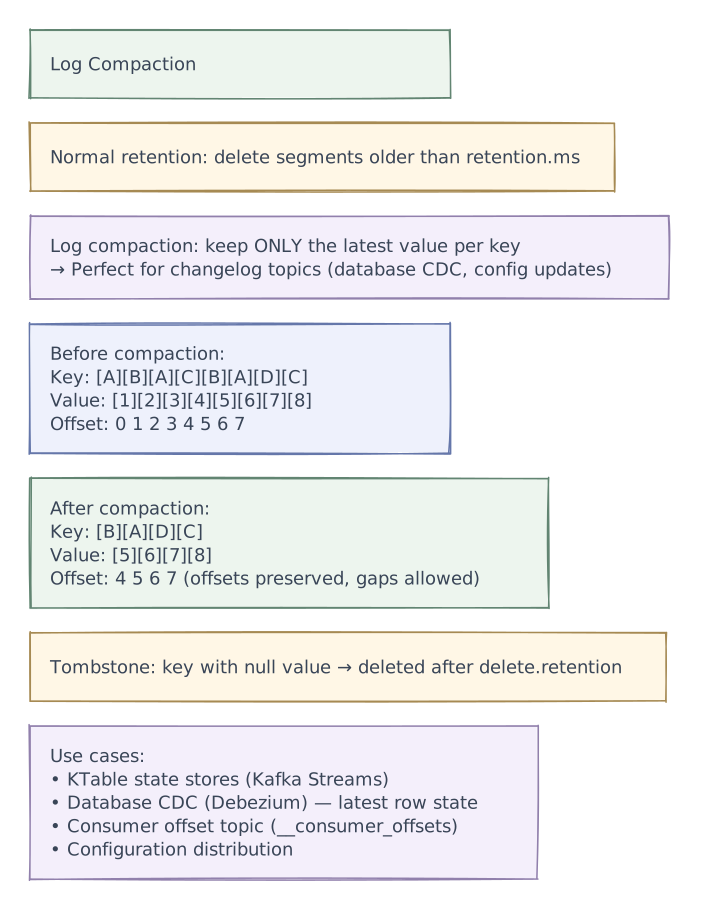
Log Compaction (Bonus Deep Dive)

Advanced design
Replication & Consistency
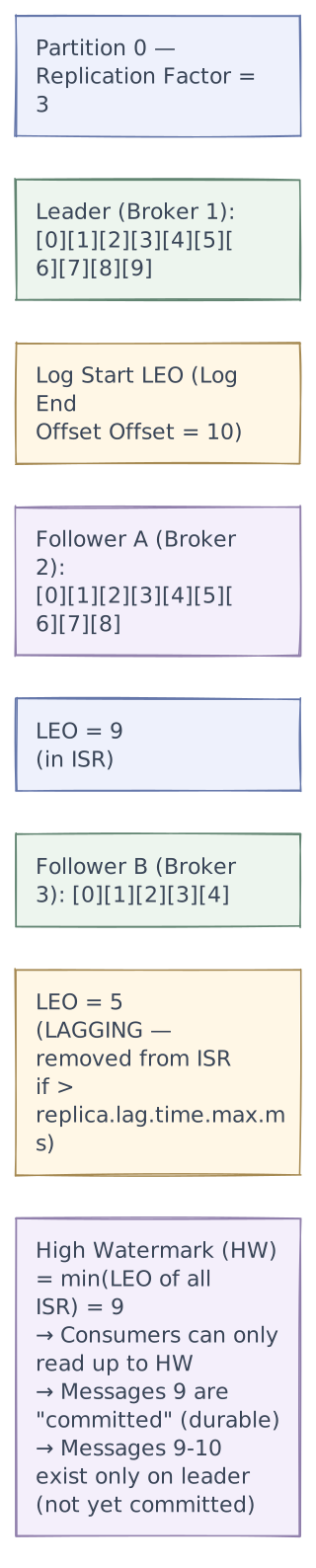
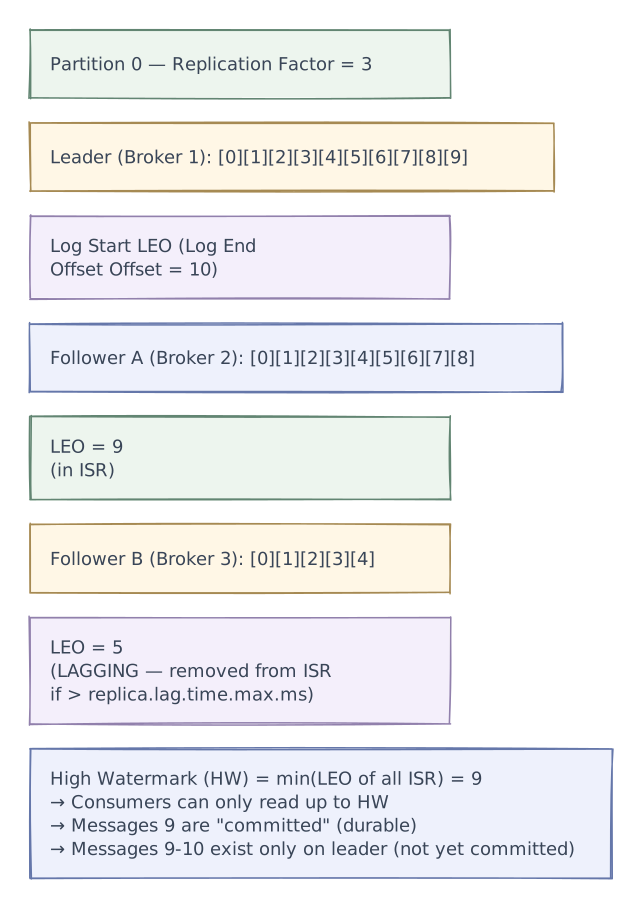
ISR (In-Sync Replicas)
Acks Configuration & Durability Tradeoffs
| acks Setting | Behavior | Durability | Latency | Throughput |
|---|---|---|---|---|
acks=0 | Producer doesn't wait for any ACK | Lowest — fire and forget | ~0.5 ms | Highest |
acks=1 | Wait for leader to write to local log | Medium — lost if leader dies before replication | ~2-5 ms | High |
acks=all | Wait for all ISR replicas to write | Highest — survives any single broker failure | ~5-15 ms | Lower |
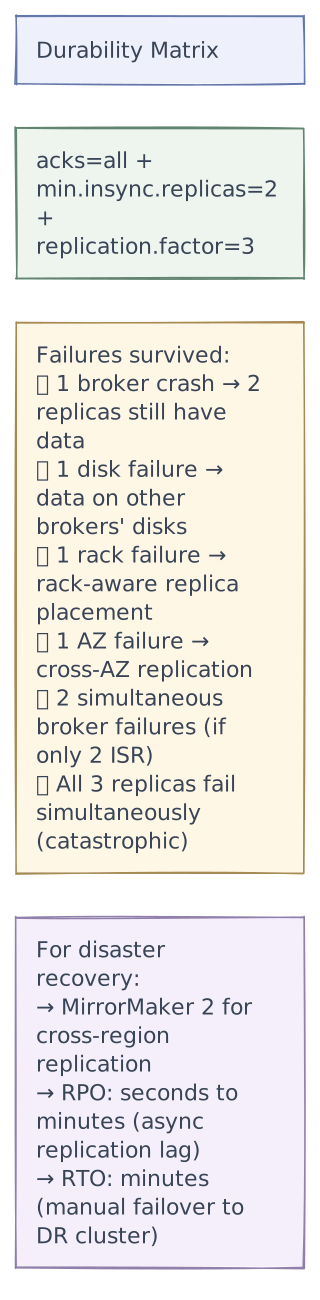
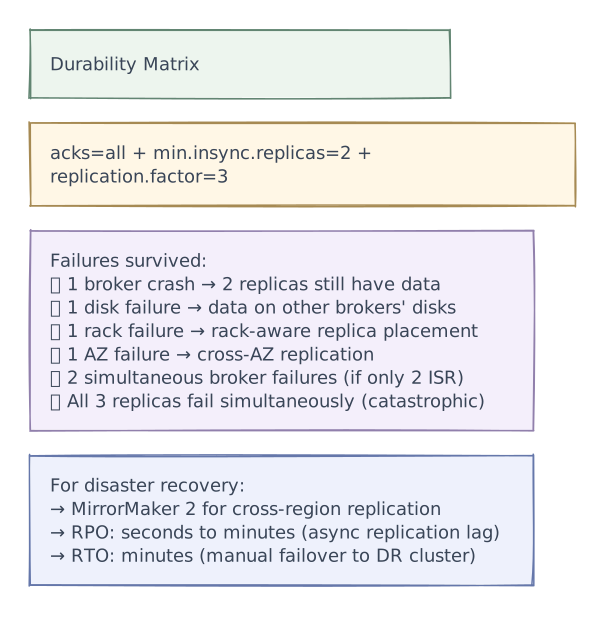
Recommendation: acks=all with min.insync.replicas=2 for production:
- Tolerates 1 broker failure without data loss
- Blocks produces if ISR shrinks below 2 (prevents single-replica writes)
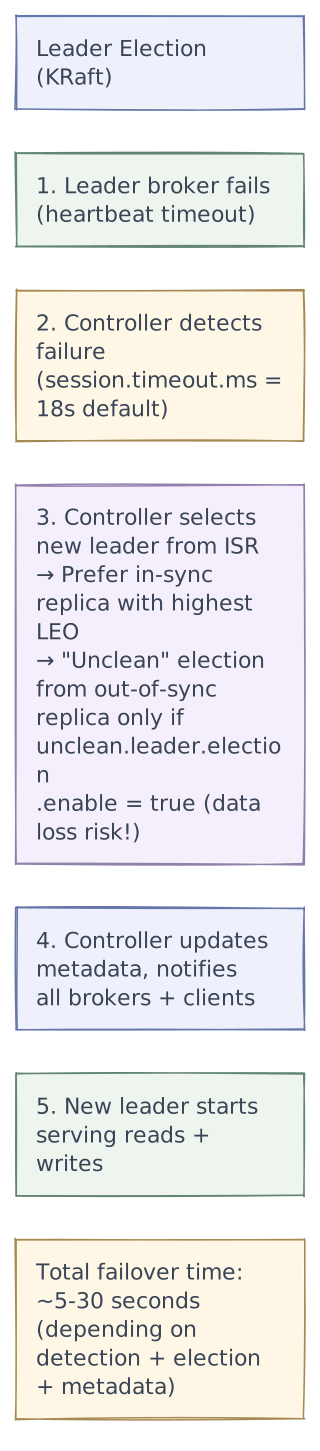
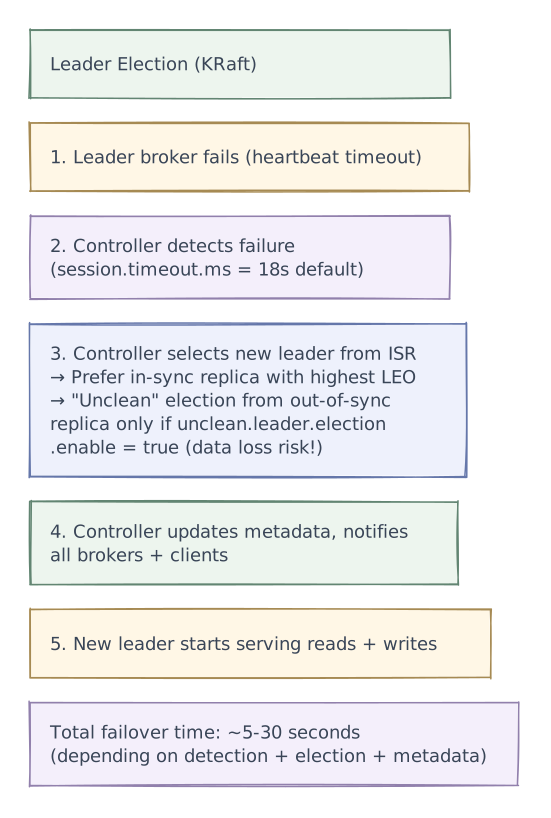
Leader Election
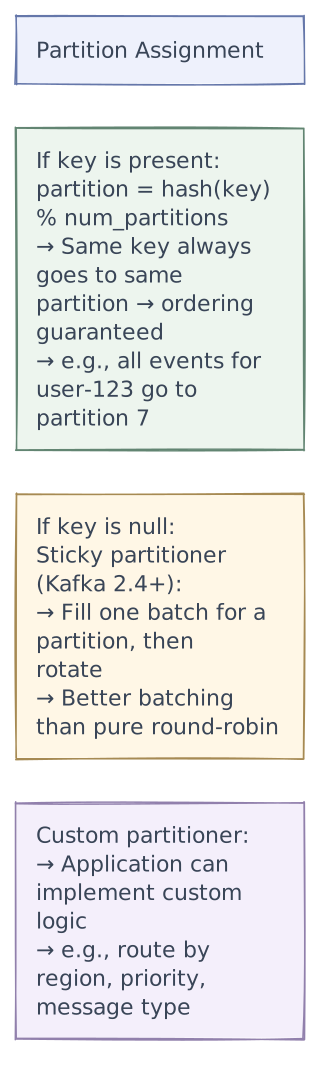
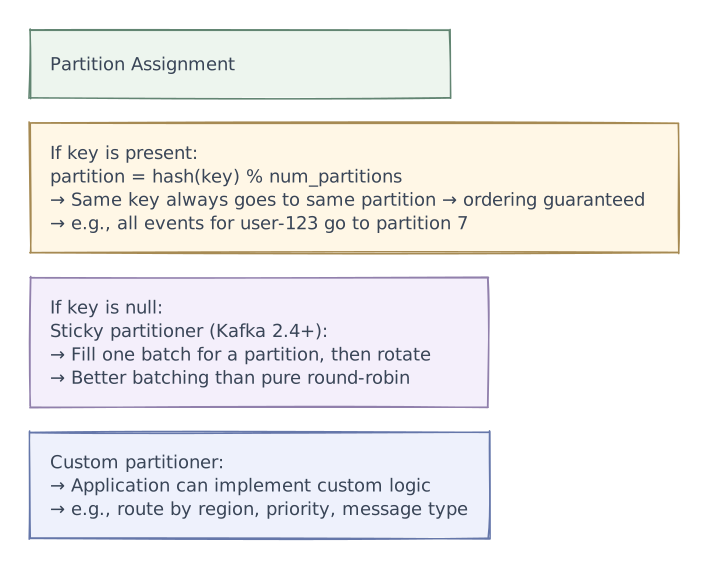
Partitioning Strategy
How Messages Are Routed to Partitions
Partition Count Selection
Target throughput: 1 GB/s

Single partition throughput:
  - Producer: ~10-50 MB/s per partition
  - Consumer: ~20-100 MB/s per partition (consumer is usually faster)
  - Bottleneck is typically producer side

Calculation:
  Required partitions = Target throughput / Per-partition throughput
                      = 1 GB/s / 30 MB/s (conservative)
                      = ~34 partitions per topic (round up to 36-48)

Rule of thumb:
  - Start with max(expected_throughput / 30MB, num_consumers_in_largest_group)
  - Can always ADD partitions later (cannot remove)
  - More partitions = more parallelism BUT more open file handles,
    longer leader election, more memory for consumer offset tracking
Partition-to-Consumer Assignment Strategies
| Strategy | How It Works | Pros | Cons |
|---|---|---|---|
| Range | Assign consecutive partitions to consumers (P0-P2→C1, P3-P5→C2) | Preserves key locality for co-partitioned topics | Uneven if partition count not divisible by consumers |
| Round-Robin | Distribute partitions one by one (P0→C1, P1→C2, P2→C1...) | Even distribution | Breaks key co-partitioning |
| Sticky | Like round-robin but minimizes reassignment during rebalance | Fewer partition movements on rebalance | Slightly more complex |
| Cooperative Sticky | Incremental rebalance — only moves partitions that need moving | Near-zero downtime rebalancing | Requires multiple rebalance rounds |
Recommendation: Cooperative Sticky Assignor — minimizes stop-the-world rebalancing.
Edge cases
Handling Edge Cases
Consumer Lag & Backpressure
Problem: Consumer is slower than producer → unbounded lag

Monitoring:
  consumer_lag = latest_offset(partition) - committed_offset(consumer_group, partition)

Mitigations:
  1. Scale out consumers (up to # of partitions)
  2. Increase consumer fetch size (fetch.max.bytes)
  3. Tune consumer processing (batch DB writes, parallelize)
  4. Add partitions to topic (+ proportional consumers)
  5. Alert when lag exceeds threshold (e.g., > 100K messages)
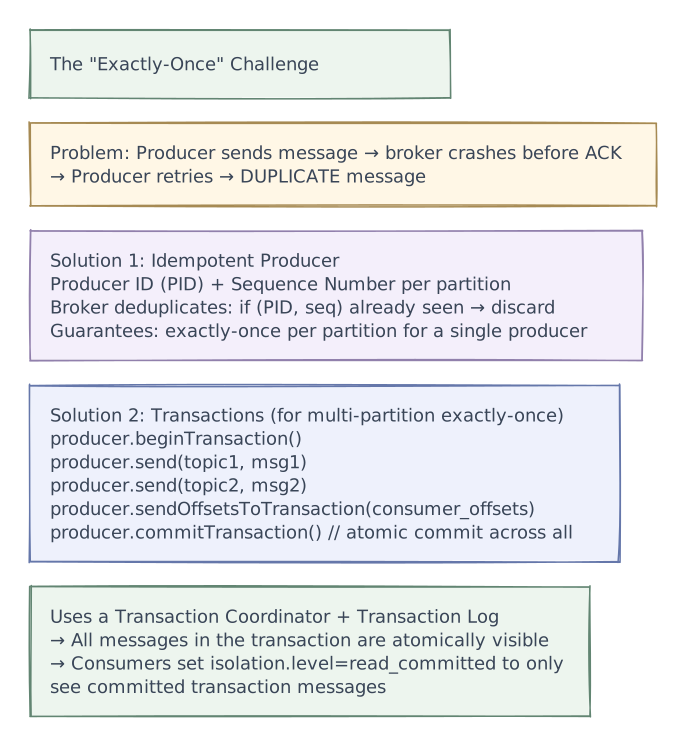
Exactly-Once Semantics (EOS)

Dead Letter Queue (DLQ)

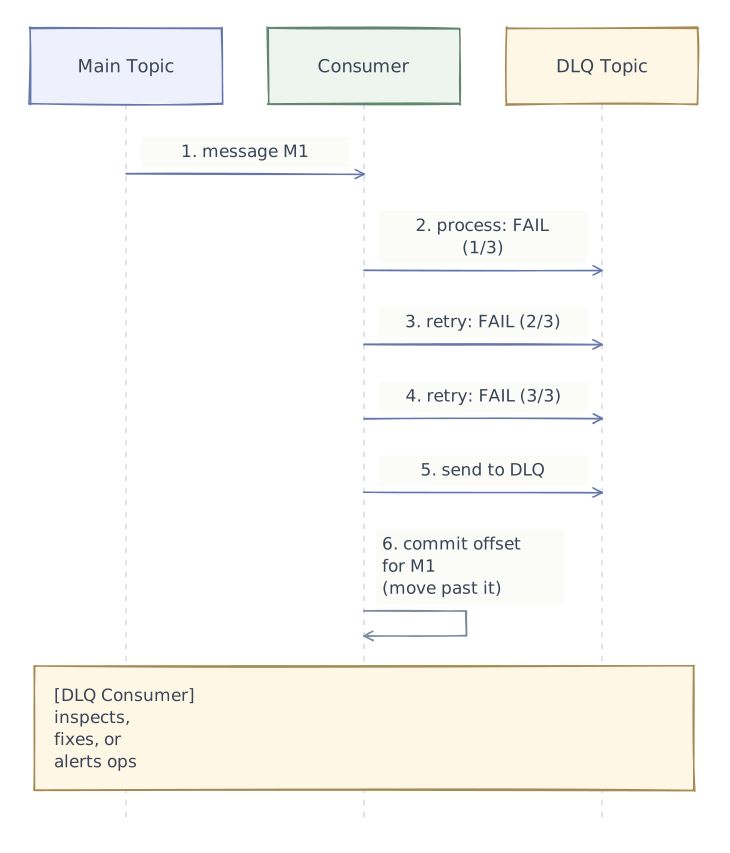
Message Ordering Across Partitions
Problem: User actions must be ordered, but topic has 12 partitions

Solution: Use the entity ID as the partition key
  - key = "user-123" → hash("user-123") % 12 = partition 7
  - ALL events for user-123 go to partition 7
  - Within partition 7, ordering is guaranteed

Caveat: If you add partitions, hash changes → key mapping shifts
  - Mitigate: Don't add partitions to topics where key ordering matters
  - Or: use a custom partitioner with a stable mapping table
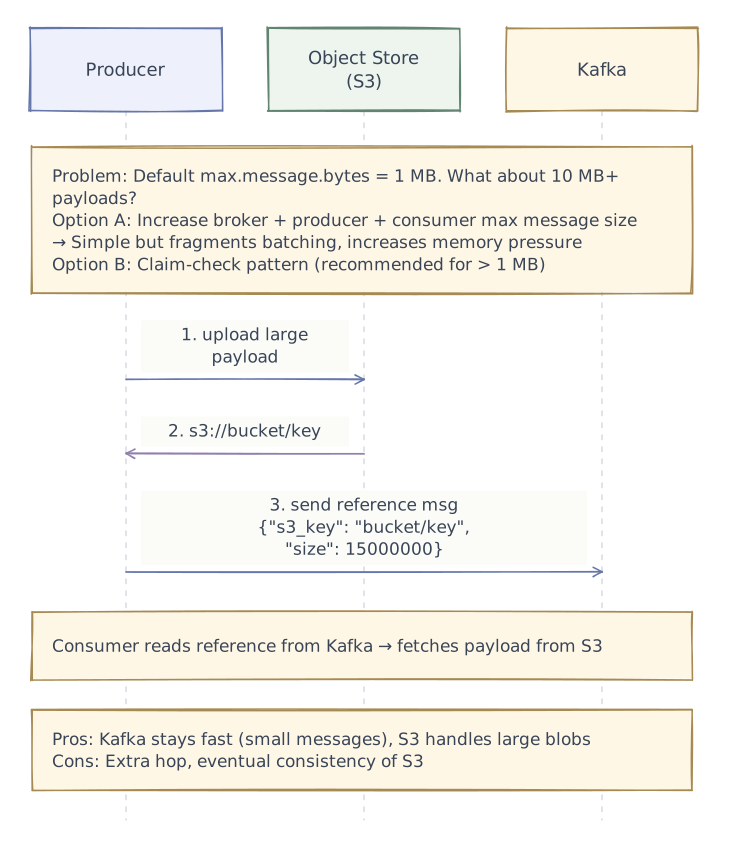
Large Messages

Tradeoffs
Tradeoffs & Design Decisions Summary
| Decision | Option A | Option B | Chosen | Why |
|---|---|---|---|---|
| Storage Engine | Append-only log (Kafka) | In-memory + WAL (RabbitMQ) | Append-only log | Sequential I/O = highest throughput; unlimited retention; replay capability |
| Delivery Model | Pull (consumer polls) | Push (broker pushes) | Pull | Consumer controls pace; no backpressure on broker; natural batching |
| Metadata Store | ZooKeeper (external) | KRaft (self-managed) | KRaft | Removes external dependency; simpler operations; better scaling (>200K partitions) |
| Ordering Scope | Global ordering | Per-partition ordering | Per-partition | Global ordering = 1 partition = no parallelism; per-partition is the right balance |
| Consumer Offset | Broker tracks (auto) | Consumer commits (manual) | Manual commit | Application controls exactly-once semantics; no re-processing on crash |
| Acks | acks=1 (leader only) | acks=all (full ISR) | acks=all | Data loss is unacceptable for most use cases; latency cost is acceptable (5-15 ms) |
| Replication | Synchronous | Asynchronous | Sync for ISR | Async loses data on leader failure; sync ISR guarantees committed = durable |
| Rebalancing | Stop-the-world | Cooperative incremental | Cooperative | Stop-the-world pauses ALL consumers during rebalance; cooperative only moves affected partitions |
| Compaction | Delete old segments | Log compaction (keep latest per key) | Both | Delete for event streams; compaction for changelog/state topics |
| Wire Protocol | HTTP/REST | Custom binary (TCP) | Binary | Lower overhead, better batching, connection multiplexing; REST for admin only |
Reliability & fault tolerance
Phase 4 of 4 · Operations & resilience
Add operational safeguards
With the request paths and tradeoffs established, add the controls that help detect trouble and keep the system operating. The final diagram retains every layer introduced so far.
- Queue telemetry
- Watch consumer lag, replica health, and retention capacity before slowdowns become outages.
Reliability & Fault Tolerance
Single Points of Failure & Mitigations

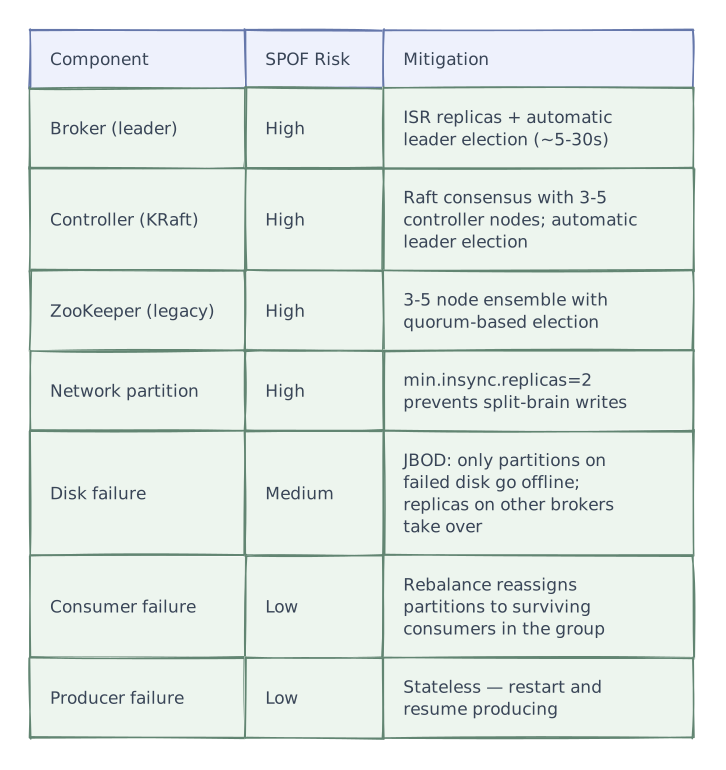
Graceful Degradation
Scenario: Broker goes down (1 of 50)

  1. Controller detects missing heartbeat (18s timeout)
  2. For each partition where dead broker was leader:
     → Elect new leader from ISR
     → Update metadata, notify clients
  3. For each partition where dead broker was follower:
     → Remove from ISR
     → Continue with remaining ISR
  4. When broker returns:
     → Fetches missed data from current leaders
     → Rejoins ISR after catching up
     → Preferred leader election restores original topology

Impact: ~5-30s of unavailability for affected partitions
         Other partitions continue unaffected
         Zero data loss (acks=all with min.insync.replicas=2)
Data Durability Guarantees
Production architecture
High-Level Architecture

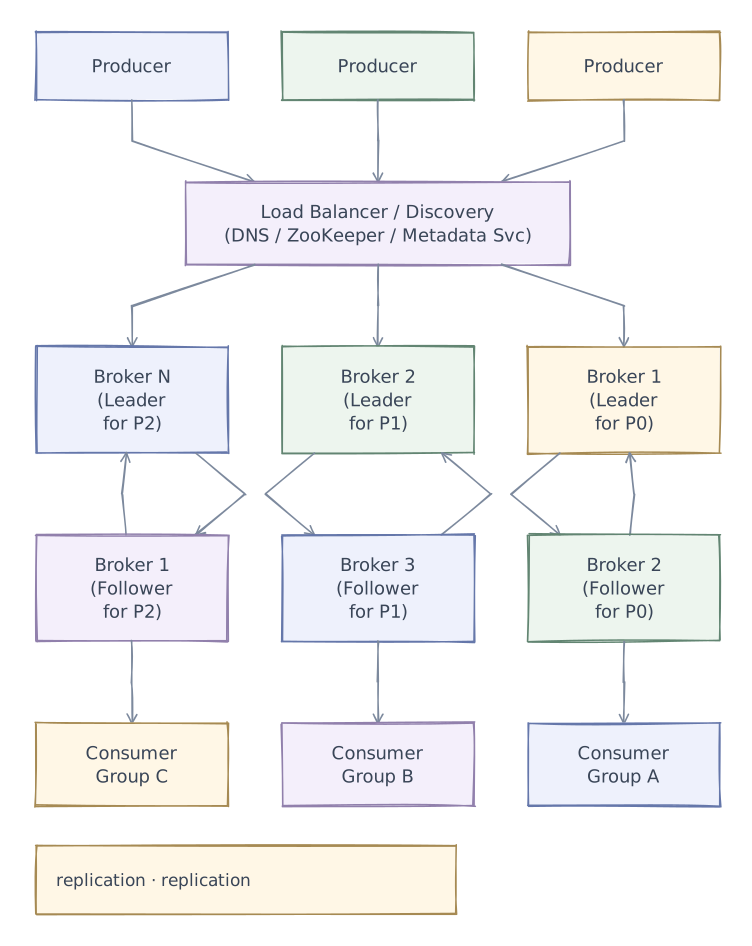
Component Breakdown

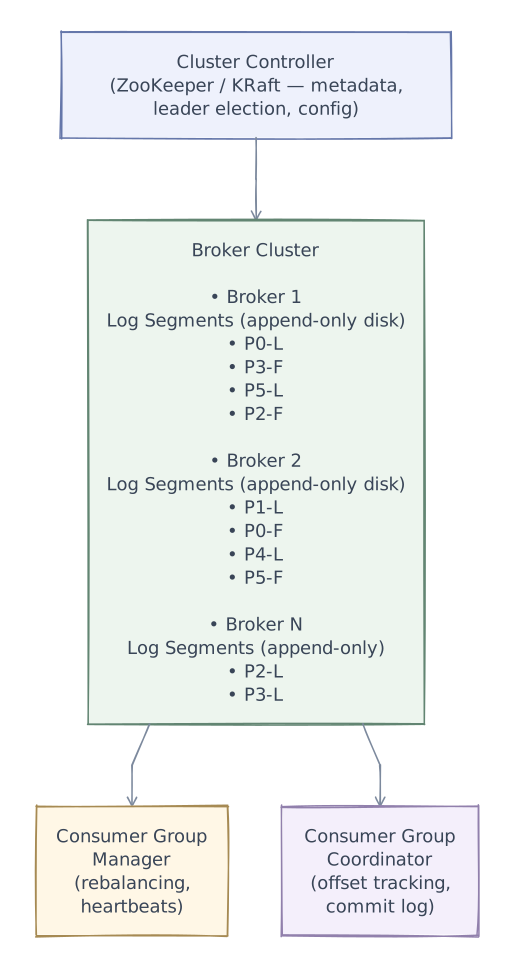
Key: P0-L = Partition 0 Leader, P0-F = Partition 0 Follower
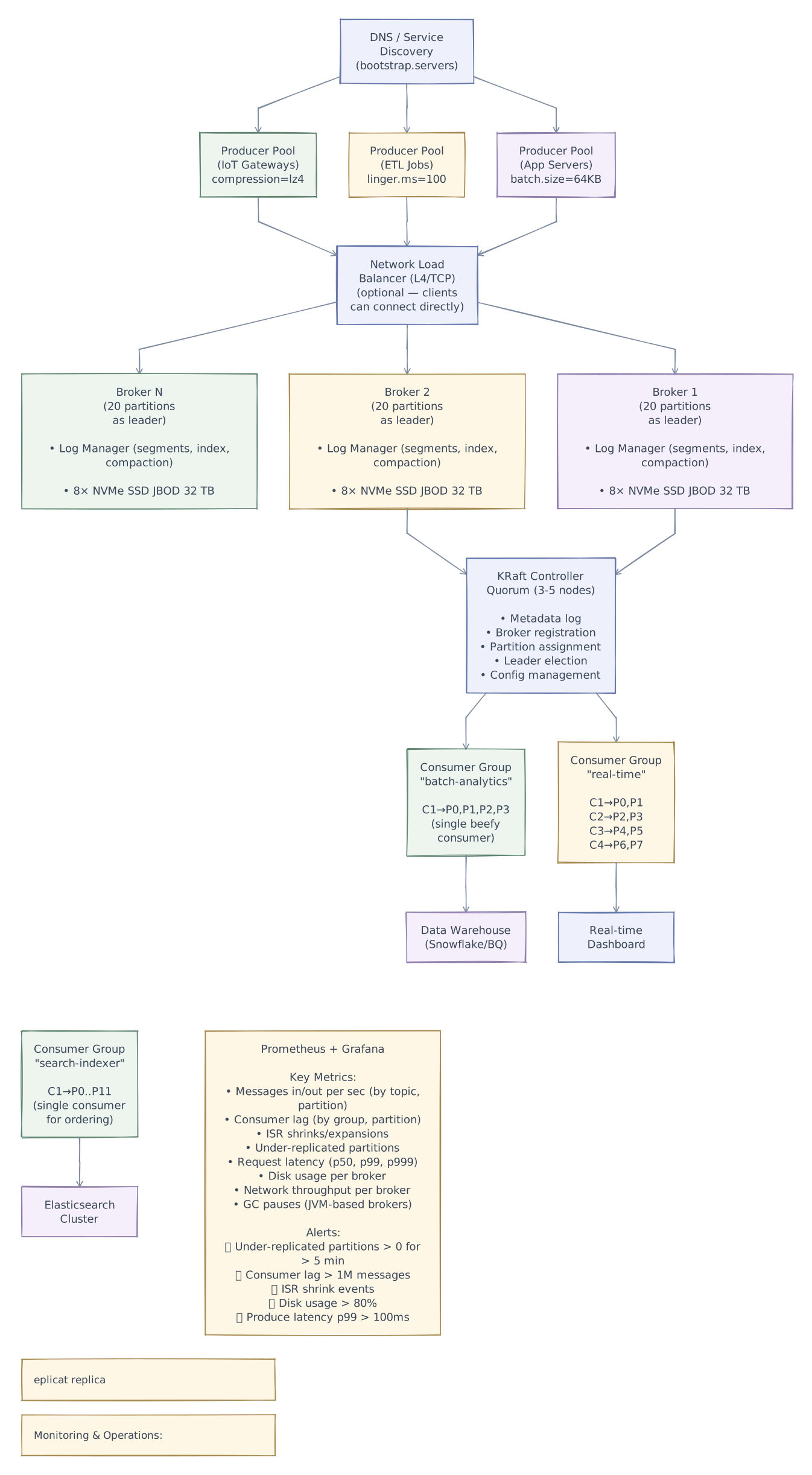
Full System Architecture (Production-Grade)

Further exploration
Let a consumer complete a database write and crash before committing its offset. On restart, the message is delivered again. Design the deduplication or transactional boundary that makes this safe, then check what changes if the side effect is a third-party API rather than your own database.
Interview playbook
Interview Tips
Start with the append-only log insight — This is the foundational design decision. Explain why sequential I/O and zero-copy make disk-based queues faster than in-memory alternatives at scale.
Draw the partition model early — Topics → Partitions → Segments. This shows you understand the parallelism model. Emphasize: ordering is per-partition, not per-topic.
Discuss the acks tradeoff in depth —
acks=0vsacks=1vsacks=all. Connect it to ISR andmin.insync.replicas. This is a nuanced durability vs latency discussion interviewers love.Explain consumer groups and rebalancing — How partitions are assigned, what triggers a rebalance, why cooperative sticky is preferred over stop-the-world. Mention the "consumers ≤ partitions" constraint.
Address exactly-once semantics — Most candidates only know at-least-once. Explaining idempotent producers (PID + sequence number) and transactions sets you apart.
Mention KRaft over ZooKeeper — Shows you know the modern architecture. ZooKeeper was a bottleneck at >200K partitions. KRaft uses Raft consensus built into the brokers themselves.
Discuss operational concerns — Partition count selection, when to add partitions (and why you can't remove them), retention policies, monitoring consumer lag, dealing with hot partitions.
Claim-check pattern for large messages — Shows pragmatism. Don't just increase
max.message.bytes— explain the S3 reference pattern.Compare with alternatives when asked — Kafka (high throughput, log-based) vs RabbitMQ (flexible routing, push-based) vs SQS (managed, simple). Each has its sweet spot.
End with scale numbers — "A single Kafka cluster with 50 brokers can handle 1M+ messages/sec, store petabytes with 7-day retention, and serve hundreds of consumer groups simultaneously."