Requirements & scope
Problem Statement & Requirements
Design a distributed task scheduling system that reliably enqueues, schedules, and executes tasks (jobs) across a fleet of workers at massive scale — similar to Celery, Temporal, Apache Airflow, Sidekiq, or cloud-native solutions like AWS Step Functions and Google Cloud Tasks.
Functional Requirements
- One-time tasks — submit a task for immediate execution (e.g., "send this email now")
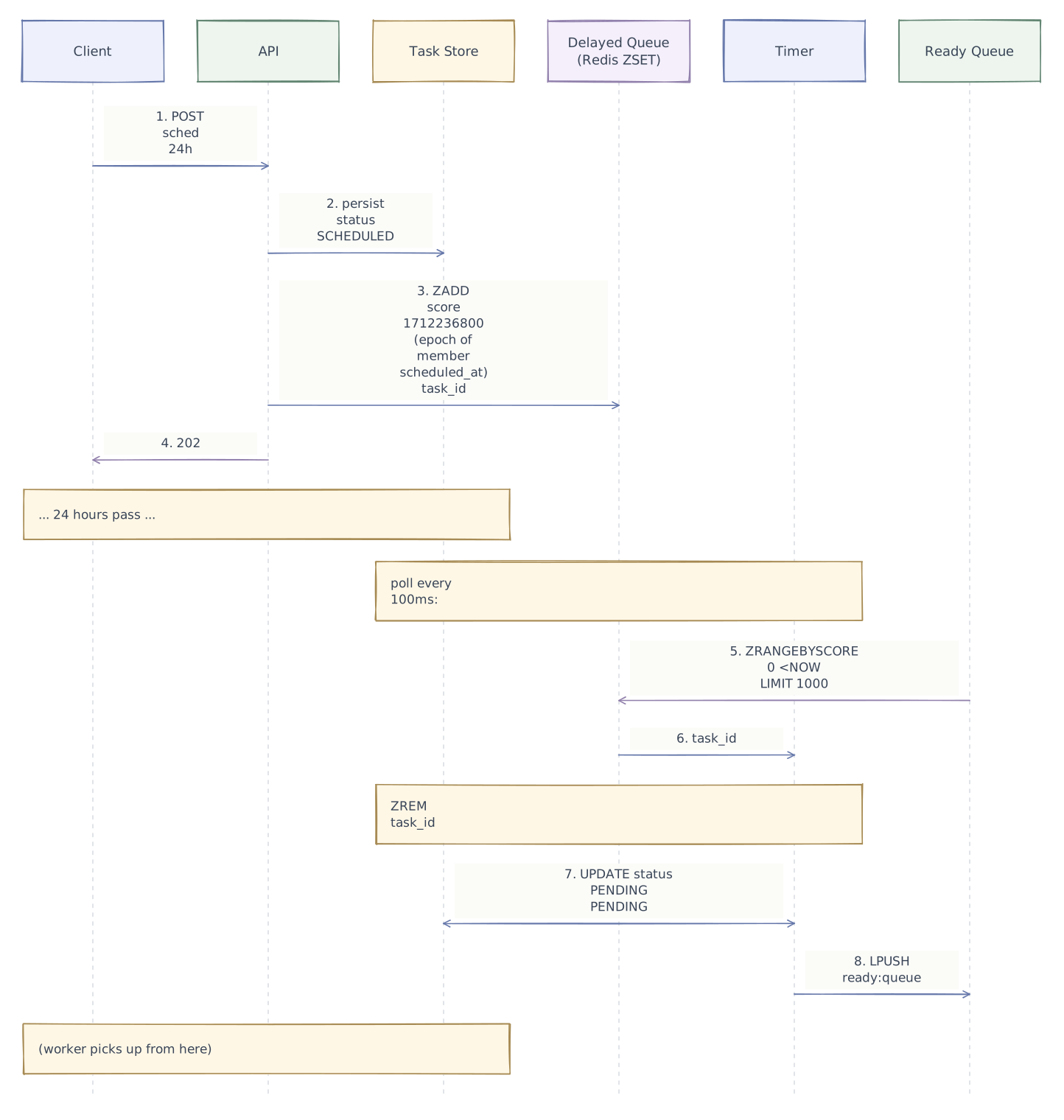
- Delayed tasks — schedule a task for a specific future time (e.g., "send reminder in 24 hours")
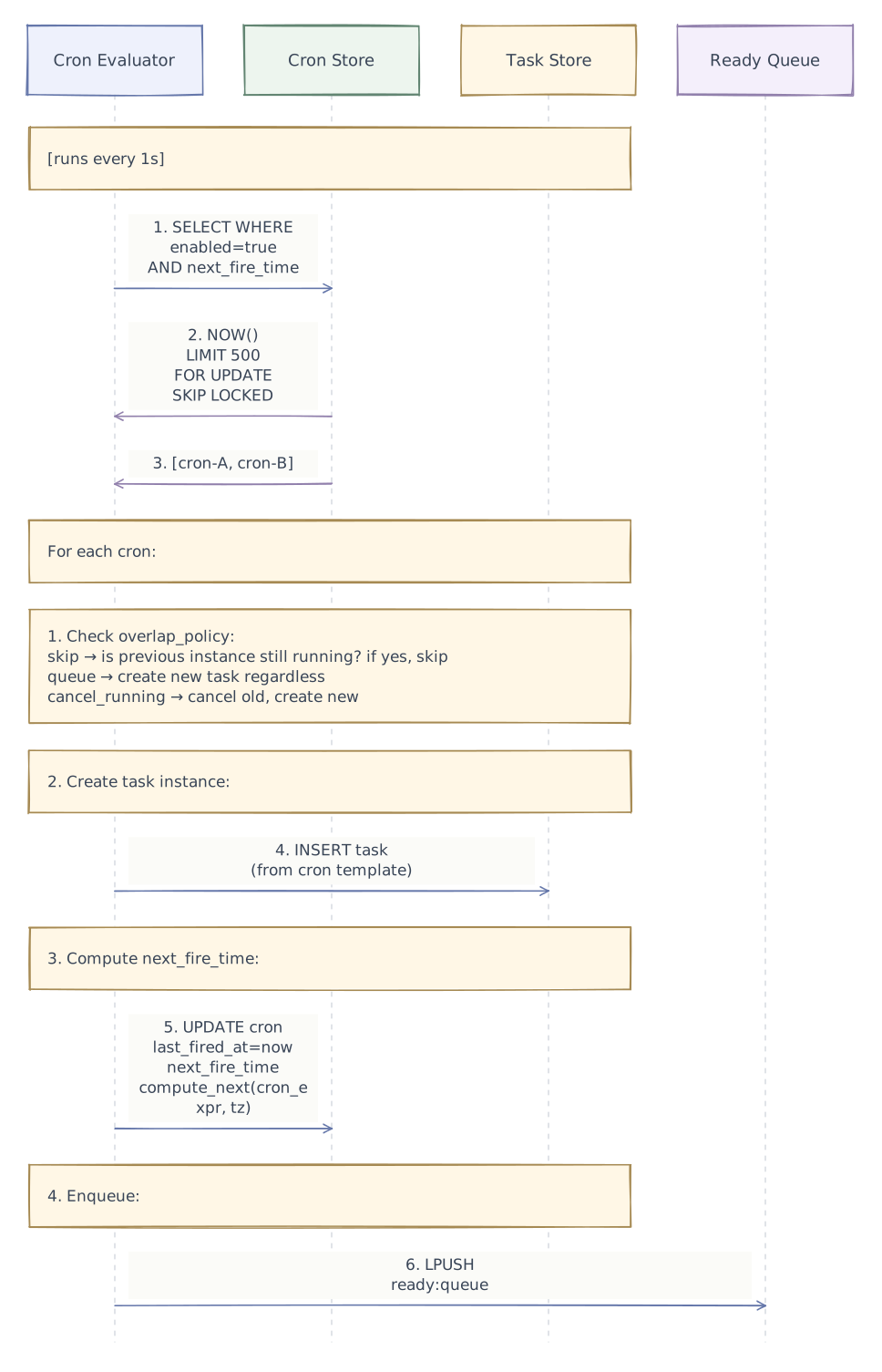
- Recurring / Cron tasks — periodic execution on a cron schedule (e.g., "run report every Monday 9am")
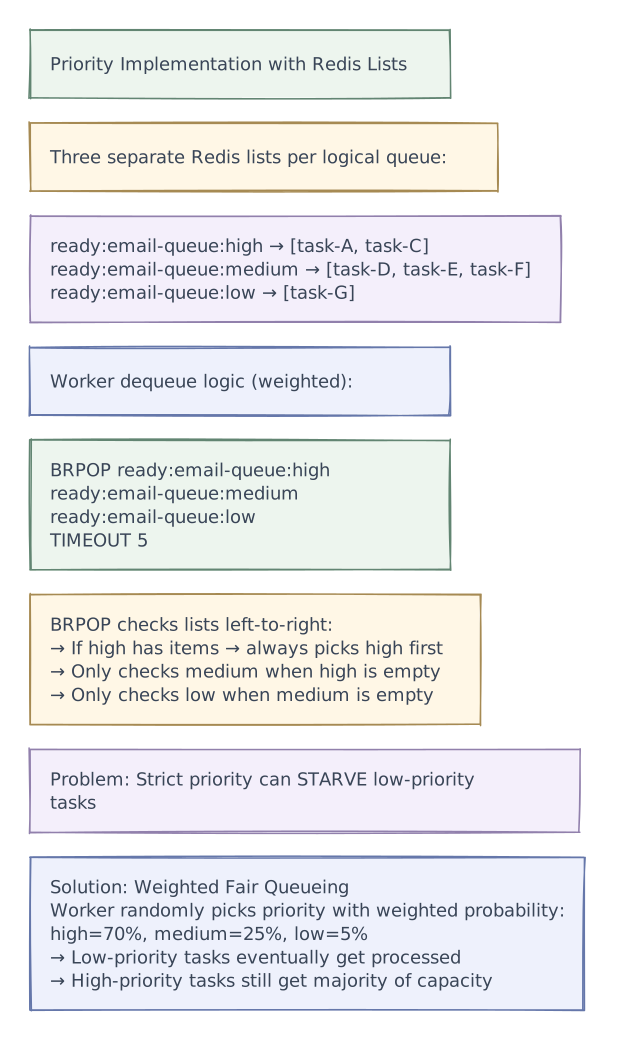
- Task priorities — high, medium, low; high-priority tasks execute before low-priority ones
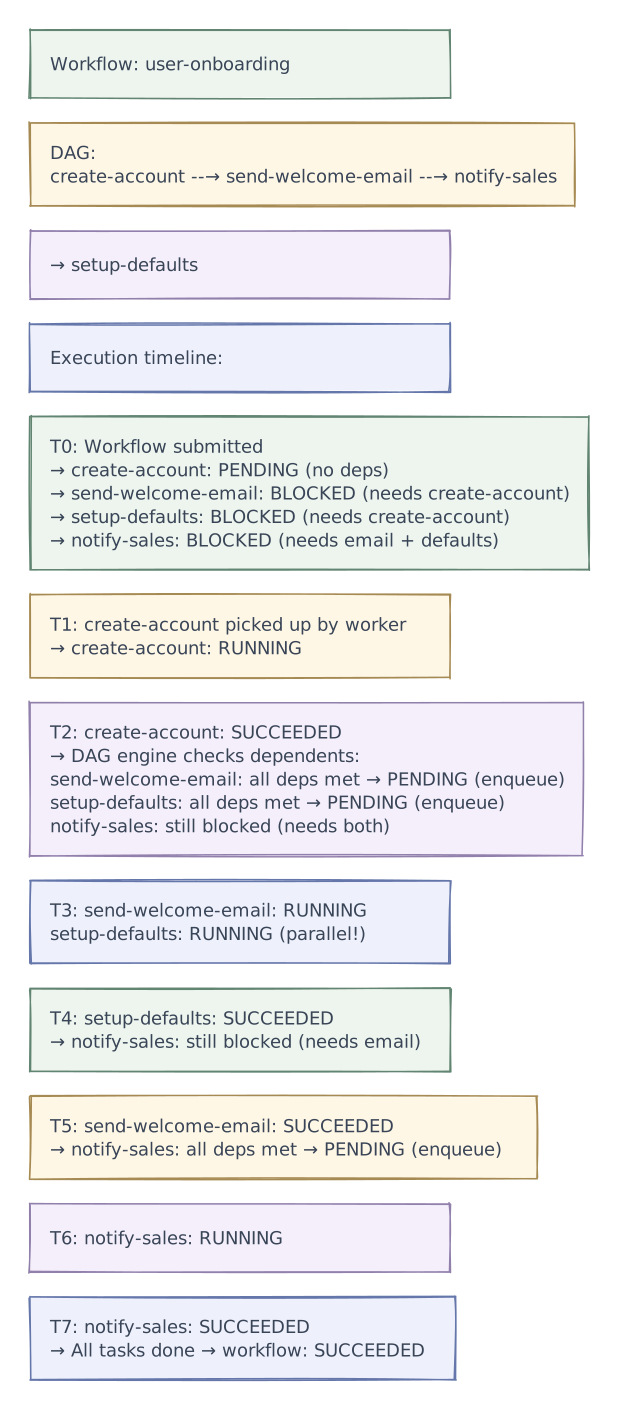
- Task dependencies (DAG) — task B runs only after task A succeeds (workflow/pipeline orchestration)
- Retry with backoff — configurable retry count, exponential backoff, dead-letter queue for exhausted retries
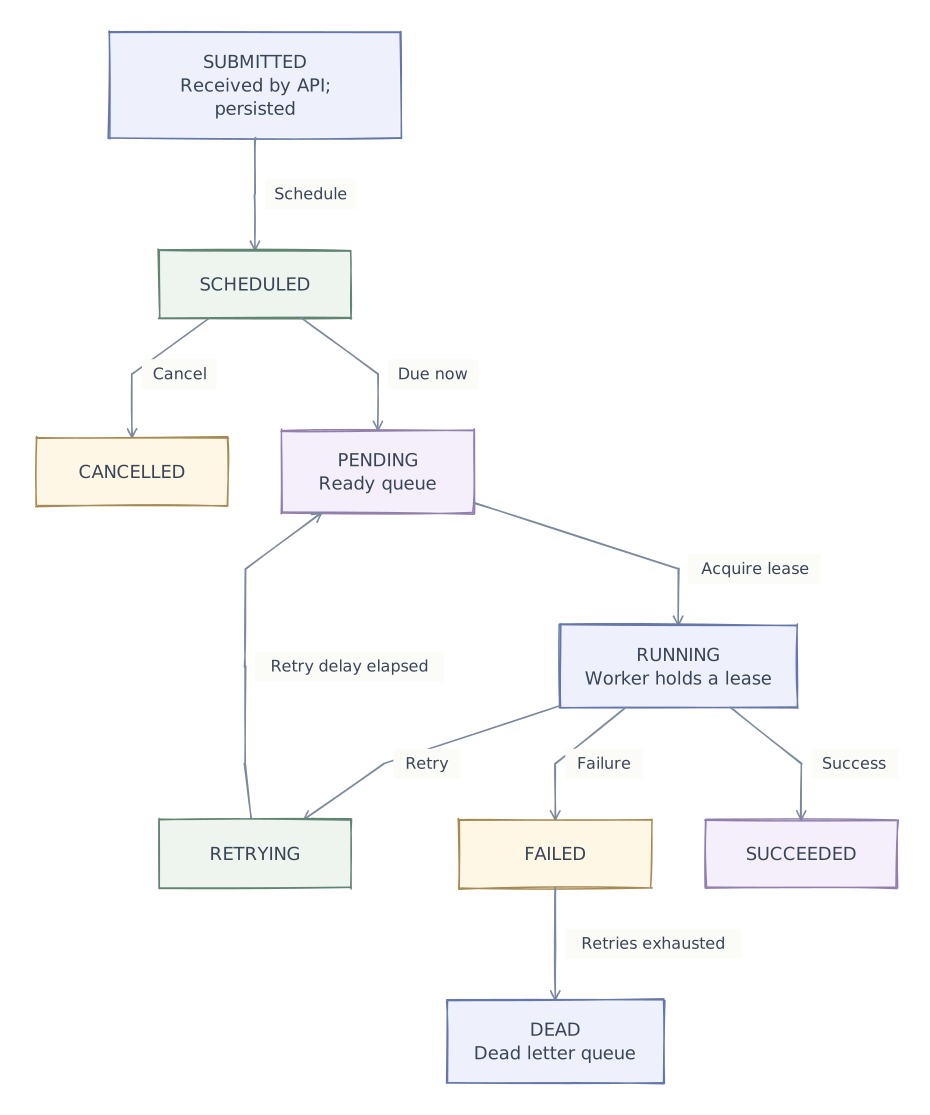
- Task status tracking — query status: PENDING, SCHEDULED, RUNNING, SUCCEEDED, FAILED, RETRYING, DEAD
- Cancellation — cancel a pending or scheduled task before it starts
- Rate limiting — limit execution rate per task type (e.g., max 100 emails/sec)
- Timeout enforcement — kill tasks that exceed max_execution_time
- Result storage — persist task output for callers to retrieve
- Idempotency — support idempotency keys to prevent duplicate execution
Non-Functional Requirements
- Exactly-once execution — each task must execute exactly once (or at-least-once with idempotency)
- Low scheduling latency — task picked up by worker within < 100 ms of its scheduled time
- High throughput — schedule and execute millions of tasks per day
- High availability — survive node failures with zero task loss
- Horizontal scalability — add workers to increase execution throughput linearly
- Durability — submitted tasks must not be lost (persisted before ACK)
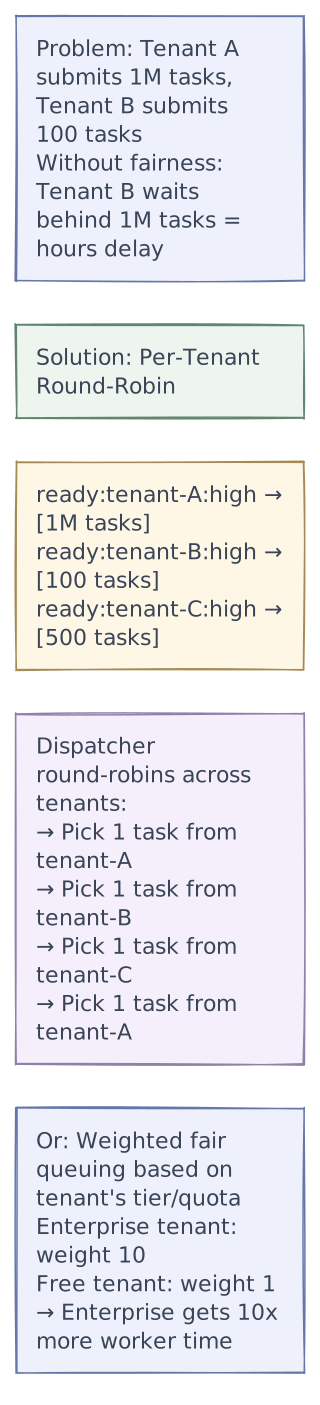
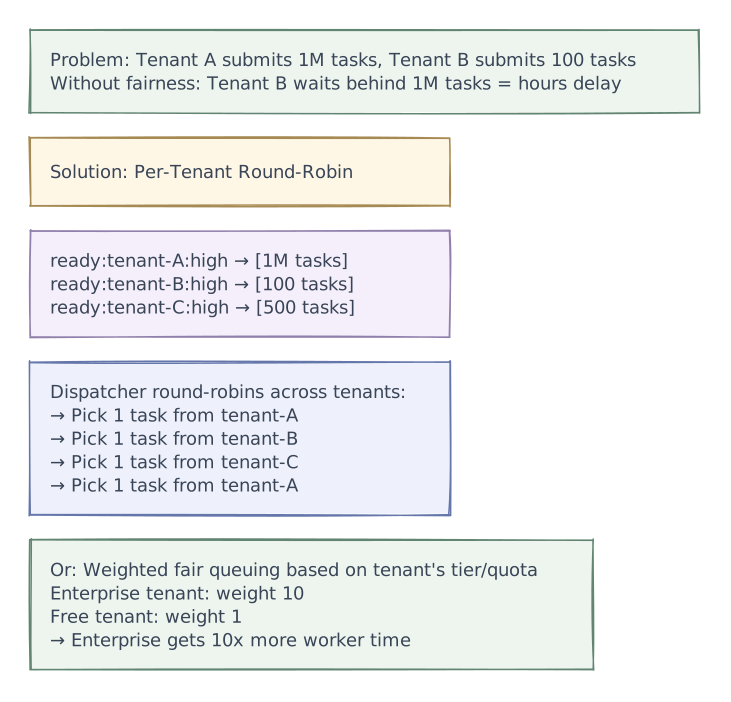
- Fairness — one tenant's burst of tasks must not starve other tenants
- Observability — metrics, logs, distributed tracing per task execution
Out of Scope
- Stream processing (Kafka Streams / Flink — different paradigm)
- Full workflow DSL (Temporal's detailed workflow-as-code semantics)
- Map-reduce / batch analytics (Spark / Hadoop territory)
Scale estimations
Scale Estimations
Traffic
| Metric | Value |
|---|---|
| Tasks submitted / second | 50K TPS |
| Tasks executed / second | 50K TPS (steady state, submitted ≈ executed) |
| Peak submission rate | 150K TPS (3x burst) |
| Delayed tasks (waiting) at any time | 500M |
| Recurring cron jobs (active definitions) | 10M |
| DAG workflows triggered / day | 5M |
| Average tasks per DAG | 8 |
Storage
| Metric | Value |
|---|---|
| Average task payload | 2 KB (serialized arguments + metadata) |
| Average task result | 1 KB |
| Task record (full row) | ~5 KB (payload + metadata + status + timestamps) |
| Tasks per day | 50K/s × 86,400 = ~4.3 billion/day |
| Retention period | 30 days |
| Total task records | 4.3B × 30 = ~130 billion records |
| Storage (task records) | 130B × 5 KB = ~650 TB |
| Delayed task index | 500M × 100 bytes = ~50 GB (fits in memory) |
| Cron definitions | 10M × 500 bytes = ~5 GB |
Bandwidth
| Metric | Value |
|---|---|
| Task submission throughput | 50K/s × 2 KB = ~100 MB/s |
| Task dispatch throughput | 50K/s × 2 KB = ~100 MB/s |
| Result storage throughput | 50K/s × 1 KB = ~50 MB/s |
| Total cluster bandwidth | ~250 MB/s |
Hardware Estimate
| Component | Spec |
|---|---|
| Scheduler nodes | 5-10 (active-active, stateless scheduling logic) |
| Task store (DB) | 20-50 nodes (sharded, SSD-backed) |
| Worker nodes | 1,000-5,000 (depending on avg task duration) |
| Delayed task queue | 3-5 nodes (Redis or custom priority queue, in-memory) |
| Message broker (internal) | 5-10 nodes (Kafka or internal queue) |
Layered architecture
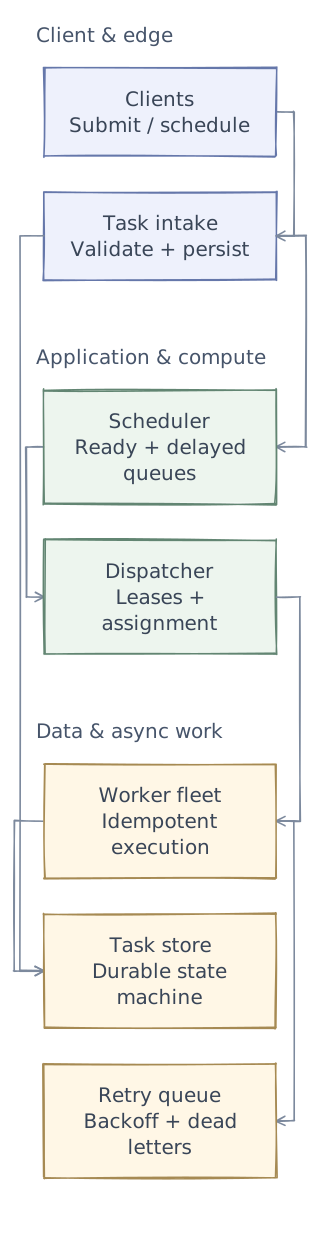
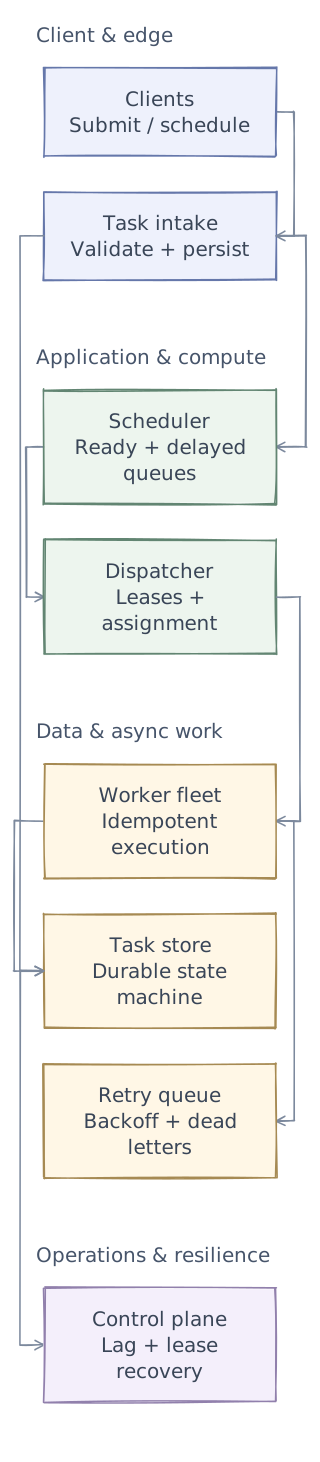
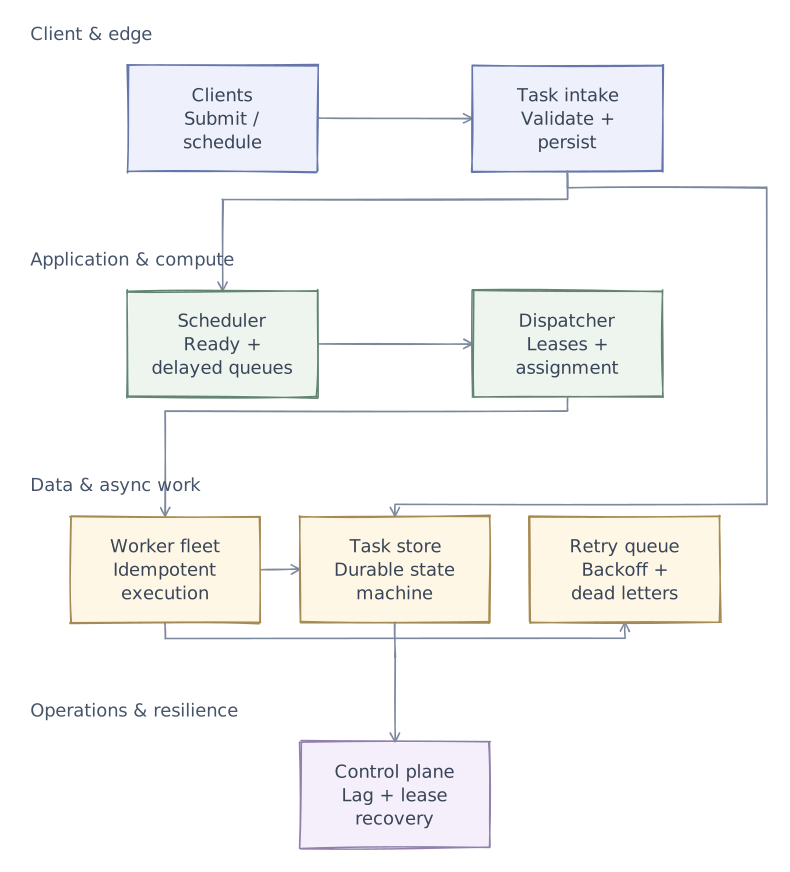
Phase 1 of 4 · Client & edge
Start with the entry points
First, define who uses the system and where requests enter. This is the boundary of the design, not yet a complete request path.
- Clients
- Submit a stable task ID, payload, execution time, and retry policy.
- Task intake
- Persist task state before acknowledging submission so accepted work survives process failure.
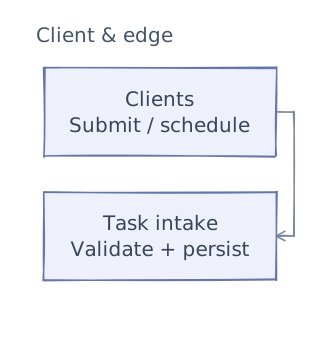
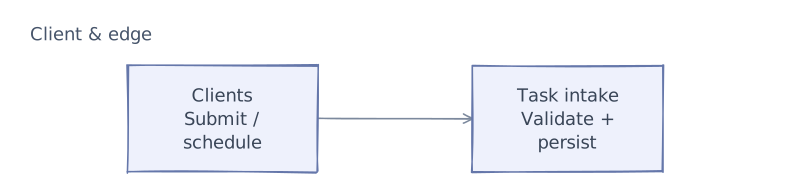
This first layer defines the system boundary. The next chapters add application logic and data dependencies. After examining the request paths and tradeoffs, we will add operational safeguards and bring the complete architecture together.
API & contracts
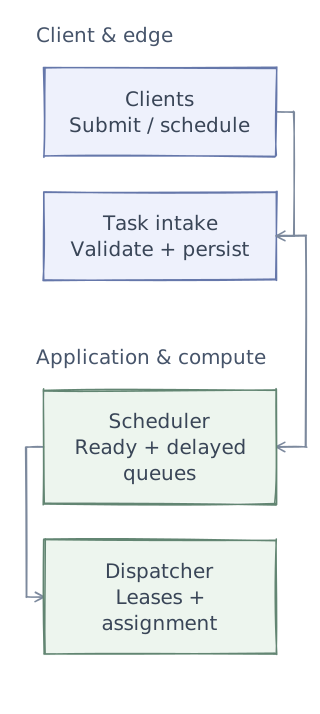
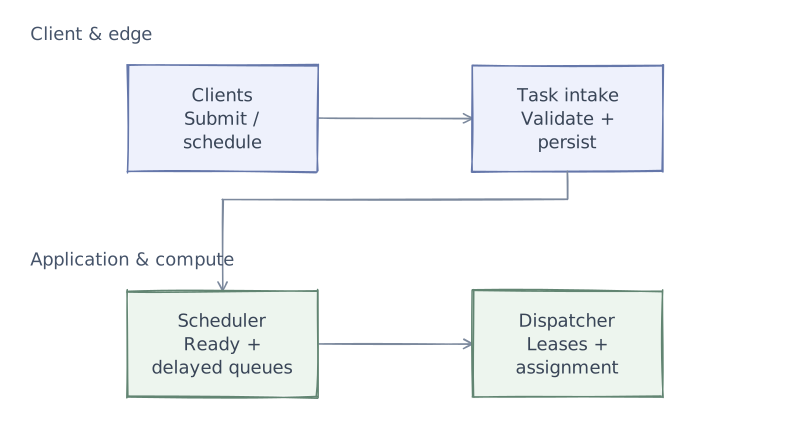
Phase 2 of 4 · Application & compute
Add the application logic
Keep the entry points and add the services that do the work. Give each service a clear responsibility before defining its contracts. Storage and background dependencies come next.
- Scheduler
- Move due tasks to ready queues while preserving priority and tenant fairness.
- Dispatcher
- Assign tasks to capable workers using expiring leases rather than assuming a worker is alive forever.
API Design
Submit Task
POST /api/v1/tasks
Content-Type: application/json

Request:
{
  "task_type": "send_email",
  "payload": {
    "to": "user@example.com",
    "subject": "Welcome!",
    "template_id": "onboarding-v2"
  },
  "priority": "high",                    // high | medium | low
  "scheduled_at": "2026-04-04T09:00:00Z", // null = immediate
  "max_retries": 3,
  "retry_backoff": "exponential",         // exponential | fixed | linear
  "retry_delay_seconds": 60,             // base delay between retries
  "timeout_seconds": 300,                // kill if running > 5 min
  "idempotency_key": "welcome-user-123", // prevent duplicate submission
  "queue": "email-queue",                // logical queue for routing
  "metadata": {
    "tenant_id": "acme-corp",
    "correlation_id": "req-abc"
  }
}

Response (202 Accepted):
{
  "task_id": "task-7f3a9b2c",
  "status": "SCHEDULED",
  "scheduled_at": "2026-04-04T09:00:00Z",
  "created_at": "2026-04-03T10:00:00Z"
}
Create Recurring (Cron) Task
POST /api/v1/cron-tasks
Content-Type: application/json

Request:
{
  "name": "daily-report-generation",
  "cron_expression": "0 9 * * 1-5",       // 9am weekdays
  "timezone": "America/New_York",
  "task_type": "generate_report",
  "payload": {
    "report_type": "daily_sales",
    "recipients": ["team@acme.com"]
  },
  "max_retries": 2,
  "timeout_seconds": 600,
  "overlap_policy": "skip",               // skip | queue | cancel_running
  "enabled": true
}

Response (201 Created):
{
  "cron_id": "cron-8a4b1c",
  "name": "daily-report-generation",
  "next_fire_time": "2026-04-04T09:00:00Z",
  "status": "ACTIVE"
}
Submit DAG Workflow
POST /api/v1/workflows
Content-Type: application/json

Request:
{
  "workflow_name": "user-onboarding",
  "tasks": [
    {
      "task_id": "create-account",
      "task_type": "create_account",
      "payload": {"user": "alice@example.com"},
      "dependencies": []
    },
    {
      "task_id": "send-welcome-email",
      "task_type": "send_email",
      "payload": {"template": "welcome"},
      "dependencies": ["create-account"]
    },
    {
      "task_id": "setup-defaults",
      "task_type": "setup_user_defaults",
      "payload": {},
      "dependencies": ["create-account"]
    },
    {
      "task_id": "notify-sales",
      "task_type": "notify_slack",
      "payload": {"channel": "#new-users"},
      "dependencies": ["send-welcome-email", "setup-defaults"]
    }
  ]
}

Response (202 Accepted):
{
  "workflow_id": "wf-c5d2e1",
  "status": "RUNNING",
  "tasks": {
    "create-account": "PENDING",
    "send-welcome-email": "BLOCKED",
    "setup-defaults": "BLOCKED",
    "notify-sales": "BLOCKED"
  }
}
Query Task Status
GET /api/v1/tasks/{task_id}

Response (200 OK):
{
  "task_id": "task-7f3a9b2c",
  "task_type": "send_email",
  "status": "SUCCEEDED",
  "priority": "high",
  "created_at": "2026-04-03T10:00:00Z",
  "scheduled_at": "2026-04-04T09:00:00Z",
  "started_at": "2026-04-04T09:00:00.045Z",
  "completed_at": "2026-04-04T09:00:01.230Z",
  "duration_ms": 1185,
  "attempts": 1,
  "worker_id": "worker-42",
  "result": {"message_id": "msg-xyz789"},
  "metadata": {"tenant_id": "acme-corp"}
}
Cancel Task
POST /api/v1/tasks/{task_id}/cancel

Response (200 OK):
{
  "task_id": "task-7f3a9b2c",
  "status": "CANCELLED",
  "cancelled_at": "2026-04-03T12:00:00Z"
}

Behavior:
  PENDING/SCHEDULED → immediately set to CANCELLED
  RUNNING → send cancellation signal to worker;
            worker should check cancellation flag periodically
SUCCEEDED/FAILED → 409 Conflict (already terminal)Data model
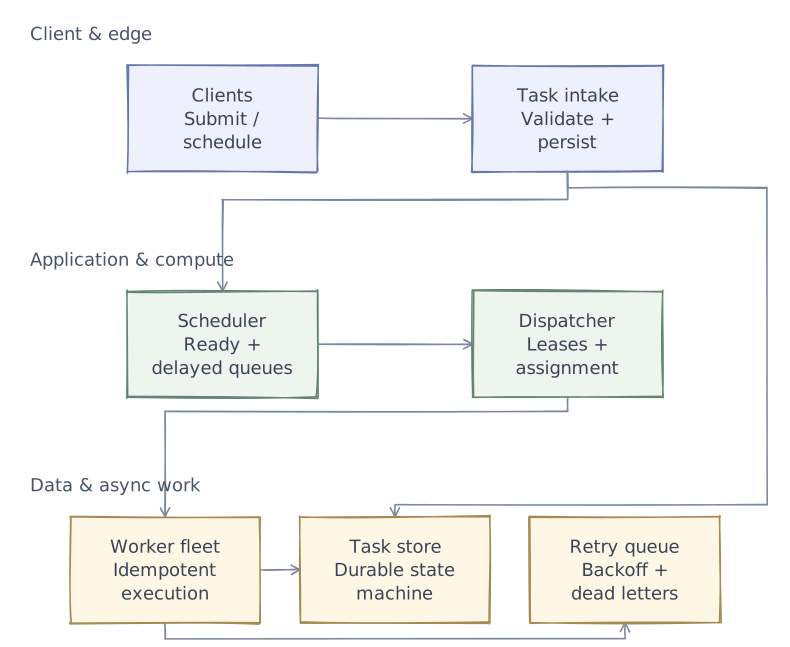
Phase 3 of 4 · Data & async work
Connect data and background work
The services now need their dependencies: durable state, fast lookups, or work that continues outside a request. Separate these responsibilities rather than treating every component as a database.
- Worker fleet
- Execute with bounded concurrency and make side effects safe under at-least-once delivery.
- Task store
- Use conditional state transitions and fencing to reject stale worker completions.
- Retry queue
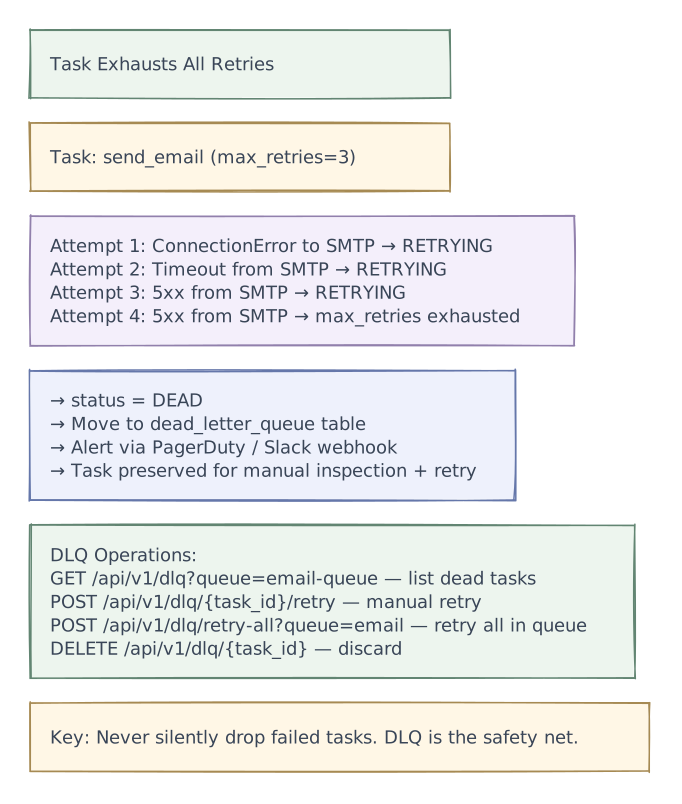
- Retry transient failures and cap attempts; dead-letter poison tasks for diagnosis.
Data Model
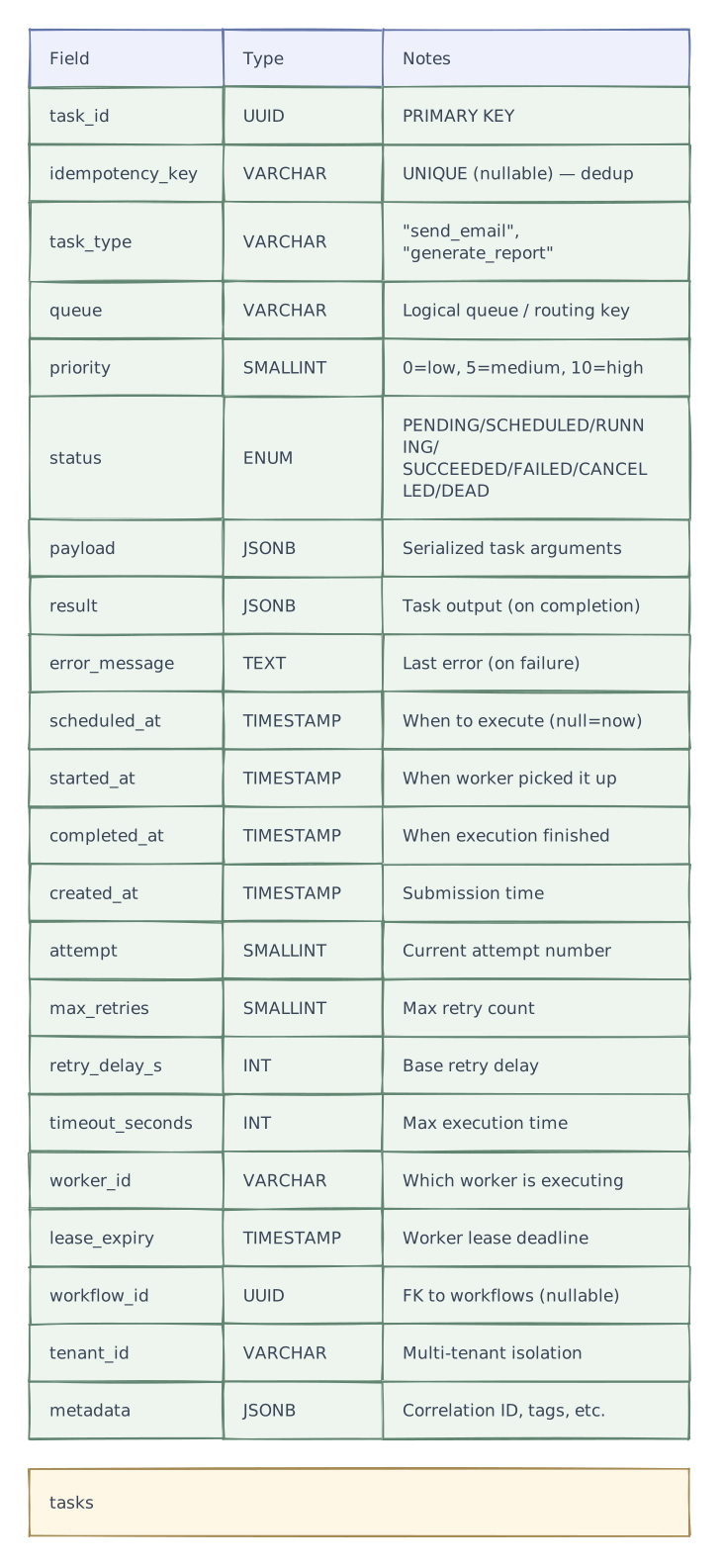
Task Record

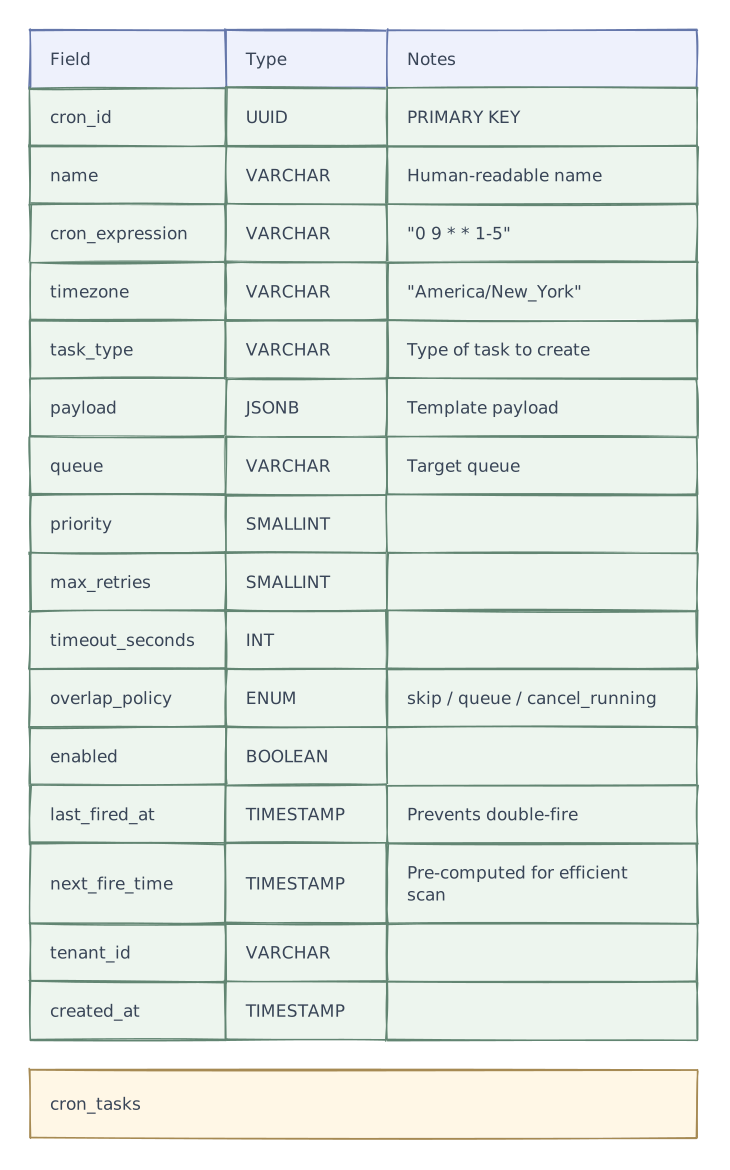
Cron Task Definition

Workflow (DAG) Record

Task State Machine

Core design decisions
Core Design Decisions
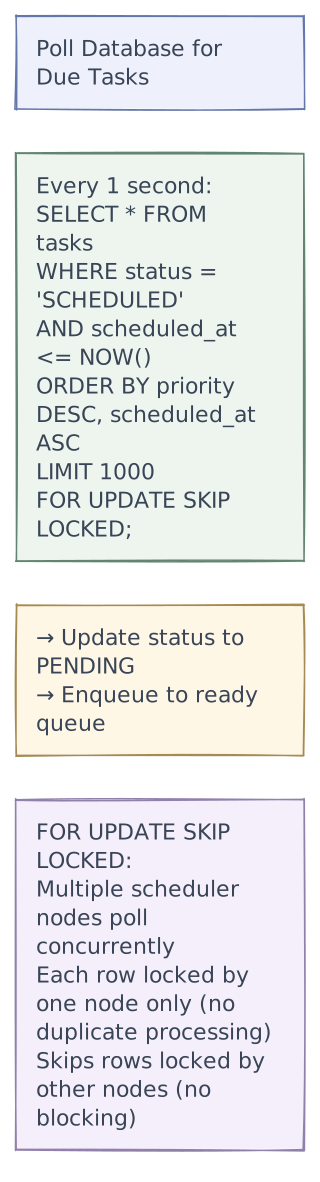
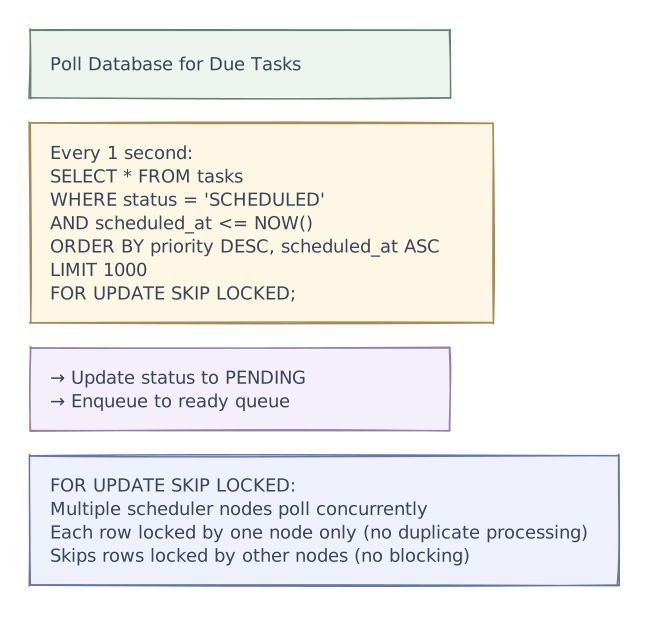
Decision 1: How to Implement the Delayed Task Queue
The hardest problem: efficiently waking up tasks at the right time among 500 million waiting tasks.
Option A: Database Polling
| Pros | Cons |
|---|---|
| Simple, no extra infrastructure | Polling creates constant DB load |
| Database is the single source of truth | Latency: up to 1 second delay (poll interval) |
| Transactional guarantees (ACID) | Doesn't scale well beyond ~10K tasks/sec |
| Works with any SQL database | Index scan on 500M rows is expensive |
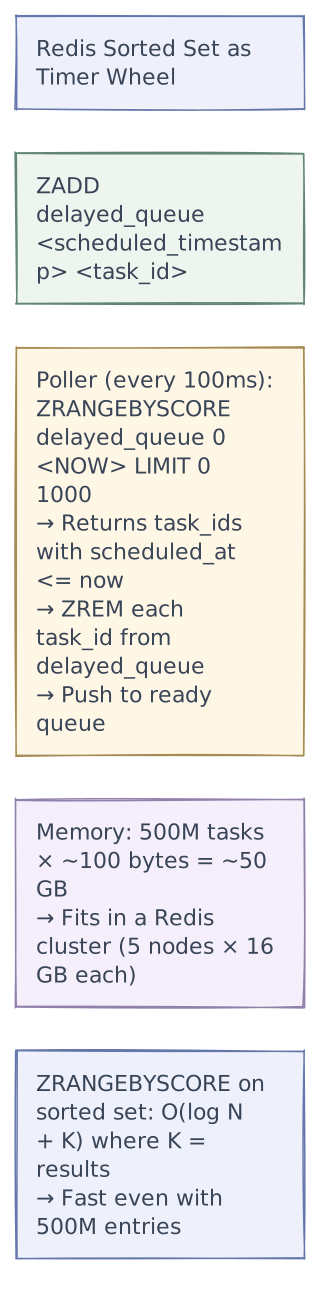
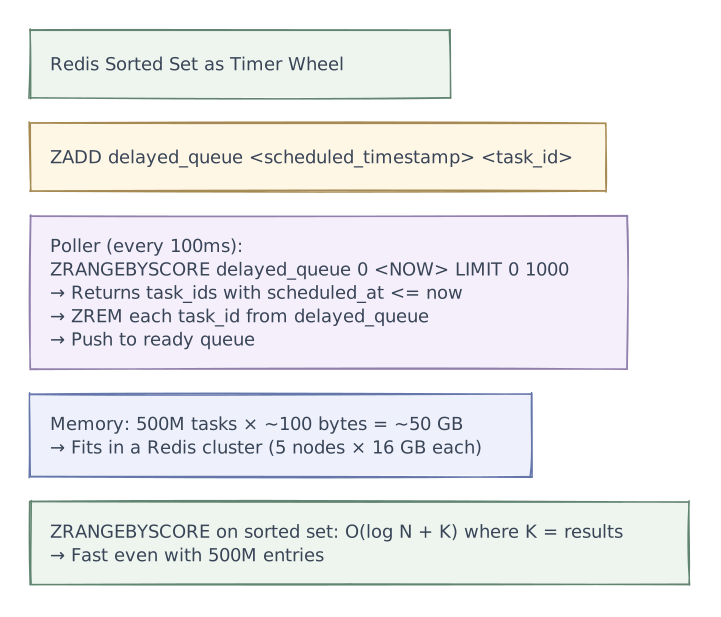
Option B: Redis Sorted Set (ZSET)
| Pros | Cons |
|---|---|
| O(log N + K) for due task lookup — very fast | Redis is in-memory — 50 GB dedicated to timers |
| Sub-second precision (100ms poll) | Need durability strategy (AOF + replication) |
| Handles 500M entries efficiently | Extra infrastructure to maintain |
| Atomic ZRANGEBYSCORE + ZREM | Must sync state between Redis and DB |
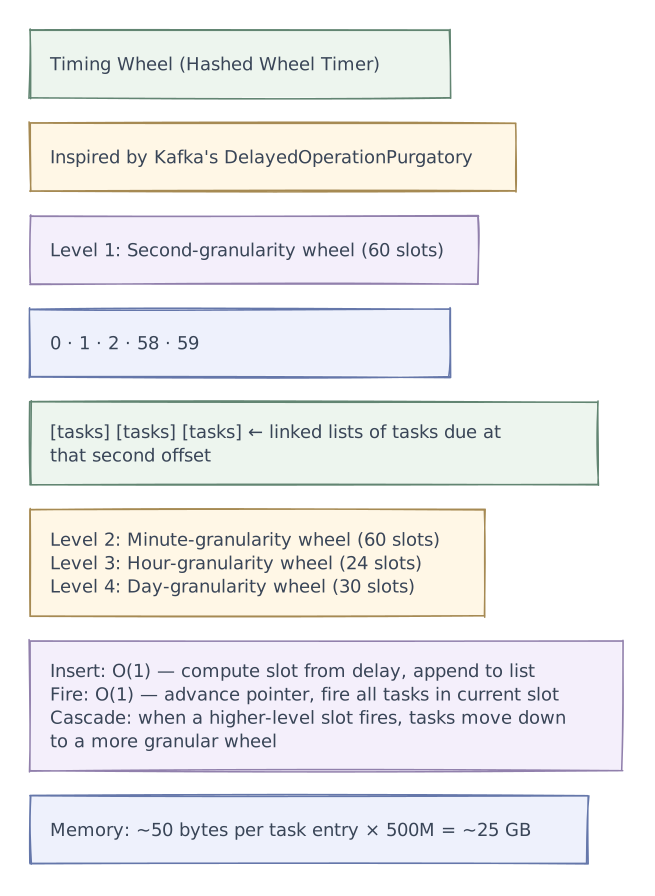
Option C: Hierarchical Timing Wheel

| Pros | Cons |
|---|---|
| O(1) insert and O(1) fire per tick | Complex implementation |
| Memory-efficient | State lost on crash (need WAL or checkpointing) |
| No database polling overhead | Single-machine capacity limit |
| Used by Kafka, Netty, Linux kernel | Cascading between levels adds complexity |
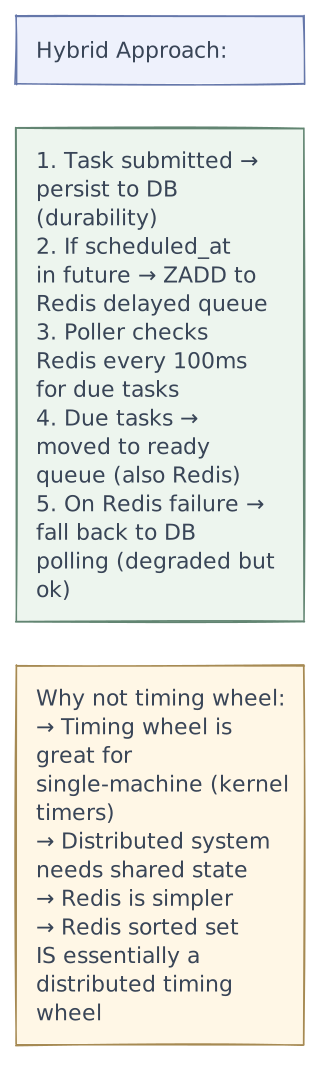
Recommendation: Redis Sorted Set + Database Backup
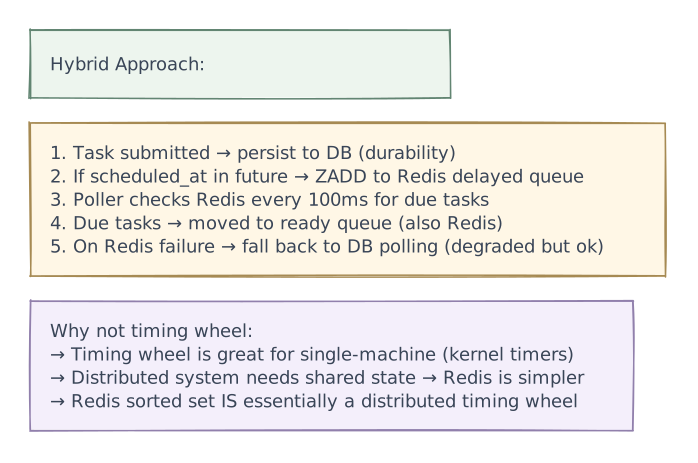
Decision 2: Task Dispatch — Push vs Pull

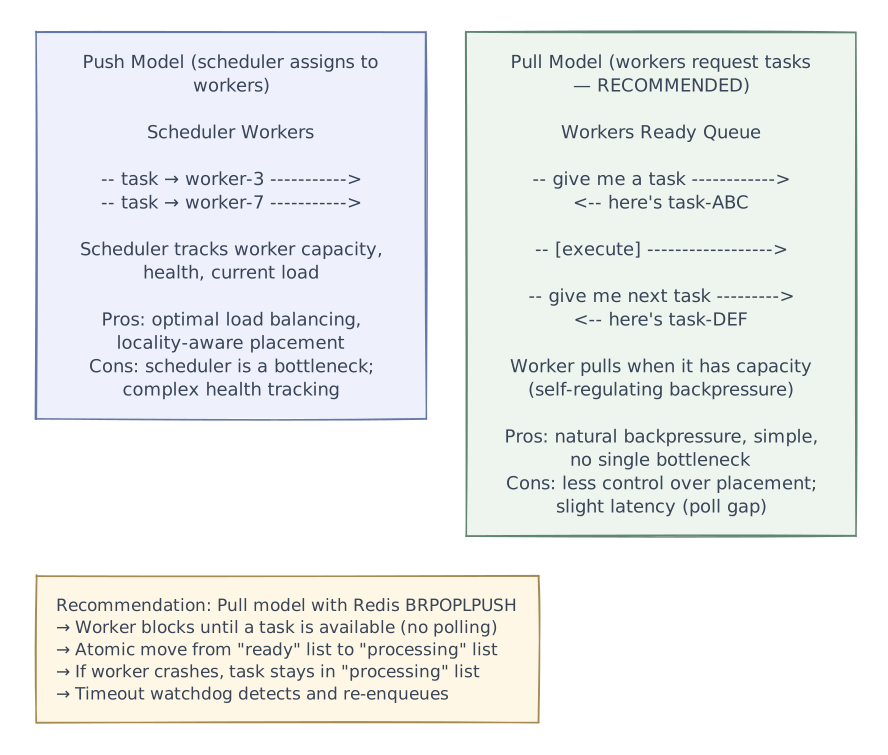
Decision 3: Exactly-Once Execution

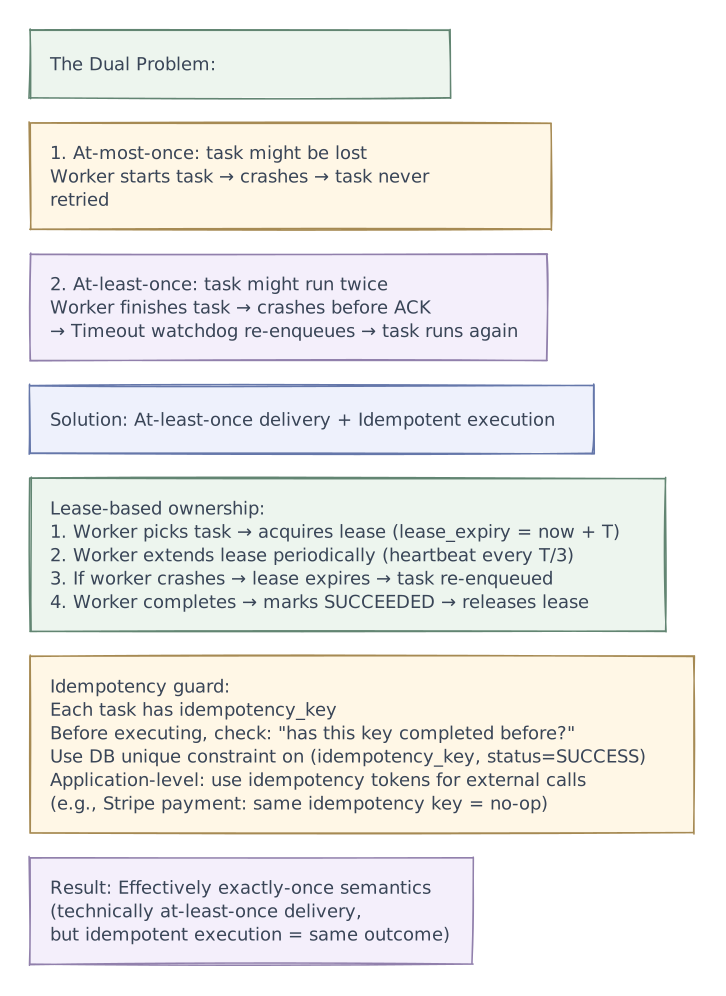
Request flows
Detailed Flow Diagrams
Immediate Task Execution Flow

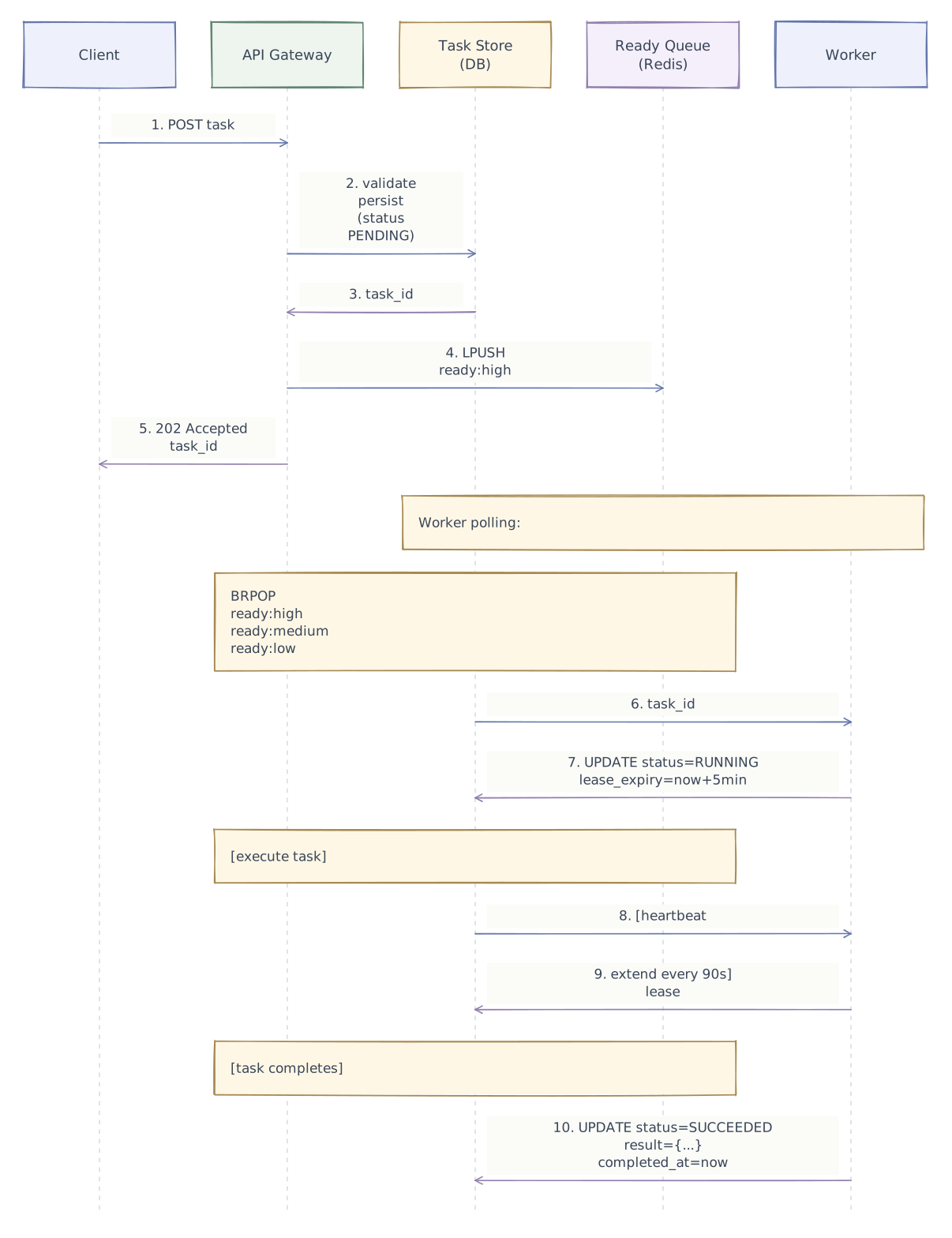
Delayed Task Flow

Cron Evaluation Flow

DAG Workflow Execution Flow

Performance & caching
Separate finding due tasks from executing them. Index or bucket scheduling records by due time so each tick does not scan the whole task table. Dispatch in bounded batches, and apply per-tenant or per-queue concurrency limits so a large overdue batch does not starve newly due work.
Advanced design
Priority Queue Implementation
Multi-Level Priority Queues

Multi-Tenant Fairness
Edge cases
Handling Edge Cases
Clock Skew in Distributed Schedulers
Problem: Multiple scheduler nodes with slightly different clocks
  Node A (clock +2s ahead): fires cron task at T-2s (too early)
  Node B (clock -1s behind): doesn't see task as due yet

Solution:
  1. NTP sync all nodes (< 100ms drift acceptable)
  2. Cron evaluator uses single source of time (DB's NOW() function)
  3. Delayed queue poller uses Redis TIME command (server-side clock)
  4. Always compare against the same clock, not local system time
Worker Dies Mid-Execution
Problem: Worker starts processing "charge_credit_card"
         → charges the card → crashes before ACK

Scenario: Task re-enqueued → new worker charges card AGAIN

Solution: Lease + Idempotency (defense in depth)

  Layer 1: Lease-based timeout
    Worker must heartbeat every 90s (lease = 5 min)
    No heartbeat in 5 min → task re-enqueued
    → Ensures no task is stuck forever

  Layer 2: Idempotency at application level
    charge_credit_card(idempotency_key="order-123-charge")
    → Stripe sees same idempotency key → returns original result
    → No double charge even if task runs twice

  Layer 3: Checkpoint for long tasks
    Long-running tasks (e.g., 30 min data pipeline):
    → Save progress to checkpoint store every N records
    → On retry, resume from last checkpoint
    → Avoids reprocessing entire dataset
Queue Buildup / Backpressure
Problem: Producers submit 100K tasks/s, workers process 50K/s
         → Queue grows unboundedly → memory/disk exhaustion

Solution: Multi-layer backpressure

  Layer 1: Per-tenant rate limiting at API gateway
    → Max 1,000 submissions/sec per tenant
    → Return 429 Too Many Requests

  Layer 2: Queue depth alerting
    → Alert when queue depth > 100K
    → Auto-scale worker fleet (k8s HPA on queue depth metric)

  Layer 3: Queue depth limit
    → Hard cap: reject new tasks when queue > 10M
    → Return 503 Service Unavailable with Retry-After header

  Layer 4: Priority shedding
    → When overloaded, drop low-priority tasks first
    → Move to overflow queue (processed when load decreases)
Cron Double-Fire Prevention
Problem: Two cron evaluator nodes both see "next_fire_time <= now"
         → Both create task instances → duplicate execution

Solution: Optimistic locking on cron record

  Evaluator A:
    UPDATE cron_tasks
    SET last_fired_at = now(),
        next_fire_time = compute_next(cron_expr)
    WHERE cron_id = 'cron-8a4b1c'
      AND next_fire_time = '2026-04-04T09:00:00Z'  ← CAS guard

  → If another evaluator already updated next_fire_time,
    this UPDATE affects 0 rows → skip (no duplicate)
  → Only one evaluator wins the CAS → exactly one task created

  Combined with: FOR UPDATE SKIP LOCKED
    → Multiple evaluators process different cron jobs in parallel
→ Same cron job processed by exactly one evaluatorTradeoffs
Tradeoffs & Design Decisions Summary
| Decision | Option A | Option B | Chosen | Why |
|---|---|---|---|---|
| Delayed queue | DB polling | Redis sorted set | Redis ZSET + DB backup | O(log N) lookups, sub-second precision, DB as durable fallback |
| Dispatch model | Push (scheduler assigns) | Pull (worker requests) | Pull | Natural backpressure, self-regulating, no scheduler bottleneck |
| Exactly-once | Distributed transactions | At-least-once + idempotency | At-least-once + idempotency | Distributed txns too slow/complex; idempotency achieves same result |
| Priority | Single sorted queue | Multi-level separate queues | Multi-level with weighted fairness | Separate queues + BRPOP is simple; weighted prevents starvation |
| Task store | SQL (PostgreSQL) | NoSQL (Cassandra) | Sharded PostgreSQL | ACID for state transitions, FOR UPDATE SKIP LOCKED for safe polling |
| Cron evaluation | Distributed lock (one evaluator) | Parallel + optimistic CAS | Parallel + CAS | No single bottleneck; CAS prevents double-fire; horizontal scaling |
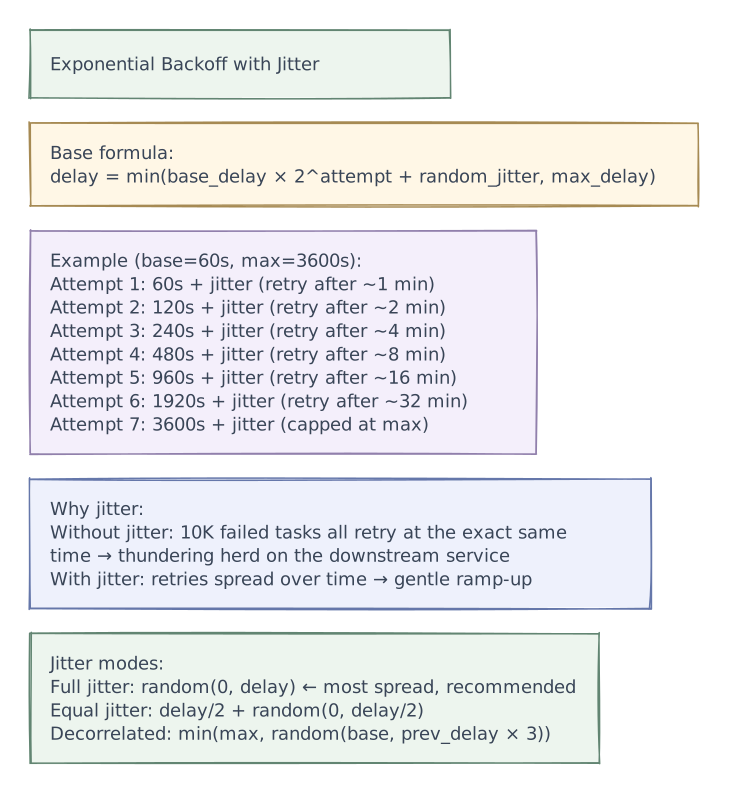
| Retry backoff | Fixed delay | Exponential + jitter | Exponential + full jitter | Prevents thundering herd on retries; jitter spreads load |
| Worker health | Heartbeat to coordinator | Lease-based timeout | Lease-based | Simpler; no coordinator needed; worker extends own lease; timeout = dead |
| Multi-tenant | Shared queue, FIFO | Per-tenant queues + round-robin | Per-tenant + weighted round-robin | Prevents noisy-neighbor starvation; weighted fairness by tier |
| Result storage | In task table (same row) | Separate result store | Same row (task table) | Simplicity; result is small (<1 KB); no extra infrastructure |
Reliability & fault tolerance
Phase 4 of 4 · Operations & resilience
Add operational safeguards
With the request paths and tradeoffs established, add the controls that help detect trouble and keep the system operating. The final diagram retains every layer introduced so far.
- Control plane
- Reclaim expired leases and monitor scheduled lateness, queue depth, and failure rates.
Retry & Error Handling
Retry Strategy

Dead Letter Queue

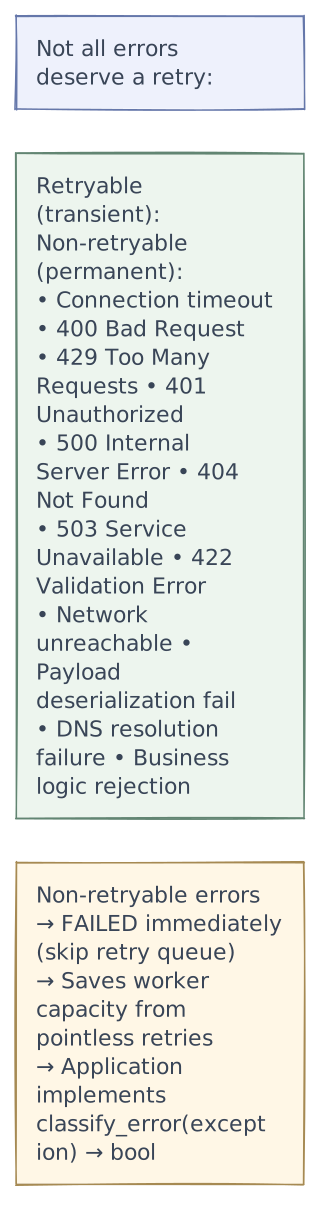
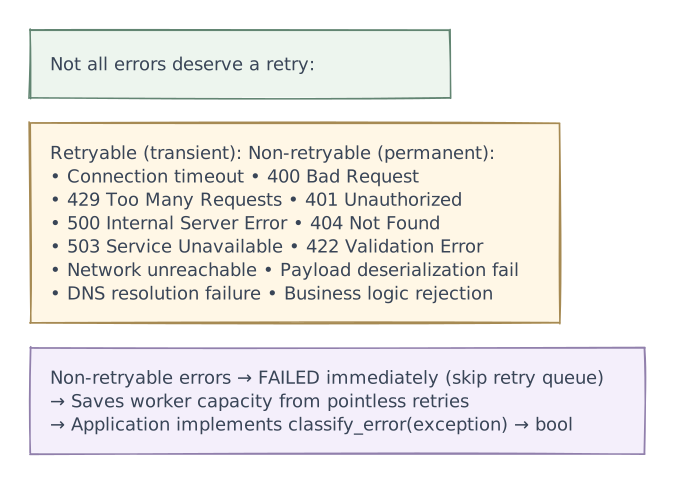
Classifying Errors
Reliability & Fault Tolerance
Single Points of Failure & Mitigations

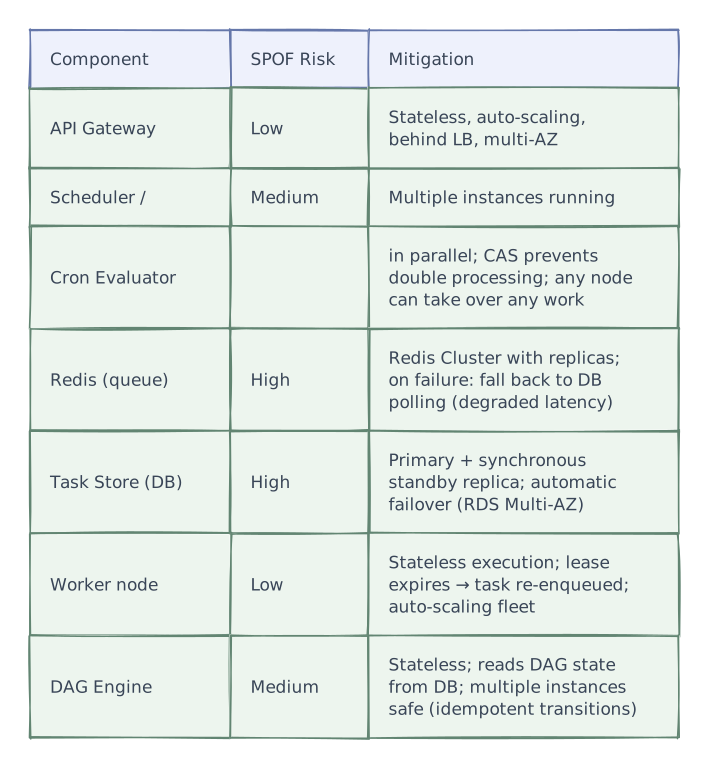
Failure Scenarios
Scenario 1: Worker crashes mid-task
  → Lease expires (5 min) → task re-enqueued → new worker picks up
  → Idempotency key prevents duplicate side effects
  → Worst case: 5 min delay (tunable via lease duration)

Scenario 2: Redis queue node fails
  → Redis Cluster failover to replica (~5-15s)
  → During failover: workers retry BRPOP → brief delay
  → If full Redis cluster down: schedulers fall back to DB polling
    SELECT ... WHERE status='PENDING' FOR UPDATE SKIP LOCKED
  → Tasks not lost (DB is the source of truth)

Scenario 3: Scheduler node fails
  → Other scheduler nodes pick up its cron evaluations
  → FOR UPDATE SKIP LOCKED ensures no conflicts
  → Zero impact on already-queued tasks

Scenario 4: Database primary fails
  → Automatic failover to standby (30-60s typically)
  → During failover: task submissions return 503, retry with backoff
  → Workers continue executing already-dispatched tasks
  → Tasks in Redis queue continue processing

Scenario 5: Network partition (split brain)
  → Redis min-replicas-to-write prevents split-brain writes
  → DB standby promotion only if primary unreachable by quorum
  → Workers on isolated side: leases expire, tasks re-enqueued
Data Recovery
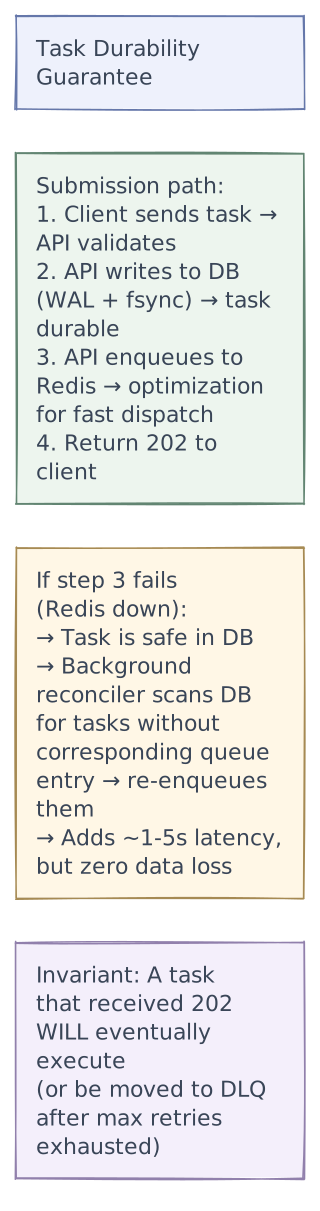
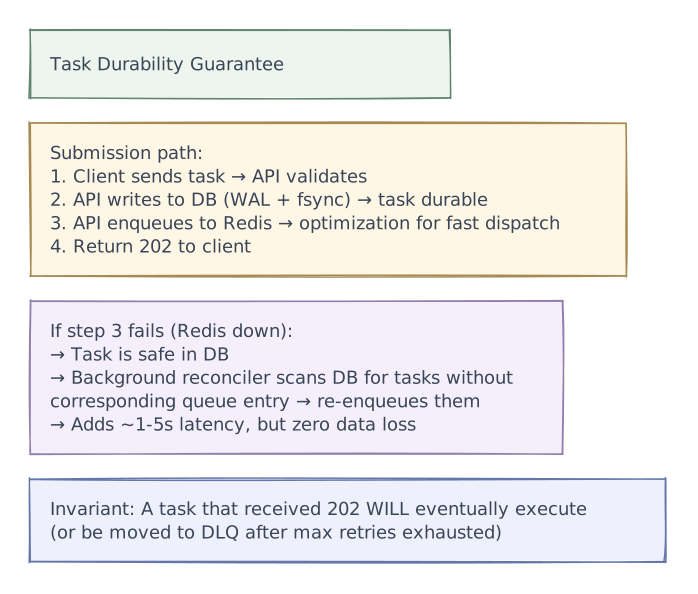
Production architecture
High-Level Architecture

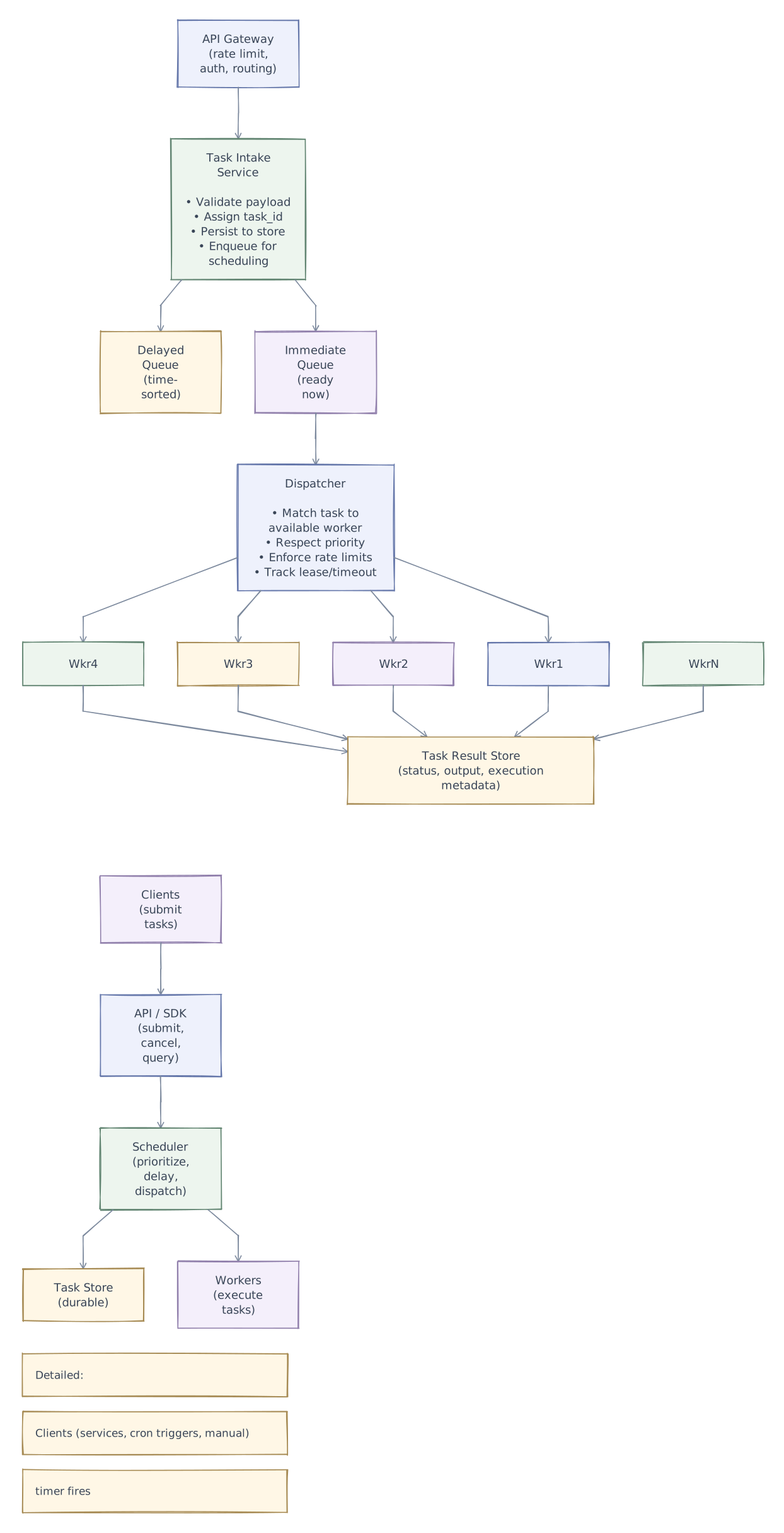
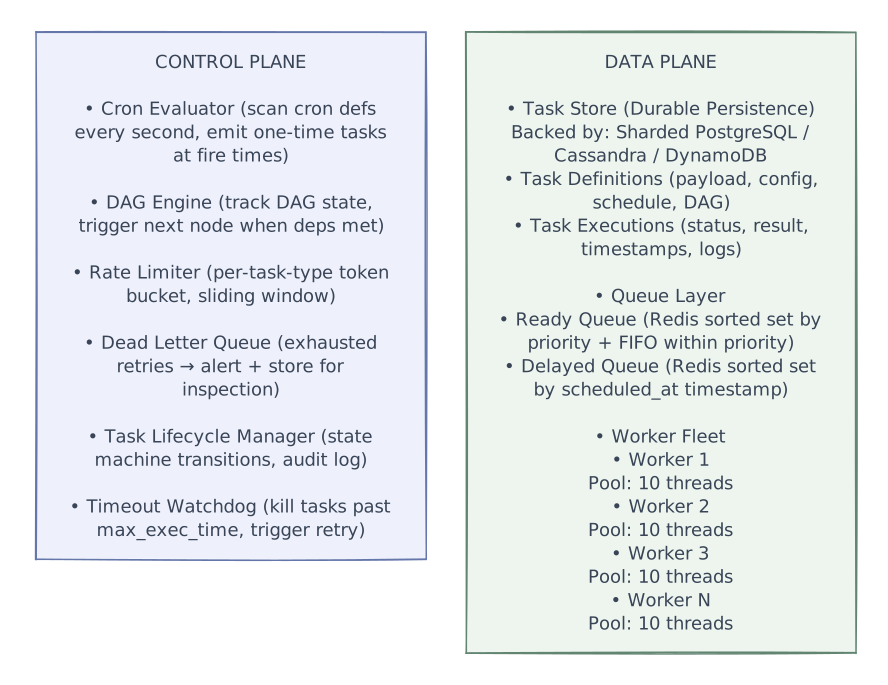
Component Breakdown

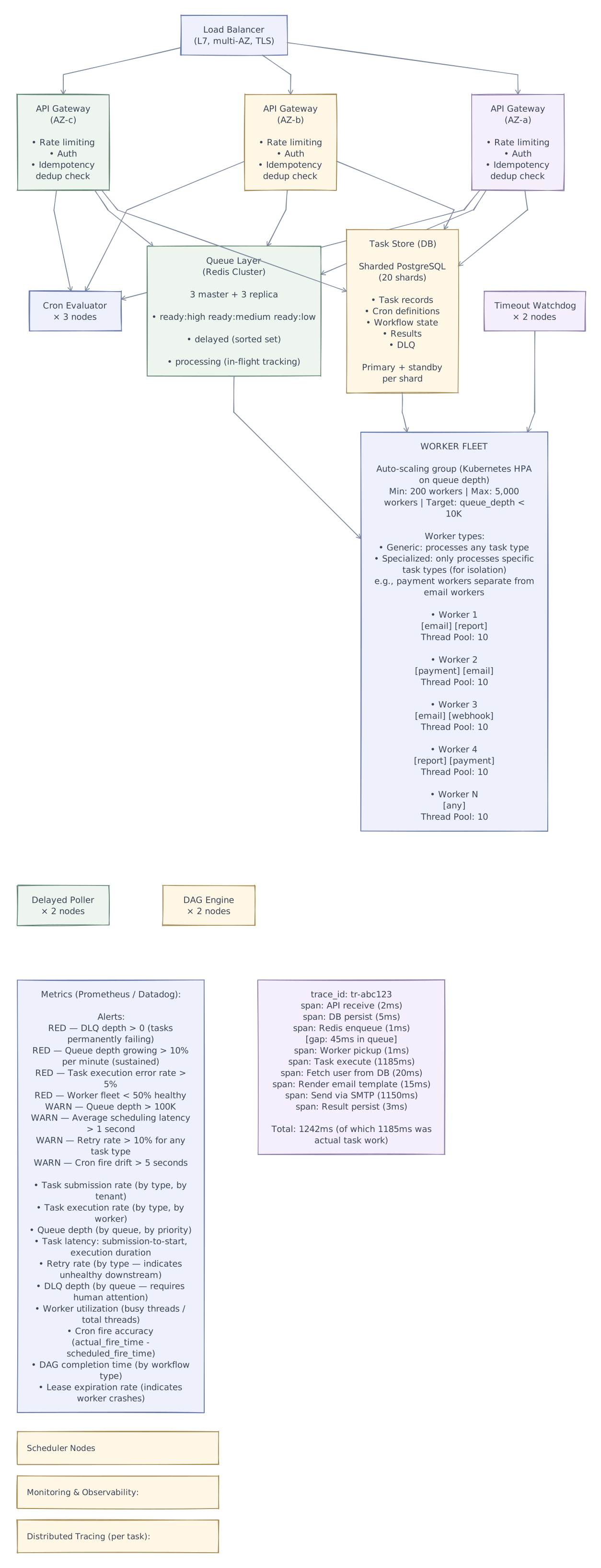
Full System Architecture (Production-Grade)

Further exploration
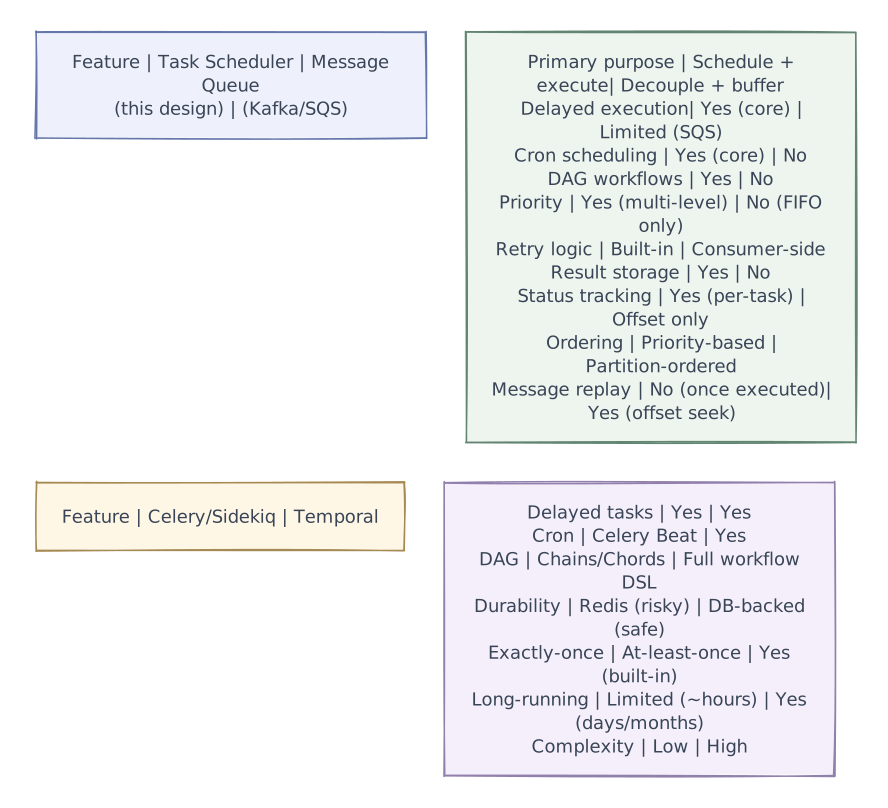
Comparison: Task Scheduler vs Related Systems

Interview playbook
Interview Tips
Start with the task lifecycle state machine — Draw the states (SUBMITTED → SCHEDULED → PENDING → RUNNING → SUCCEEDED/FAILED/RETRYING → DEAD). This immediately shows you understand the full system.
Delayed queue is the core challenge — Don't handwave "just use a queue." Explain why 500M delayed tasks need a sorted data structure (Redis ZSET), how the poller works (ZRANGEBYSCORE every 100ms), and why DB polling doesn't scale.
Pull vs Push is a key tradeoff — Explain why pull is better: workers self-regulate via backpressure, no centralized scheduler bottleneck, natural load balancing. Mention BRPOP for blocking pull (no polling waste).
Exactly-once is a lie (but achievable in practice) — Explain the reality: at-least-once delivery + idempotent execution = effectively exactly-once. The lease + heartbeat + idempotency key pattern is critical to understand.
Retry strategy with jitter — Don't just say "retry 3 times." Explain exponential backoff (60s → 120s → 240s), why jitter prevents thundering herd, and how error classification (retryable vs permanent) saves worker capacity.
Cron double-fire prevention — Multiple scheduler nodes evaluating crons = duplicate tasks. Solution: optimistic CAS on next_fire_time. Show the SQL:
UPDATE ... WHERE next_fire_time = :expected. Only one node wins.DAG execution engine — Draw the dependency graph. Explain how the engine evaluates after each task completion: "are all dependencies of X met? If yes, enqueue X." Show parallel execution of independent tasks.
Multi-tenant fairness — One tenant's 1M-task burst shouldn't starve others. Explain per-tenant queues with weighted round-robin dispatch. Connect to real-world: SaaS platform serving multiple customers.
Worker auto-scaling — Scale workers based on queue depth, not CPU. Kubernetes HPA with custom metric:
queue_depth / desired_processing_rate = target_workers. Show the feedback loop.End with observability — Task schedulers are notoriously hard to debug. Mention distributed tracing per task (submission → queue wait → execution), DLQ alerting (tasks that permanently fail need human attention), and cron fire accuracy monitoring.