Requirements & scope
Problem Statement & Requirements
Design a multi-tenant Software-as-a-Service platform architecture that serves thousands of organizations (tenants) on shared infrastructure while providing data isolation, per-tenant customization, fair resource allocation, and tiered pricing — the foundational pattern behind Slack, Salesforce, Shopify, Datadog, Atlassian, and virtually every modern B2B SaaS product.
Functional Requirements
- Tenant onboarding — self-service signup with organization creation, admin user, initial configuration
- Tenant isolation — each tenant's data is logically (or physically) separated; no cross-tenant data leakage
- Tenant-level configuration — custom branding (logo, colors, domain), feature flags, workflow configuration per tenant
- User management — tenant admins manage their own users, roles, and permissions (RBAC within tenant)
- Tiered plans — Free, Pro, Enterprise tiers with different feature sets, limits, and pricing
- Usage metering & billing — track per-tenant usage (API calls, storage, seats) and bill accordingly
- Tenant-aware API — all API endpoints are tenant-scoped; tenant resolved from auth token, subdomain, or header
- Admin console — platform-level admin to manage tenants, view usage, handle support escalations
- Data export / portability — tenants can export their data (GDPR, vendor lock-in concerns)
- Custom domains — Enterprise tenants use their own domain (acme.myproduct.com or app.acme.com)
Non-Functional Requirements
- Noisy neighbor prevention — one tenant's traffic spike must not degrade others
- Scalability — support 100K+ tenants, from 1-user free tier to 100K-user enterprise
- Security — tenant data isolation is paramount; penetration of one tenant must not expose another
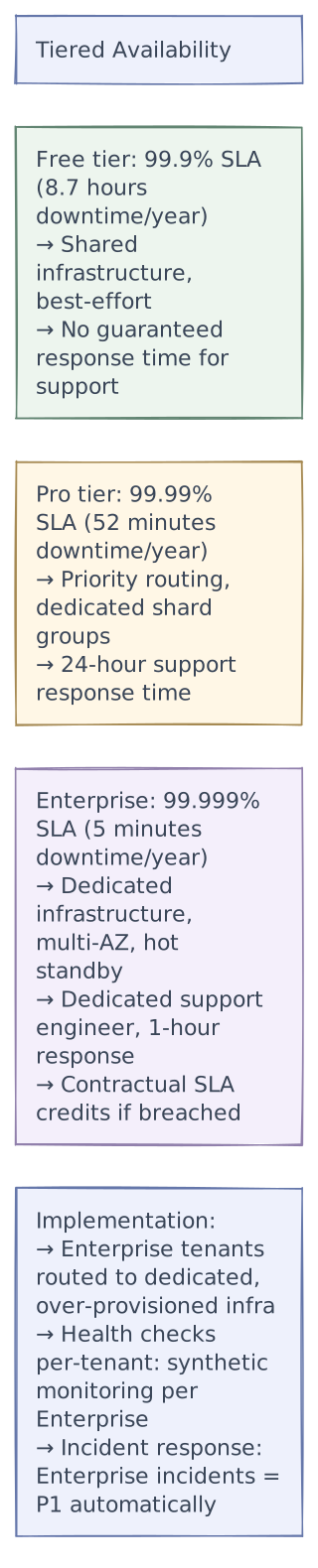
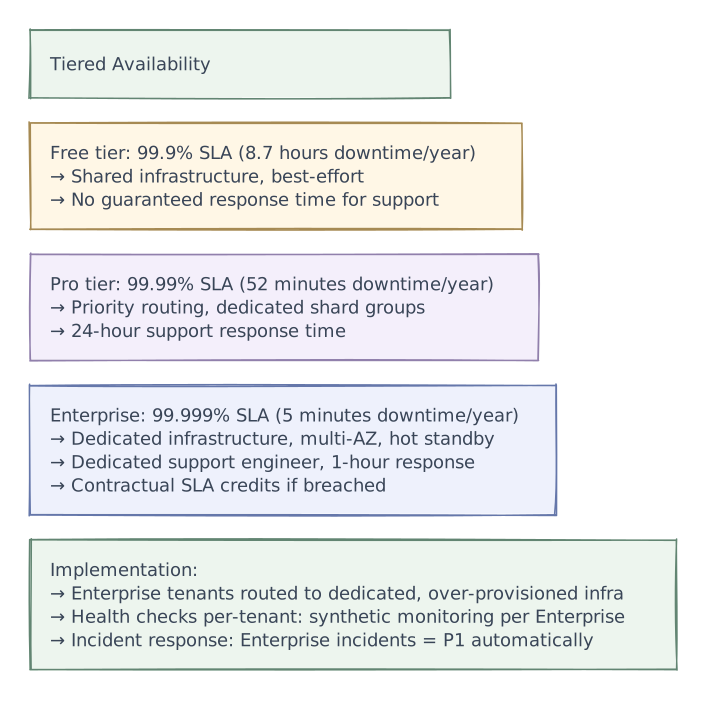
- Availability — 99.99% for all tenants; 99.999% SLA for Enterprise tier
- Cost efficiency — shared infrastructure for small tenants; dedicated resources for large ones
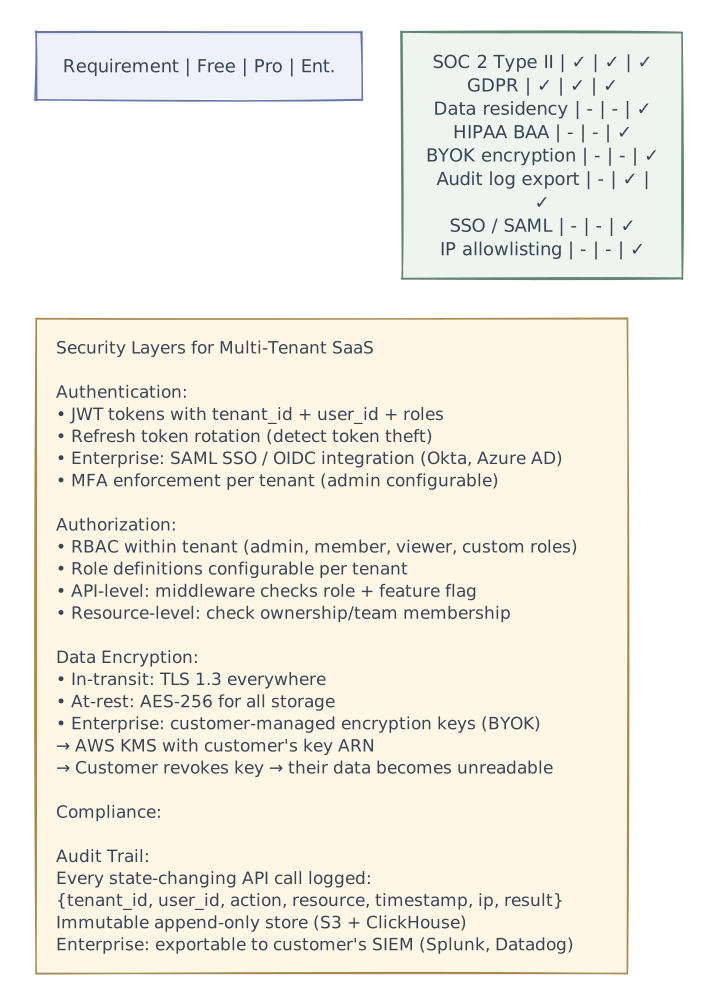
- Compliance — SOC 2, GDPR, HIPAA (for healthcare SaaS); data residency per region
- Zero-downtime deployments — rolling updates without interrupting any tenant
Out of Scope
- Specific SaaS product features (CRM, project management, etc.)
- Marketplace / app ecosystem (Shopify App Store model)
- Full identity provider implementation (use Auth0/Okta integration)
Scale estimations
Scale Estimations
Traffic
| Metric | Value |
|---|---|
| Total tenants | 100K |
| Free tier tenants (1-5 users) | 80K (80%) |
| Pro tier tenants (5-500 users) | 18K (18%) |
| Enterprise tier tenants (500-100K users) | 2K (2%) |
| Total end users | 50M |
| Daily active users | 10M |
| API requests / second (total) | 200K RPS |
| API requests / second (single large tenant peak) | 20K RPS |
| Webhook deliveries / day | 100M |
Storage
| Metric | Value |
|---|---|
| Avg data per Free tenant | 100 MB |
| Avg data per Pro tenant | 10 GB |
| Avg data per Enterprise tenant | 500 GB |
| Total: Free (80K × 100 MB) | ~8 TB |
| Total: Pro (18K × 10 GB) | ~180 TB |
| Total: Enterprise (2K × 500 GB) | ~1 PB |
| Grand total | ~1.2 PB |
| File/blob storage (attachments) | ~3 PB |
| Audit logs (all tenants, 1 year) | ~50 TB |
Compute
| Metric | Value |
|---|---|
| API servers | 200-500 (auto-scaling) |
| Background workers | 100-200 |
| Database shards | 50-100 (shared pool) |
| Dedicated DB instances (Enterprise) | 50-100 |
| Redis cache nodes | 30-50 |
| Tenant isolation overhead | ~10-15% of total compute (auth, routing, metering) |
Layered architecture
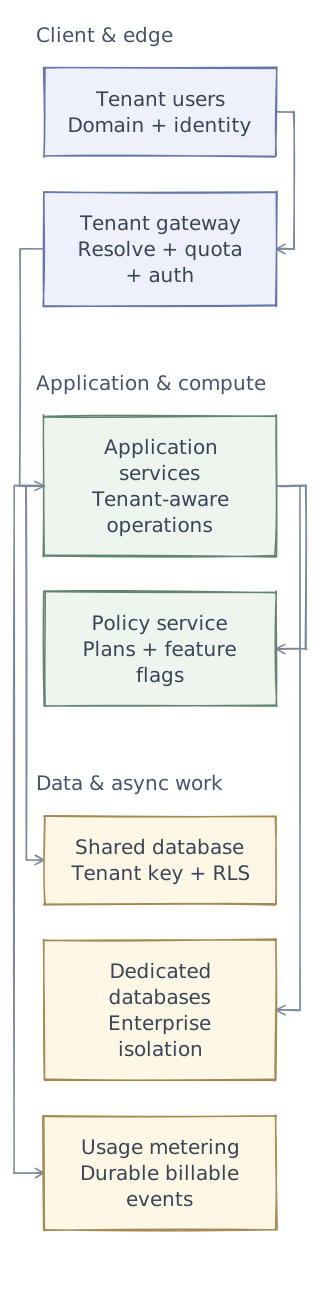
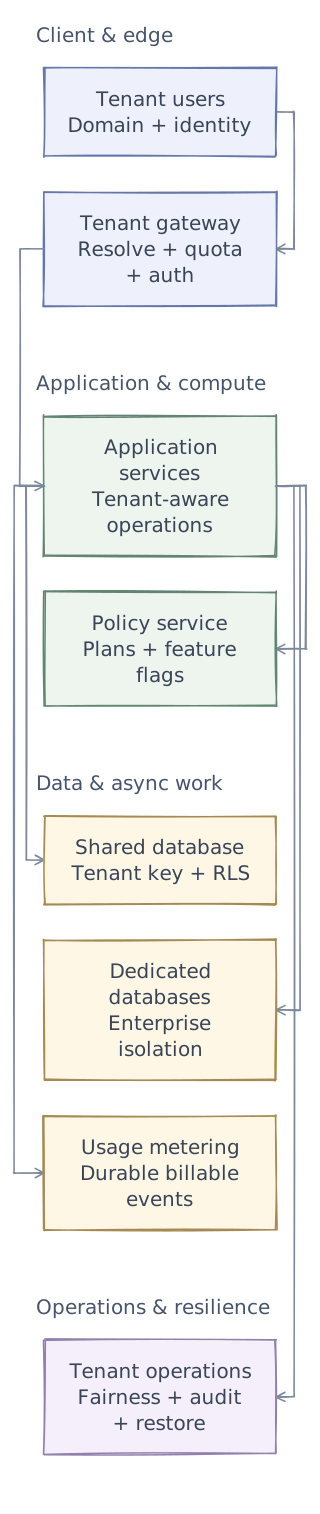
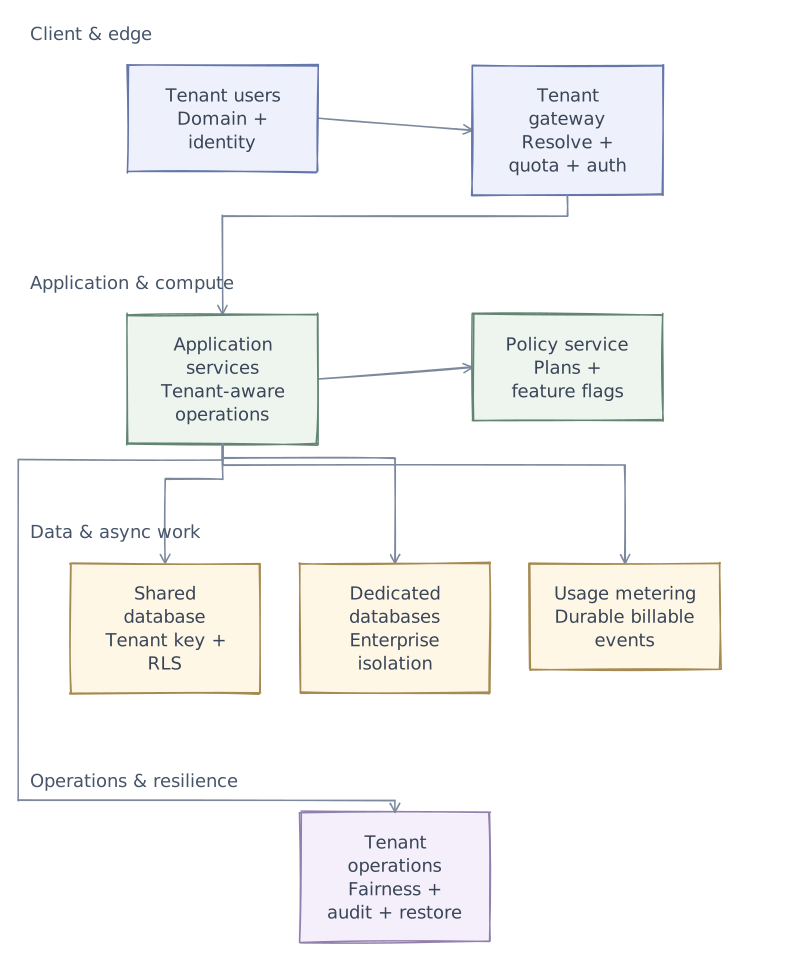
Phase 1 of 4 · Client & edge
Start with the entry points
First, define who uses the system and where requests enter. This is the boundary of the design, not yet a complete request path.
- Tenant users
- Establish tenant identity from authenticated context, not an untrusted request parameter.
- Tenant gateway
- Resolve the tenant and enforce tenant-specific admission, plan limits, and authorization.
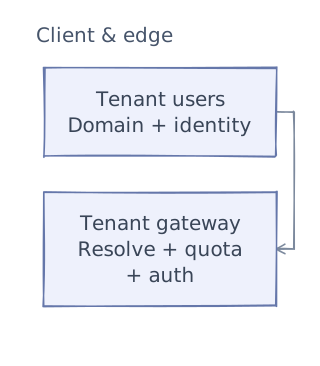
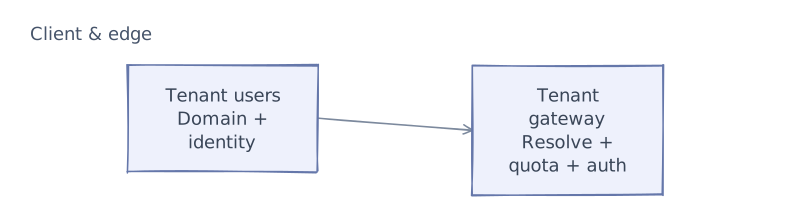
This first layer defines the system boundary. The next chapters add application logic and data dependencies. After examining the request paths and tradeoffs, we will add operational safeguards and bring the complete architecture together.
API & contracts
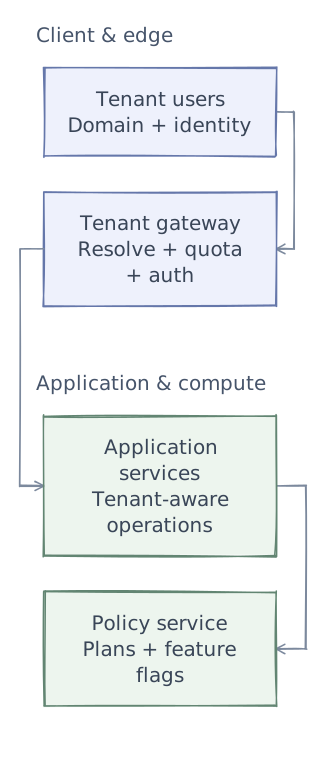
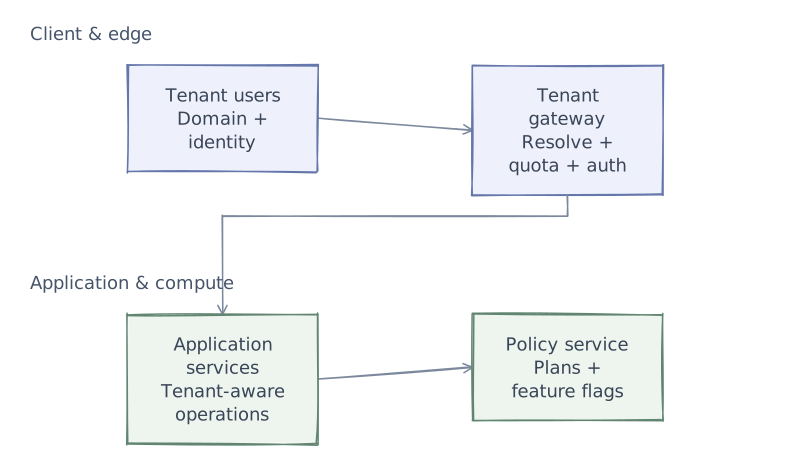
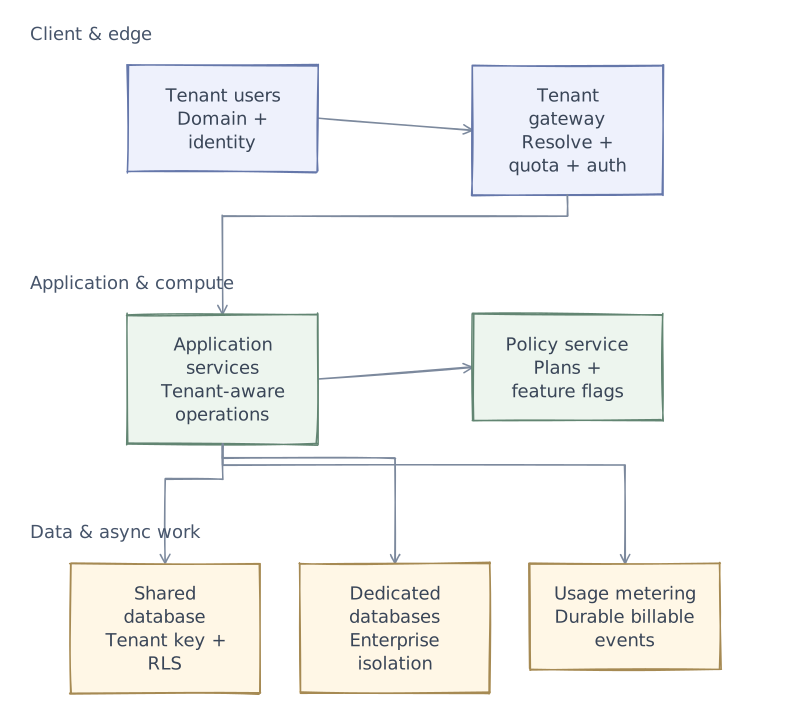
Phase 2 of 4 · Application & compute
Add the application logic
Keep the entry points and add the services that do the work. Give each service a clear responsibility before defining its contracts. Storage and background dependencies come next.
- Application services
- Propagate tenant context through every synchronous call and asynchronous job.
- Policy service
- Centralize entitlements and use cached policy snapshots with defined expiry.
API Design
Tenant Onboarding
POST /api/v1/tenants
Content-Type: application/json

Request:
{
  "organization_name": "Acme Corp",
  "subdomain": "acme",                  // acme.myproduct.com
  "admin_email": "alice@acme.com",
  "plan": "pro",                         // free | pro | enterprise
  "billing": {
    "payment_method_id": "pm_card_4242"
  }
}

Response (201 Created):
{
  "tenant_id": "tenant-abc123",
  "organization_name": "Acme Corp",
  "subdomain": "acme",
  "url": "https://acme.myproduct.com",
  "plan": "pro",
  "status": "provisioning",             // provisioning → active
  "admin_user": {
    "user_id": "user-alice",
    "email": "alice@acme.com",
    "role": "admin",
    "invite_link": "https://acme.myproduct.com/invite/..."
  },
  "provisioning_eta_seconds": 30,
  "created_at": "2026-04-03T10:00:00Z"
}

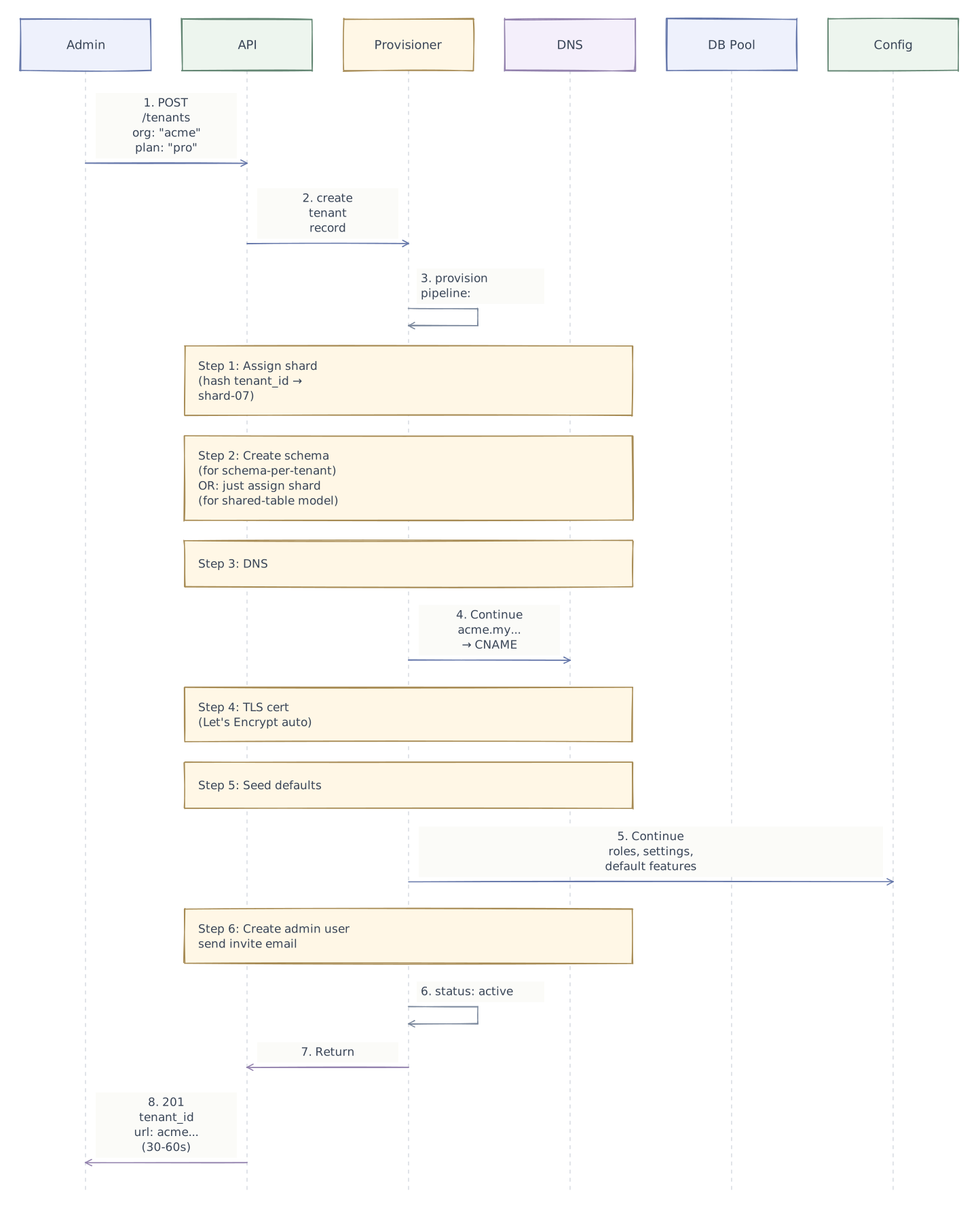
// Behind the scenes (provisioning pipeline):
// 1. Create tenant record in control plane DB
// 2. Provision database schema / shard allocation
// 3. Seed default configuration (roles, settings)
// 4. Create admin user + send invite email
// 5. Configure subdomain DNS
// 6. Issue TLS certificate (if custom domain)
// 7. Status → "active"
Tenant-Scoped API Call
GET /api/v1/projects
Authorization: Bearer <JWT with tenant_id=acme>
# OR
Host: acme.myproduct.com

Response (200 OK):
{
  "projects": [
    {
      "project_id": "proj-001",
      "name": "Q2 Launch",
      "members": 12,
      "created_at": "2026-03-15T10:00:00Z"
    },
    ...
  ]
}

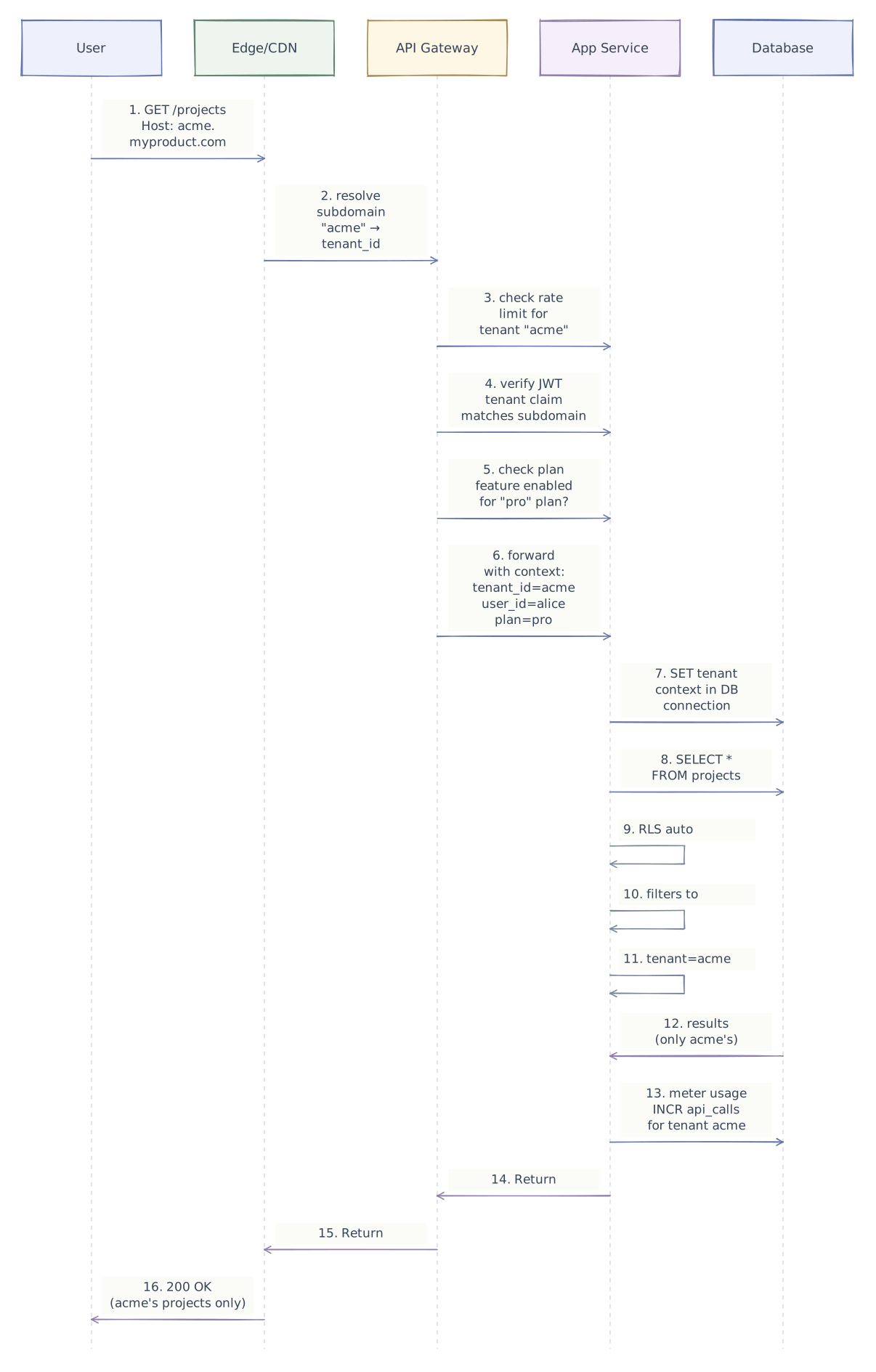
// This ONLY returns projects belonging to tenant "acme"
// Even if database has 100K tenants' projects,
// query is: SELECT * FROM projects WHERE tenant_id = 'acme'
// RLS policy enforces this even if code has a bug
Usage & Billing
GET /api/v1/tenants/{tenant_id}/usage?period=2026-04

Response (200 OK):
{
  "tenant_id": "tenant-abc123",
  "period": "2026-04",
  "plan": "pro",
  "usage": {
    "seats": {"used": 47, "limit": 100, "overage": 0},
    "api_calls": {"used": 2340000, "limit": 5000000},
    "storage_gb": {"used": 8.7, "limit": 50},
    "projects": {"used": 23, "limit": 50}
  },
  "billing": {
    "base_charge": 9900,              // $99/month base
    "seat_charge": 4700,              // 47 seats × $1/seat
    "overage_charges": 0,
    "total": 14600,                   // $146.00
    "currency": "usd"
  }
}
Platform Admin
GET /api/v1/admin/tenants?plan=enterprise&sort=storage_desc&limit=20
Authorization: Bearer <platform_admin_token>

Response (200 OK):
{
  "tenants": [
    {
      "tenant_id": "tenant-bigcorp",
      "name": "BigCorp Inc.",
      "plan": "enterprise",
      "users": 45000,
      "storage_tb": 1.2,
      "api_calls_per_day": 5000000,
      "monthly_revenue": 250000,
      "health": "healthy",
      "shard": "dedicated-bigcorp-01"
    },
    ...
  ]
}Data model
Phase 3 of 4 · Data & async work
Connect data and background work
The services now need their dependencies: durable state, fast lookups, or work that continues outside a request. Separate these responsibilities rather than treating every component as a database.
- Shared database
- Include tenant identity in data keys and use database policies as defense in depth.
- Dedicated databases
- Route selected tenants to isolated databases using controlled tenant placement metadata.
- Usage metering
- Record deduplicated usage events and reconcile aggregates before producing bills.
Data Model
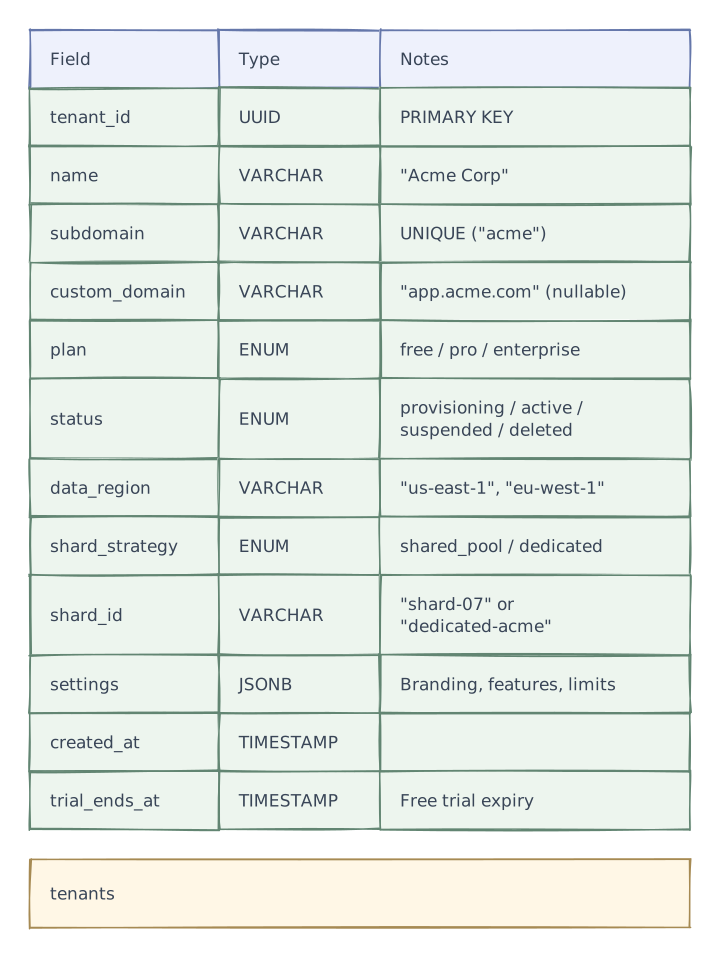
Tenant (Control Plane)

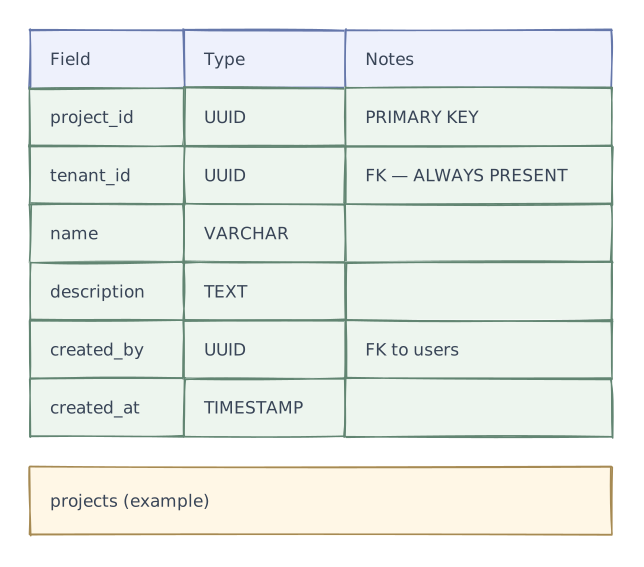
Tenant-Scoped Data (Application Tables)

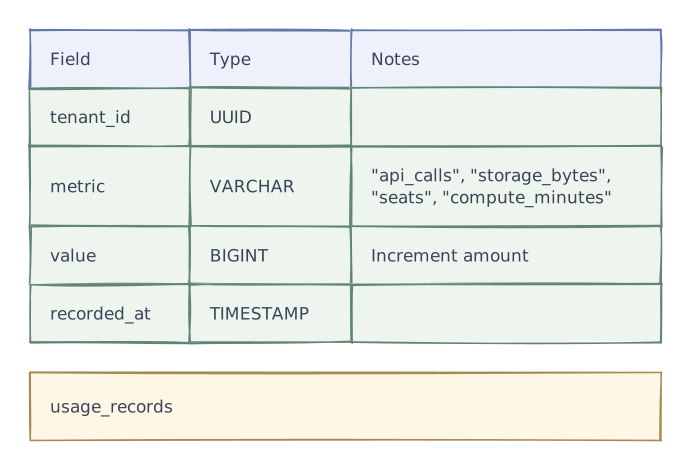
Usage Metering

Core design decisions
Core Design Decisions
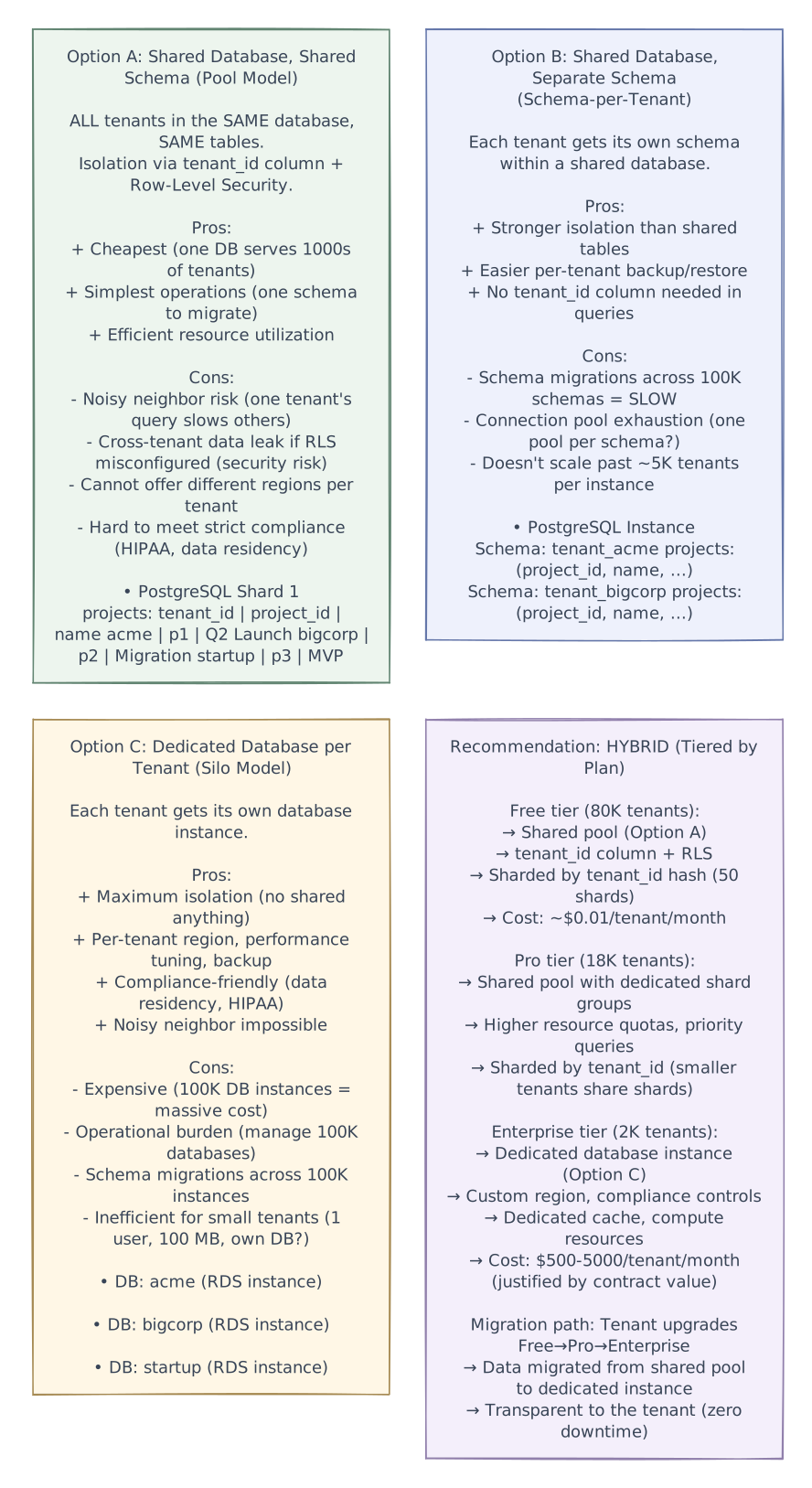
Decision 1: Data Isolation Model — The Most Critical Choice

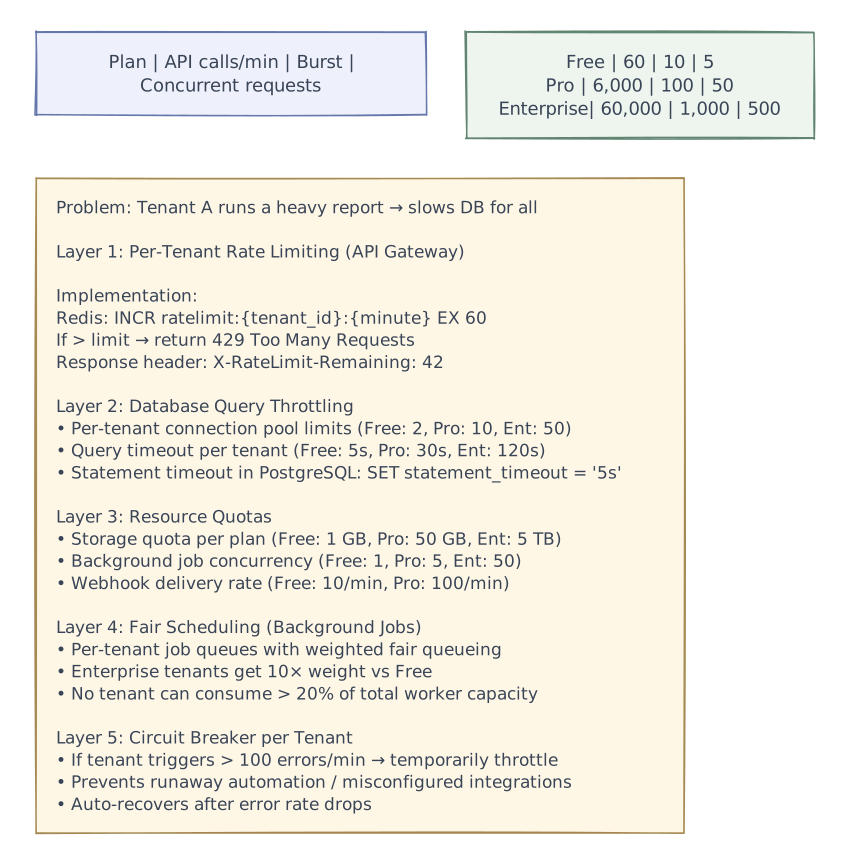
Decision 2: Noisy Neighbor Prevention

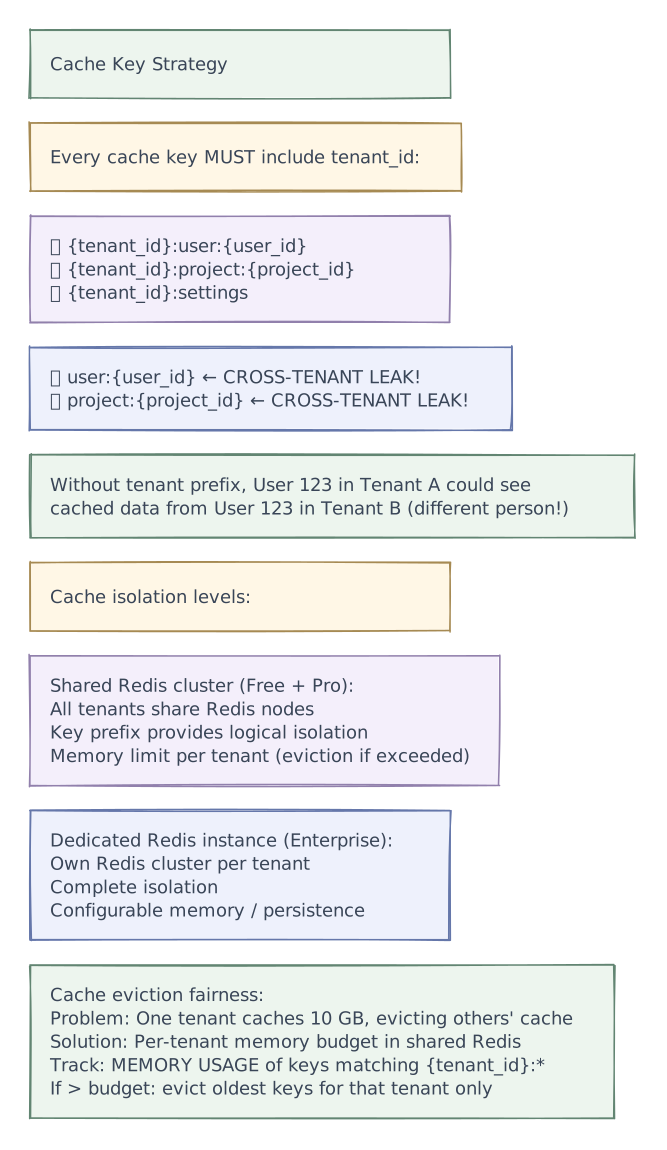
Decision 3: Tenant-Aware Caching

Request flows
Detailed Flow Diagrams
Request Flow (Tenant Resolution → Execution → Response)

Tenant Provisioning Flow

Tenant Data Migration (Upgrade to Enterprise)

Performance & caching
Include tenant identity in cache keys and partition expensive work into fair queues. Shared infrastructure needs per-tenant visibility: a healthy average can conceal one customer monopolizing the database pool. Rate limits and concurrency budgets should apply to background jobs as well as HTTP requests.
Advanced design
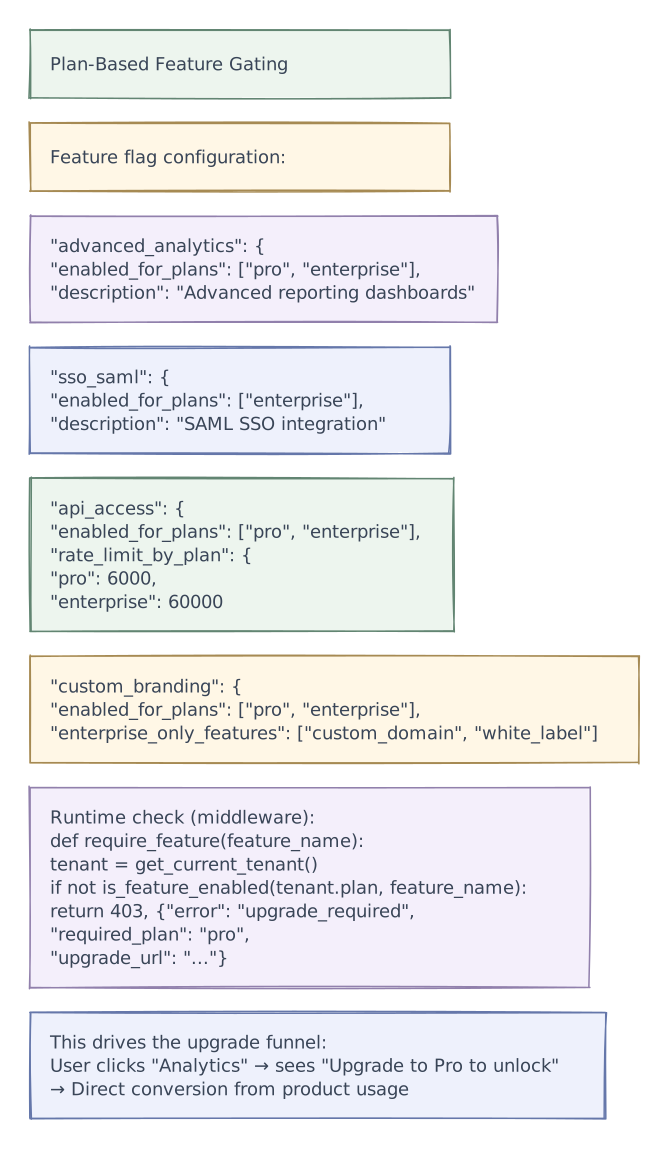
Feature Flags & Plan-Based Access

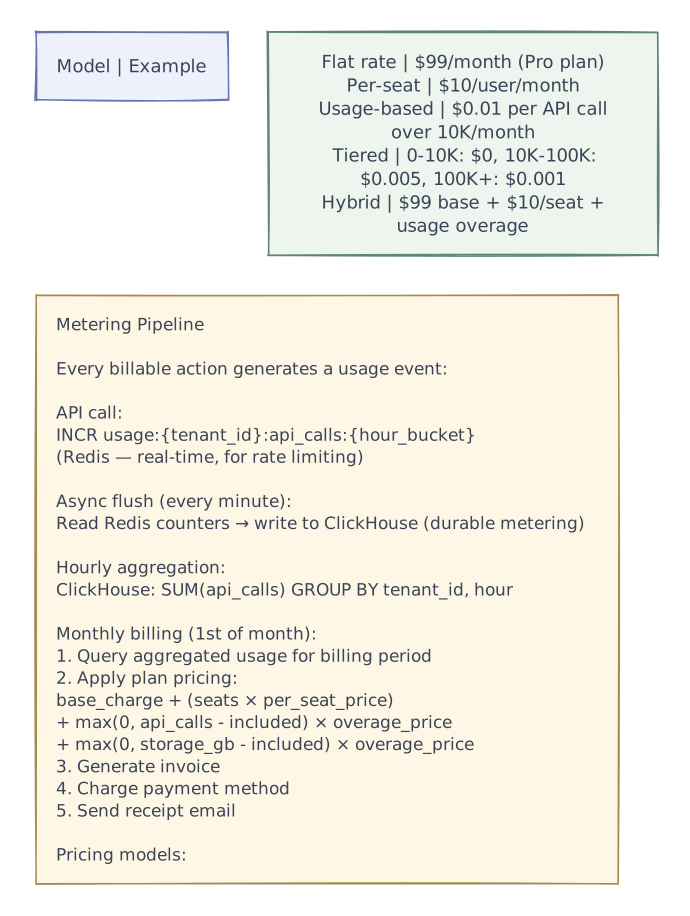
Billing & Usage Metering

Security & Compliance

Edge cases
Handling Edge Cases
Tenant Deletion (GDPR Right to Erasure)
Tenant requests account deletion:

  1. Immediate: Mark tenant as "pending_deletion" (30-day grace)
     → Tenant can still cancel deletion within 30 days
     → All access blocked after request

  2. Day 30: Hard deletion pipeline
     → Shared DB: DELETE FROM all_tables WHERE tenant_id = ?
       (batch delete, 10K rows at a time to avoid lock contention)
     → Dedicated DB: DROP DATABASE tenant_acme
     → Blob storage: DELETE s3://bucket/tenants/acme/*
     → Cache: SCAN + DEL all keys matching acme:*
     → Search index: delete all documents for tenant
     → Audit logs: retained (anonymized) for compliance
     → Backups: tenant data excluded from future backups;
       old backups expire naturally (30-90 day retention)

  3. Confirmation: generate deletion certificate
     → Cryptographic proof that all data was purged
     → Required by GDPR Article 17
Tenant Suspended (Non-Payment)
Billing failure for tenant "acme":

  Day 0: Payment fails → retry
  Day 3: Second attempt fails → email warning
  Day 7: Third attempt fails → mark tenant as "payment_overdue"
         → Banner in UI: "Update payment method to continue"
         → All features still accessible (grace period)
  Day 14: Mark as "suspended"
         → Read-only access (can view data, cannot modify)
         → API writes return 402 Payment Required
         → Background jobs paused
  Day 30: Mark as "pending_deletion"
         → Data export available (30 more days)
  Day 60: Hard deletion (same as GDPR flow)

  At any point: payment succeeds → immediately reactivate
  → Status returns to "active"
  → Zero data loss
Cross-Tenant Data Leak Prevention
Defense in depth (5 layers):

  Layer 1: Tenant Context Middleware
    → Every request resolves tenant_id
    → Attached to request context
    → Service layer reads from context

  Layer 2: Row-Level Security (PostgreSQL)
    → Database enforces tenant_id filter
    → Even buggy application code can't cross tenants
    → Policy: USING (tenant_id = current_setting('app.tenant'))

  Layer 3: Cache Key Namespace
    → All cache keys prefixed with tenant_id
    → Framework enforces: if key doesn't start with tenant_id, reject

  Layer 4: API Response Validation
    → Response interceptor checks: do ALL returned objects
      belong to the request's tenant_id?
    → If mismatch detected → 500 error + security alert + block response

  Layer 5: Automated Testing
    → Integration tests with 2 test tenants
    → Verify: actions on Tenant A never return Tenant B's data
    → Run on every deployment (CI/CD gate)
    → Penetration testing quarterly
Schema Migrations Across Tenants
Problem: 100K tenants on shared DB → ALTER TABLE affects everyone

Shared-table model (recommended migrations):
  1. Additive changes only: ADD COLUMN (nullable), ADD INDEX
     → Online DDL in PostgreSQL/MySQL (no locks for most operations)
     → All tenants get the new column simultaneously
     → Application code handles both old (null) and new values

  2. Breaking changes (rare):
     → Blue-green migration:
       a. Create new table with new schema
       b. Backfill data from old table (background, batched)
       c. Dual-write: both old and new tables
       d. Switch reads to new table
       e. Stop writing to old table
       f. Drop old table
     → Zero downtime for any tenant

  Dedicated DB model (Enterprise):
  → Migration applied per-instance via rolling update
  → Can canary: migrate 5% of instances → verify → rollout rest
→ Failed migration: rollback that instance onlyTradeoffs
Tradeoffs & Design Decisions Summary
| Decision | Option A | Option B | Chosen | Why |
|---|---|---|---|---|
| Data isolation | All shared (pool) | All dedicated (silo) | Hybrid: shared for Free/Pro, dedicated for Enterprise | Cost-effective for small tenants; full isolation for large/compliance tenants |
| Tenant resolution | JWT claim only | Subdomain + JWT + custom domain | Multi-method | Subdomain for web UX; JWT for API; custom domain for Enterprise branding |
| Query isolation | Application-level WHERE | PostgreSQL RLS | RLS + application | RLS as safety net catches application bugs; defense in depth |
| Rate limiting | Global only | Per-tenant | Per-tenant + per-plan | Prevents noisy neighbor; plan-based limits drive upgrades |
| Cache isolation | Shared with prefix | Dedicated per tenant | Shared (Free/Pro) + dedicated (Enterprise) | Shared is cost-effective; Enterprise gets full isolation |
| Billing model | Flat rate only | Usage-based only | Hybrid (base + seat + usage overage) | Base provides predictable revenue; usage captures growth; overage monetizes heavy users |
| Feature gating | Plan column check | Feature flag service | Feature flag service + plan mapping | Flexible: can enable features per-tenant (beta), per-plan, or globally |
| Schema migrations | Downtime window | Online DDL + blue-green | Online DDL (additive) + blue-green (breaking) | Zero downtime; additive changes cover 95% of migrations |
| Tenant onboarding | Manual provisioning | Automated pipeline | Automated (< 60s) | Self-service is critical for SaaS growth; automation scales to 100K tenants |
| Data region | Single region | Multi-region per tenant | Configurable per tenant (Enterprise) | Free/Pro in default region; Enterprise chooses region for compliance |
Reliability & fault tolerance
Phase 4 of 4 · Operations & resilience
Add operational safeguards
With the request paths and tradeoffs established, add the controls that help detect trouble and keep the system operating. The final diagram retains every layer introduced so far.
- Tenant operations
- Monitor per-tenant load, isolate noisy neighbors, and design tenant-scoped backup and audit workflows.
Reliability & Fault Tolerance
Single Points of Failure & Mitigations

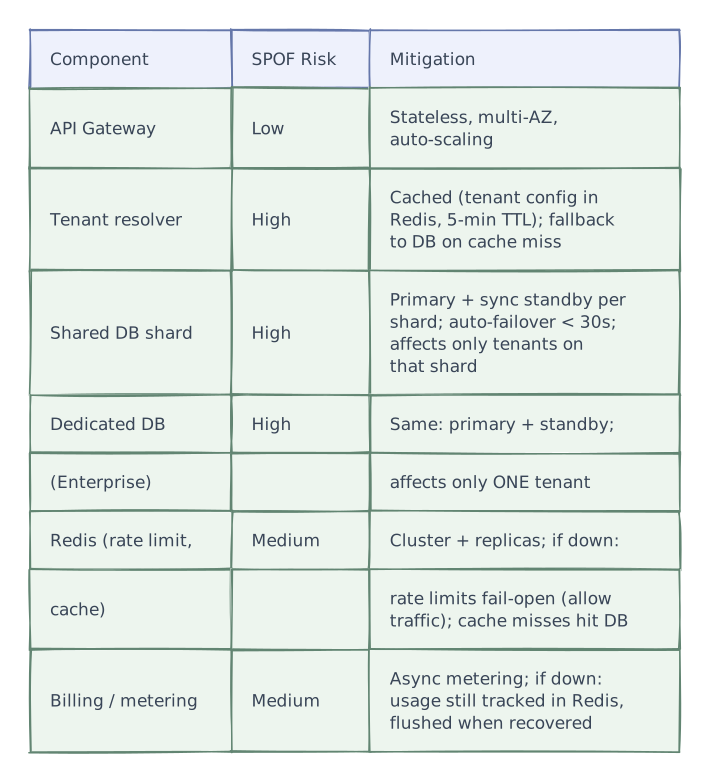
Per-Tenant SLA
Production architecture
High-Level Architecture

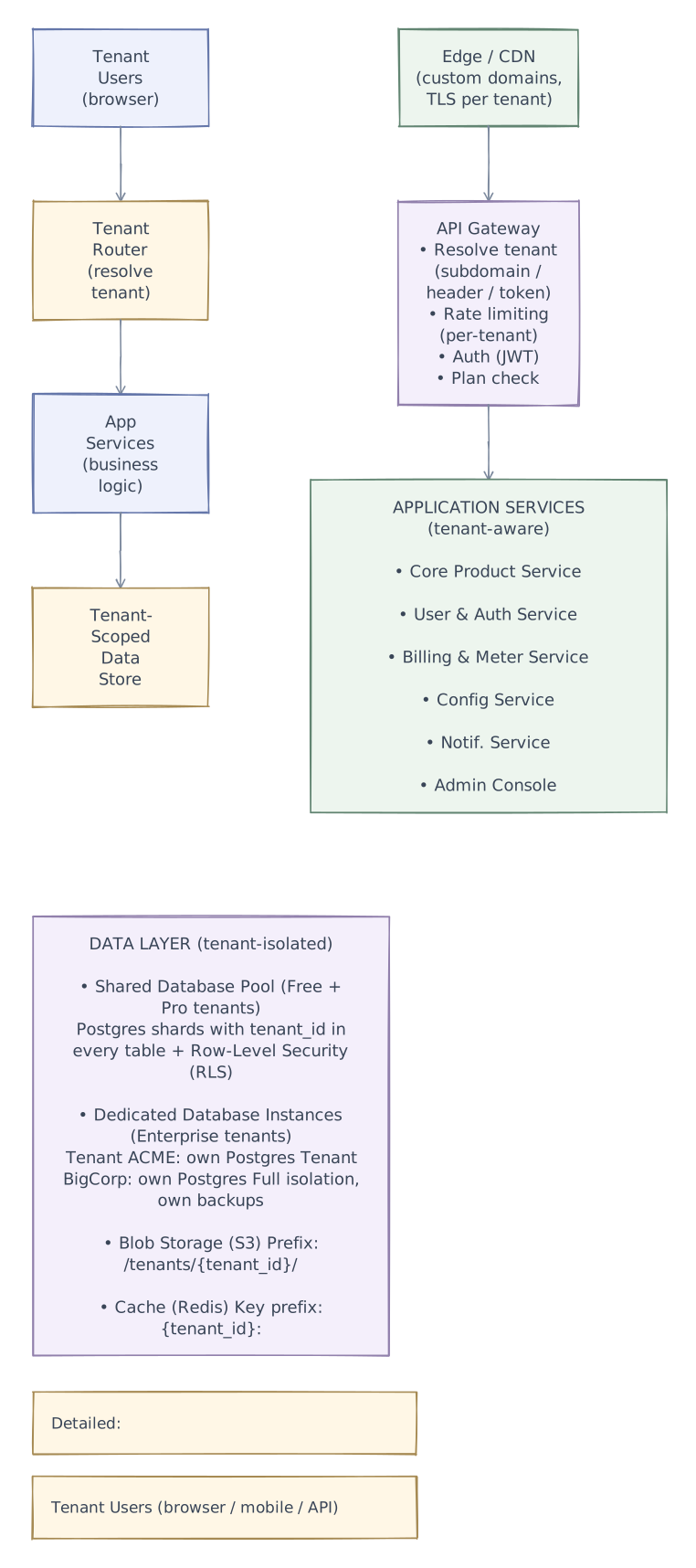
Component Breakdown

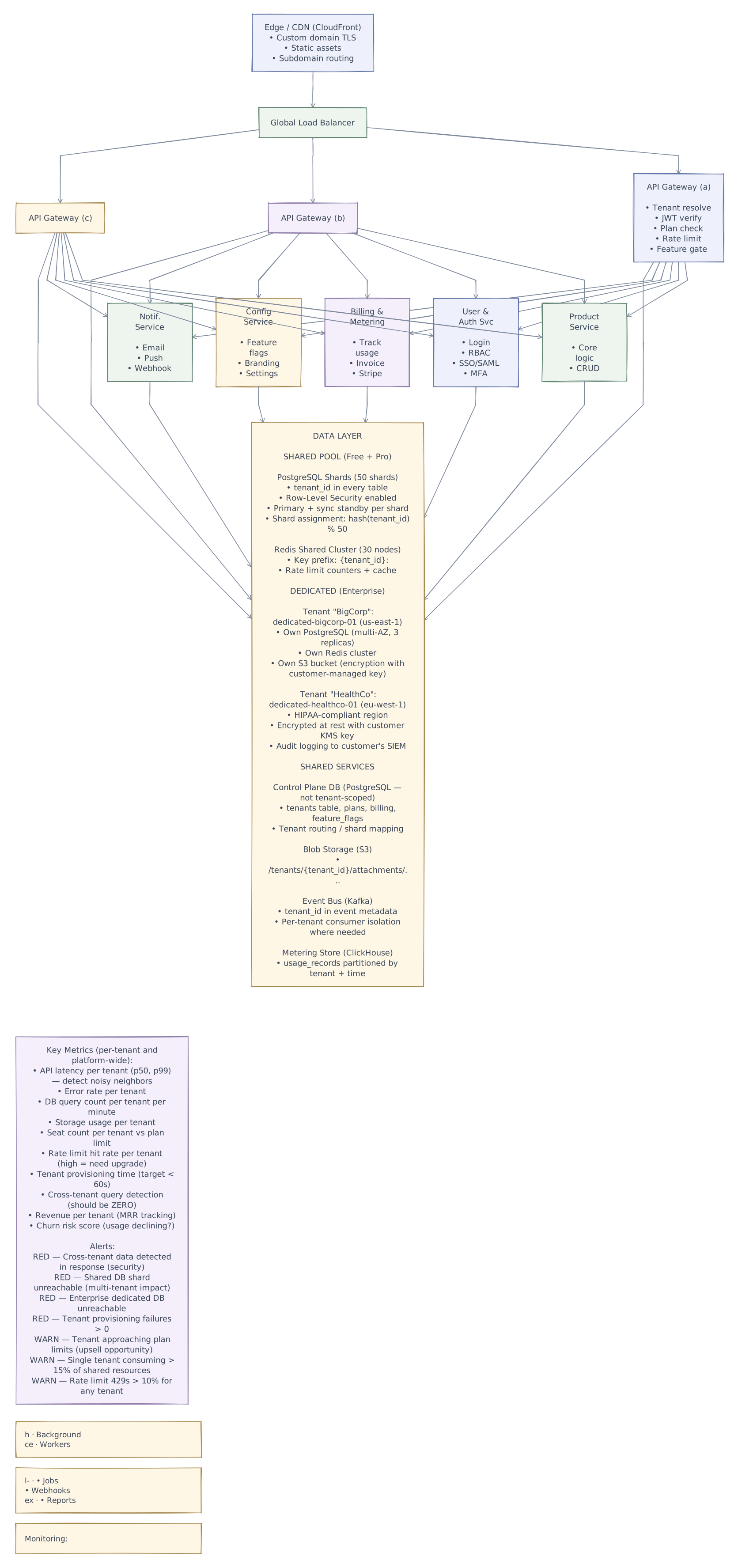
Full System Architecture (Production-Grade)

Further exploration
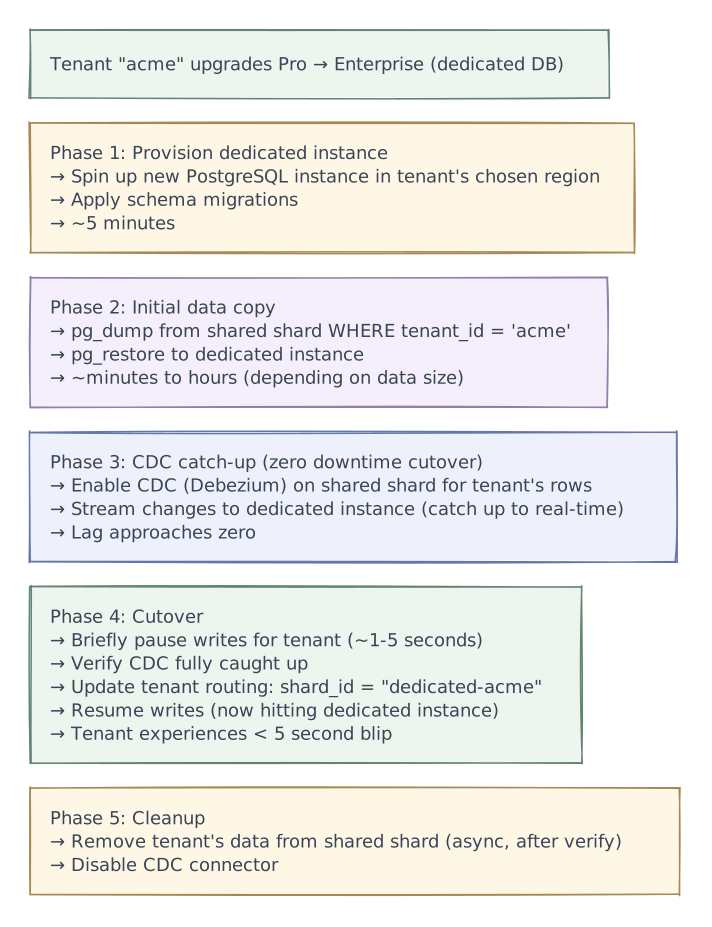
Move one growing tenant from shared storage into a dedicated database while everyone else stays online. Trace routing metadata, in-flight requests, background jobs, and rollback. Then restore only that tenant from backup: the exercise reveals whether tenant isolation exists in operational procedures as well as application queries.
Interview playbook
Interview Tips
Start with the tenant isolation spectrum — "The fundamental decision is shared vs dedicated infrastructure. Draw the spectrum: shared tables (cheapest, highest density) → schema-per-tenant → database-per-tenant → VM-per-tenant (most isolated, most expensive). Most SaaS uses a hybrid: shared for small tenants, dedicated for enterprise."
Row-Level Security is the defense-in-depth hero — "Even if application code forgets
WHERE tenant_id = ?, PostgreSQL RLS enforces it at the database level. This is the safety net that prevents cross-tenant data leaks. Application-level filtering is the primary mechanism; RLS catches bugs."Noisy neighbor is the #1 operational challenge — Don't just say "rate limiting." Explain the full stack: per-tenant API rate limits, per-tenant DB connection pools, per-tenant query timeouts, per-tenant background job quotas, and circuit breakers for runaway tenants. One misconfigured tenant's automation must not degrade the platform.
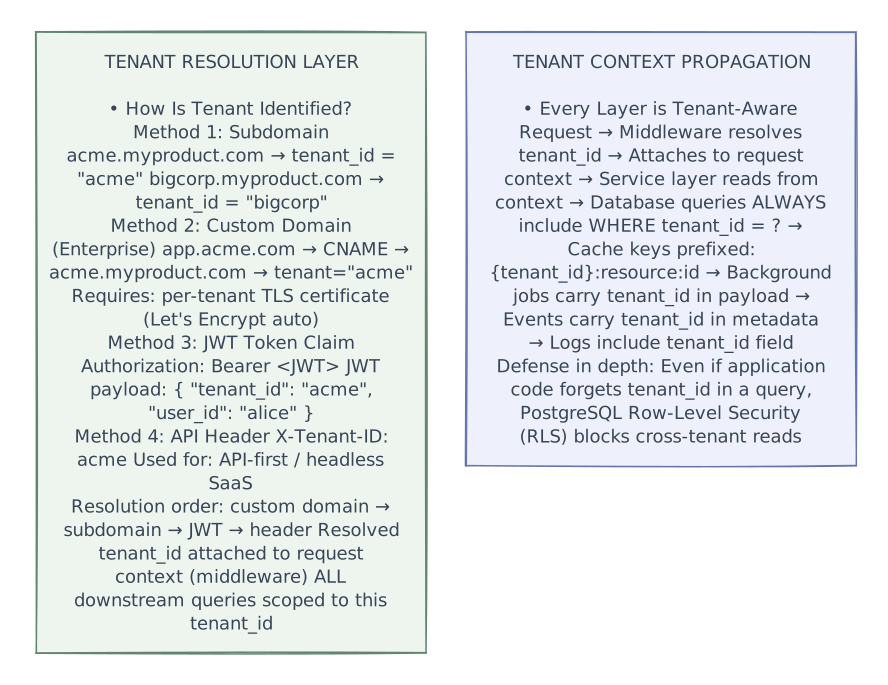
Tenant context must flow through EVERY layer — "Tenant resolution at the gateway is just the start. The tenant_id must propagate to: service layer (request context), database (RLS session variable), cache (key prefix), background jobs (payload), events (metadata), logs (field), and traces (tag). If ANY layer lacks tenant context, you have an isolation gap."
Hybrid data model is the pragmatic answer — "100K tenants on dedicated databases = 100K DB instances = operational nightmare + cost explosion. Shared pool with
tenant_idcolumn for 98% of tenants, dedicated instances for the 2% enterprise tenants who need compliance/isolation. Upgrade path: migrate data from shared to dedicated when tenant upgrades."Feature flags drive the upgrade funnel — "Free user clicks 'Analytics' → '403 Upgrade to Pro.' This is the SaaS growth engine. Feature flags per plan, but also per-tenant (beta features to select tenants). The feature flag service is a revenue tool, not just a dev tool."
Billing metering is a distributed systems problem — "Track usage in Redis (real-time, for rate limiting) → flush to ClickHouse (durable, for billing). Monthly aggregation → invoice generation → Stripe charge. Overage pricing: base + (usage - included) × overage_rate. Get billing wrong = lose trust."
Schema migrations across 100K tenants — "Additive changes only (ADD COLUMN nullable) via online DDL — zero downtime, all tenants simultaneously. Breaking changes: blue-green migration (new table, backfill, dual-write, cutover). Never ALTER TABLE NOT NULL on a 100K-tenant shared table."
Tenant deletion must be thorough (GDPR) — Explain: 30-day grace period, then hard delete from ALL stores (DB, cache, search index, blob storage, backups age out). Generate deletion certificate. This is legally required and builds trust.
End with the business model connection — "Multi-tenancy isn't just an architecture pattern — it's the SaaS business model. Shared infrastructure = low cost per tenant = freemium viable. Per-tenant metering = usage-based pricing. Feature gating = upgrade funnel. Dedicated tier = enterprise contracts. The architecture enables the business."