Requirements & scope
Problem Statement & Requirements
Functional Requirements
- Web crawling -- discover and fetch billions of web pages continuously
- Indexing -- build an inverted index mapping terms to documents
- Query processing -- parse and understand user queries (spell correction, synonyms, intent)
- Ranking -- return the most relevant results using signals like PageRank, content relevance, freshness
- Snippet generation -- extract and highlight relevant text snippets for each result
- Autocomplete / suggestions -- suggest queries as user types (covered in separate design)
- Image / video / news verticals -- blend different content types into results
- Ads integration -- serve relevant ads alongside organic results
- Personalization -- tailor results based on user history, location, language
- Knowledge panels -- structured answers for entities (people, places, companies)
- Safe search / content filtering -- filter explicit or harmful content
Non-Functional Requirements
- Ultra-low latency -- search results in < 200 ms (end-to-end)
- High availability -- 99.99% uptime, search must never go down
- Massive scale -- index 100B+ web pages, serve 100K+ QPS
- Freshness -- breaking news indexed within minutes; general web within days
- Relevance quality -- users find what they need in first 3 results (high precision)
- Fault tolerance -- no single point of failure; graceful degradation
- Global distribution -- low latency for users worldwide
Scope Boundaries
| In Scope | Out of Scope |
|---|---|
| Web crawling & page fetching | Browser / client implementation |
| Inverted index construction | Ad auction / bidding system (simplified) |
| Query parsing & ranking | Gmail / YouTube search (different domains) |
| PageRank computation | Full NLP / LLM-based answers |
| Serving infrastructure | Detailed spam/SEO penalty systems |
| Snippet generation | Detailed personalization ML models |
Scale estimations
Scale Estimations
Index & Content
| Metric | Value |
|---|---|
| Total indexed web pages | 100B |
| Average page size (compressed HTML) | 30 KB |
| Average unique terms per page | 500 |
| Total unique terms in corpus | ~1B |
| Total raw page storage | 100B x 30 KB = 3 PB |
| Inverted index size | ~500 TB (compressed, with positions) |
| PageRank vector | 100B pages x 8 bytes = 800 GB |
| URL metadata store | 100B x 200 bytes = 20 TB |
Crawling
| Metric | Value |
|---|---|
| Pages crawled per day | 5B |
| Crawl rate | ~58K pages/sec |
| Raw bandwidth (crawling) | 58K x 100 KB avg = ~5.8 GB/s |
| Re-crawl cycle (popular pages) | Hours |
| Re-crawl cycle (long-tail pages) | Weeks to months |
| Unique domains | ~500M |
Query Traffic
| Metric | Value |
|---|---|
| Queries per day | 8.5B |
| Queries per second (avg) | ~100K QPS |
| Queries per second (peak) | ~300K QPS |
| Average query length | 3-4 words |
| Average results returned | 10 per page |
| Cache hit rate (popular queries) | ~30-40% |
Storage Summary
| Component | Size |
|---|---|
| Raw page store (compressed) | 3 PB |
| Inverted index (sharded) | 500 TB |
| Document metadata | 20 TB |
| PageRank + link graph | 5 TB |
| Query logs (30 days) | 50 TB |
| Total | ~3.6 PB |
Bandwidth & Compute
| Metric | Value |
|---|---|
| Serving bandwidth (results) | 100K QPS x 50 KB = 5 GB/s |
| Index servers needed | ~10,000+ (sharded by doc range) |
| Serving replicas per shard | 3-5 (for availability + load) |
| Total serving machines | ~30,000-50,000 |
Layered architecture
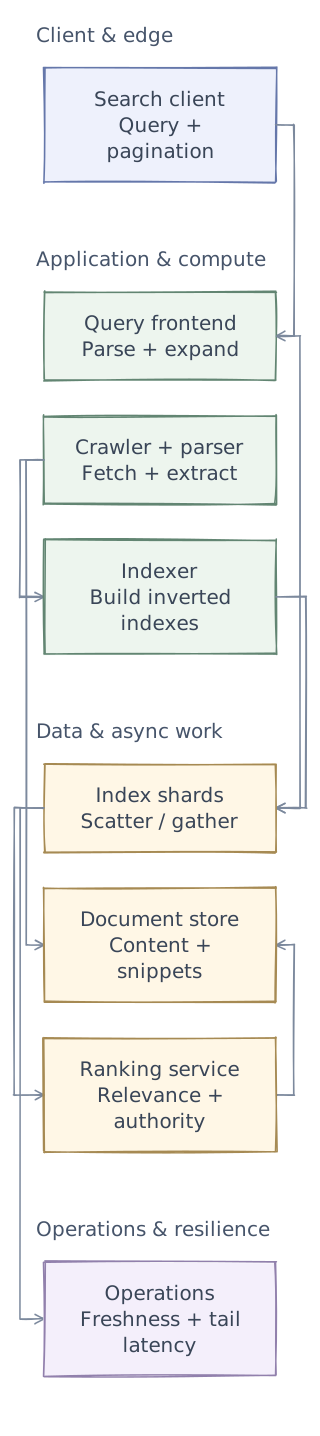
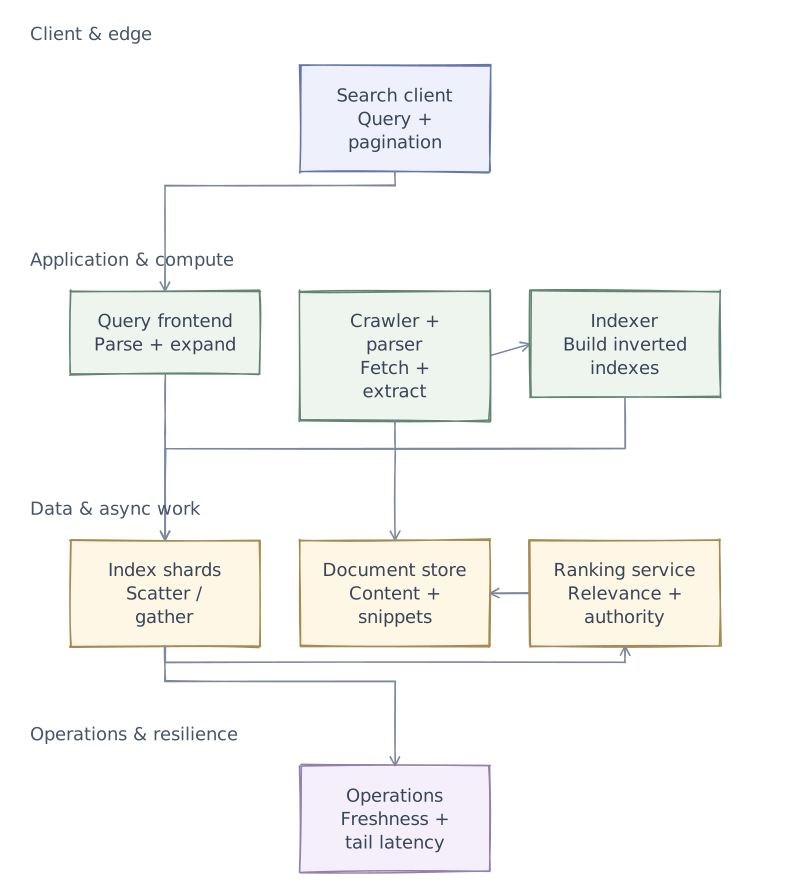
Phase 1 of 4 · Client & edge
Start with the entry points
First, define who uses the system and where requests enter. This is the boundary of the design, not yet a complete request path.
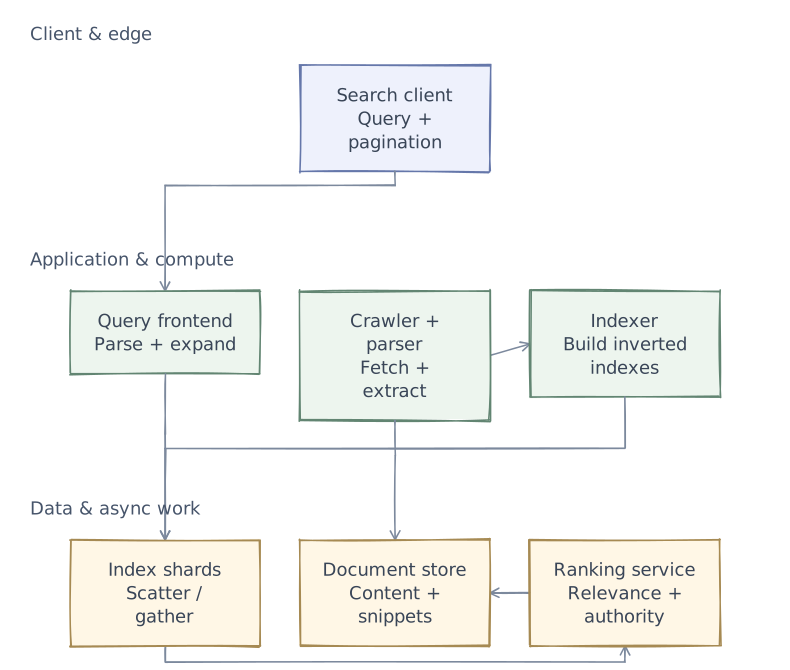
- Search client
- Start with a query, language, and an explicit result latency budget.
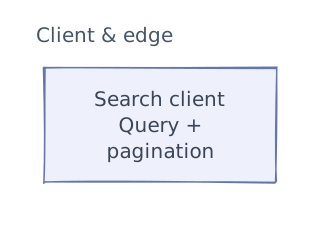

This first layer defines the system boundary. The next chapters add application logic and data dependencies. After examining the request paths and tradeoffs, we will add operational safeguards and bring the complete architecture together.
API & contracts
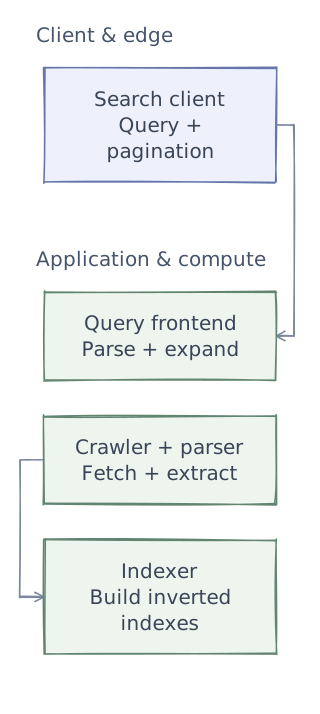
Phase 2 of 4 · Application & compute
Add the application logic
Keep the entry points and add the services that do the work. Give each service a clear responsibility before defining its contracts. Storage and background dependencies come next.
- Query frontend
- Normalize tokens and interpret query intent before asking index shards for candidates.
- Crawler + parser
- Discover documents and extract normalized text and link metadata asynchronously.
- Indexer
- Create term-to-document postings and publish versioned index segments.
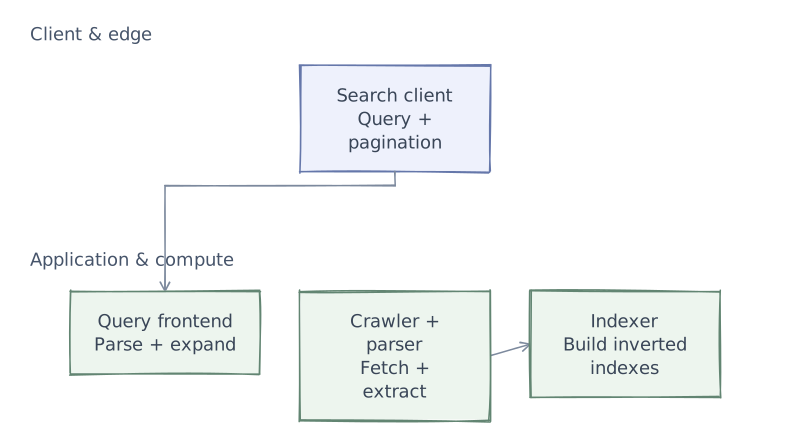
A search request carries the query, locale, filters, and pagination context. The response should distinguish no matches from incomplete results caused by a failed shard. Keep internal ranking features out of the public contract, and use a stable cursor or search snapshot when deep pagination must remain consistent.
Data model
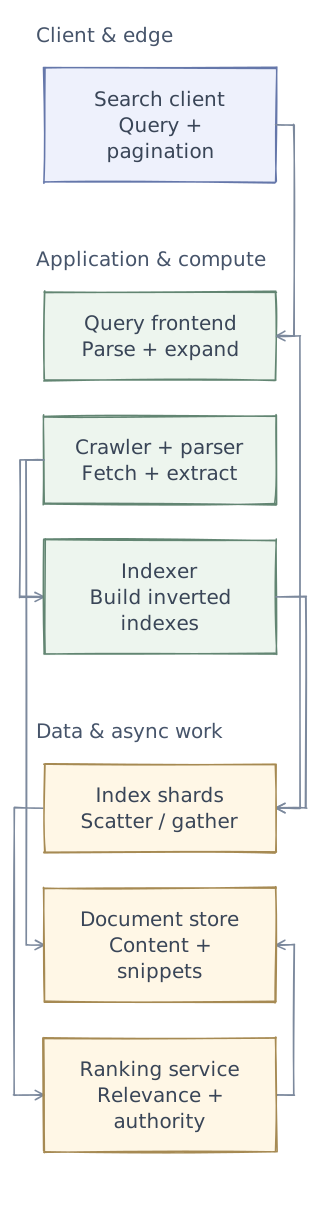
Phase 3 of 4 · Data & async work
Connect data and background work
The services now need their dependencies: durable state, fast lookups, or work that continues outside a request. Separate these responsibilities rather than treating every component as a database.
- Index shards
- Search shards in parallel with bounded timeouts and merge their top candidates.
- Document store
- Keep document content available for snippets without bloating the searchable posting lists.
- Ranking service
- Combine text relevance, link signals, and freshness, then return a bounded result set.
Data Storage Architecture
Storage Layer Summary
| Component | Technology | Size | Purpose |
|---|---|---|---|
| Raw page store | Distributed FS (GFS/Colossus) | 3 PB | Compressed HTML of crawled pages |
| Inverted index | Custom SSTable format | 500 TB | Term → posting lists |
| Document store | Bigtable / custom column store | 20 TB | URL, title, metadata, cached content |
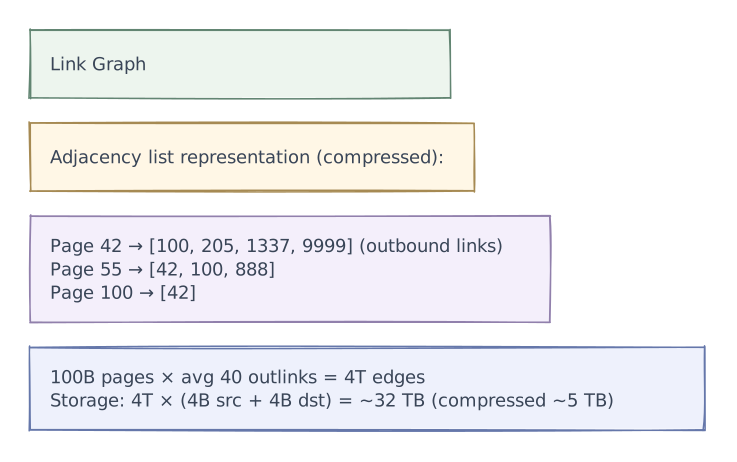
| Link graph | Custom adjacency format | 5 TB | Page-to-page links for PageRank |
| PageRank scores | In-memory + SSTable | 800 GB | Static rank per page |
| Query logs | Distributed log (Kafka → Colossus) | 50 TB/mo | User queries for ML training, analytics |
| Result cache | In-memory (distributed) | 100 GB/DC | Cached SERP for popular queries |
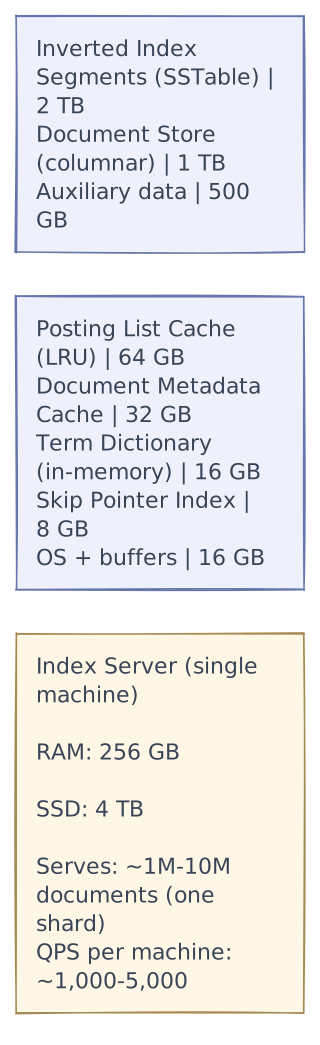
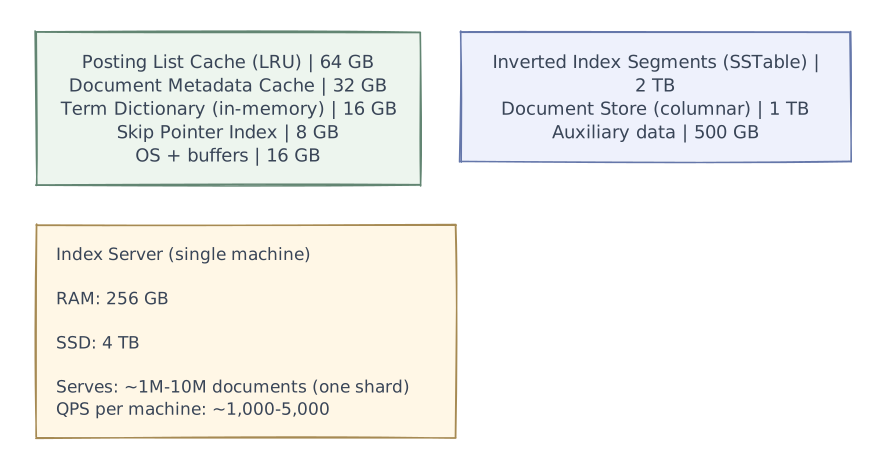
| Posting list cache | In-memory (per machine) | 64 GB/machine | Hot posting lists |
| Spell correction model | In-memory | 10 GB | Dictionary + language models |
Index Server Architecture (Single Machine)
Core design decisions
Ranking System
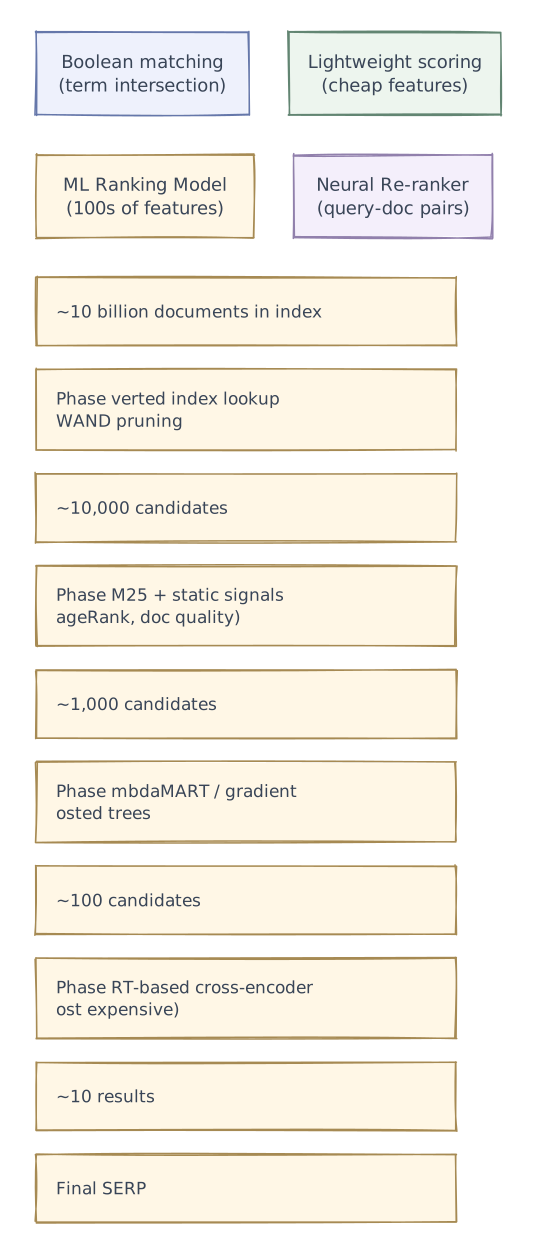
Multi-Phase Ranking Architecture

Key Ranking Signals
| Signal Category | Signals | Weight |
|---|---|---|
| Text relevance | BM25, TF-IDF, term positions, phrase match, title match | High |
| Link analysis | PageRank, # of inbound links, link quality, anchor text | High |
| Content quality | Domain authority, content length, reading level, E-E-A-T | Medium-High |
| Freshness | Page age, last modified, content change rate | Medium |
| User signals | Click-through rate, dwell time, pogo-sticking rate | Medium |
| Technical | Page speed, mobile-friendly, HTTPS, Core Web Vitals | Medium |
| Personalization | User location, language, search history | Low-Medium |
| Spam signals | Keyword stuffing, cloaking, link farms, thin content | Negative |
BM25 Scoring Formula
BM25(D, Q) = Σ  IDF(qi) × [ f(qi, D) × (k1 + 1) ]
            qi∈Q           [ f(qi, D) + k1 × (1 - b + b × |D|/avgdl) ]

Where:
  qi        = i-th query term
  f(qi, D)  = term frequency of qi in document D
  |D|       = document length (in terms)
  avgdl     = average document length across corpus
  k1        = 1.2 (term frequency saturation parameter)
  b         = 0.75 (document length normalization)
  IDF(qi)   = log((N - n(qi) + 0.5) / (n(qi) + 0.5) + 1)
  N         = total number of documents
  n(qi)     = number of documents containing qi
PageRank Algorithm
PageRank(A) = (1 - d) + d × Σ  PageRank(T) / OutLinks(T)
                              T∈BackLinks(A)

Where:
  d = damping factor = 0.85
  T = pages that link to page A
  OutLinks(T) = number of outbound links from page T
Computation at scale:
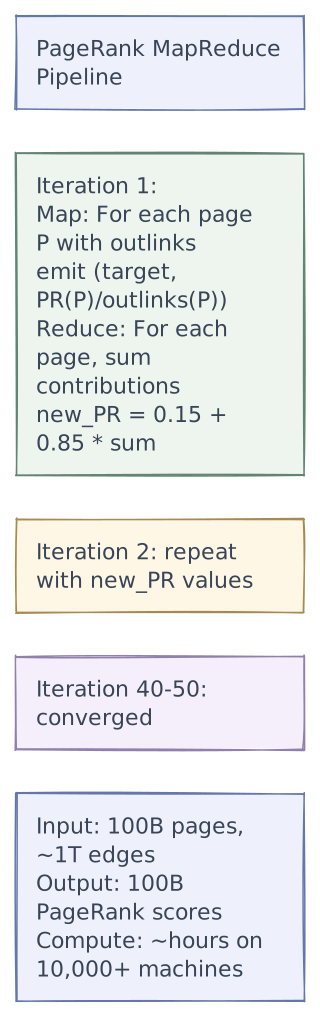
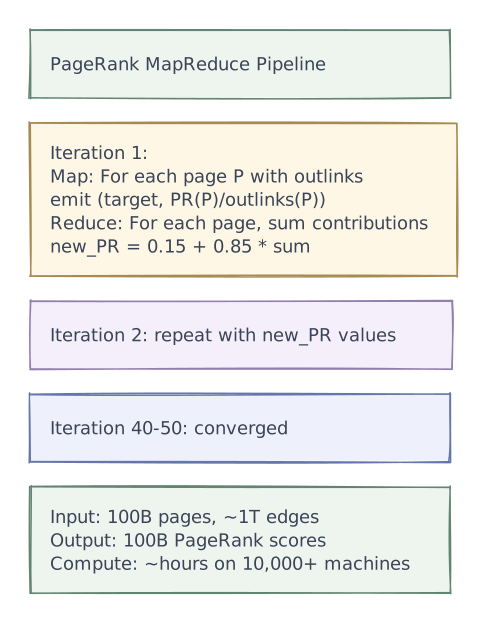
Optimizations:
- Partition by host: Pages on same host tend to link to each other → locality
- Dead-end handling: Pages with no outlinks distribute rank to all pages (random surfer)
- Spam resistance: TrustRank propagates trust from seed set of known-good pages
- Topic-sensitive PageRank: Compute per-topic PageRank vectors for better relevance
Request flows
Indexing Pipeline
Document Processing Flow

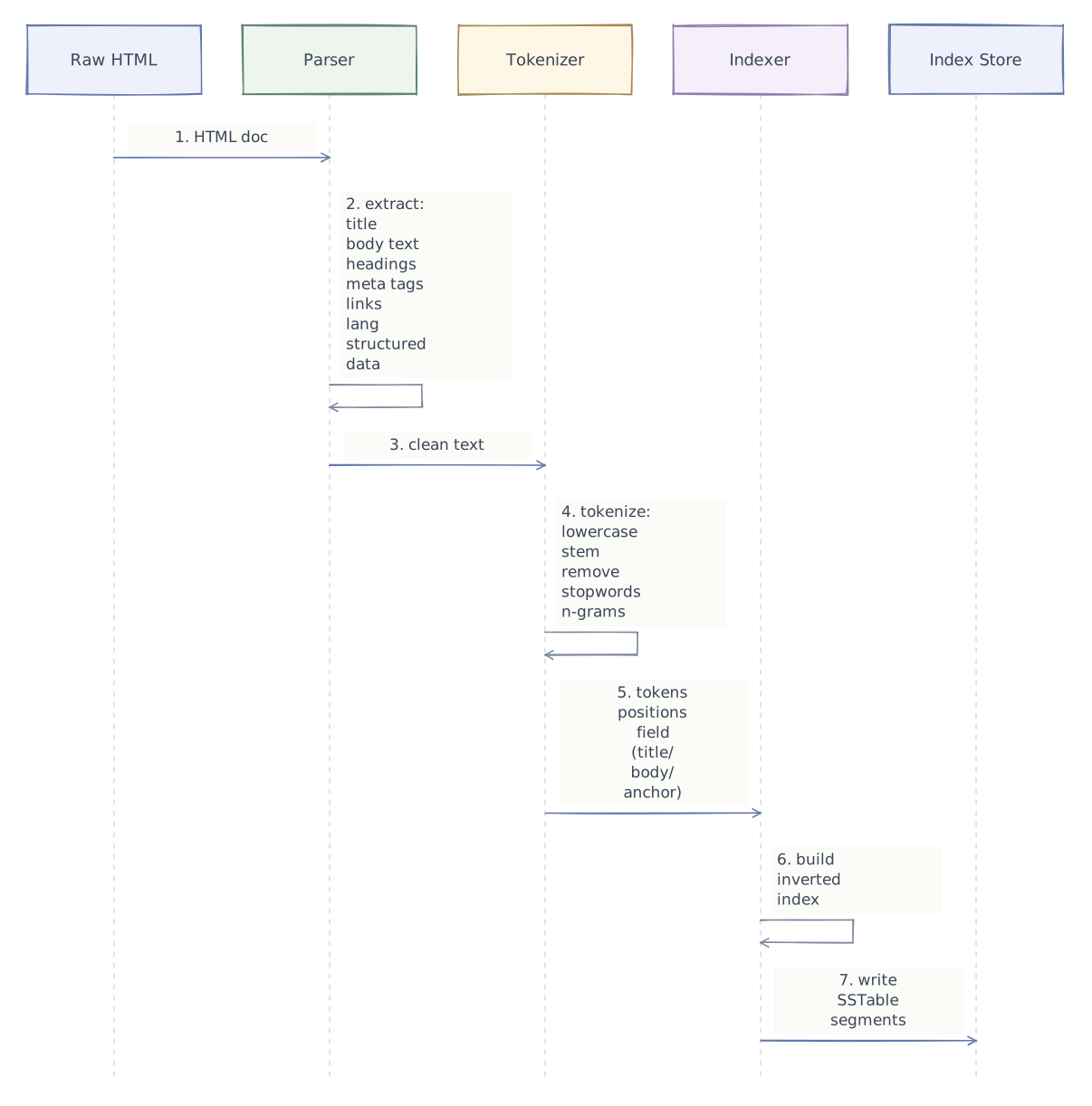
Inverted Index Structure

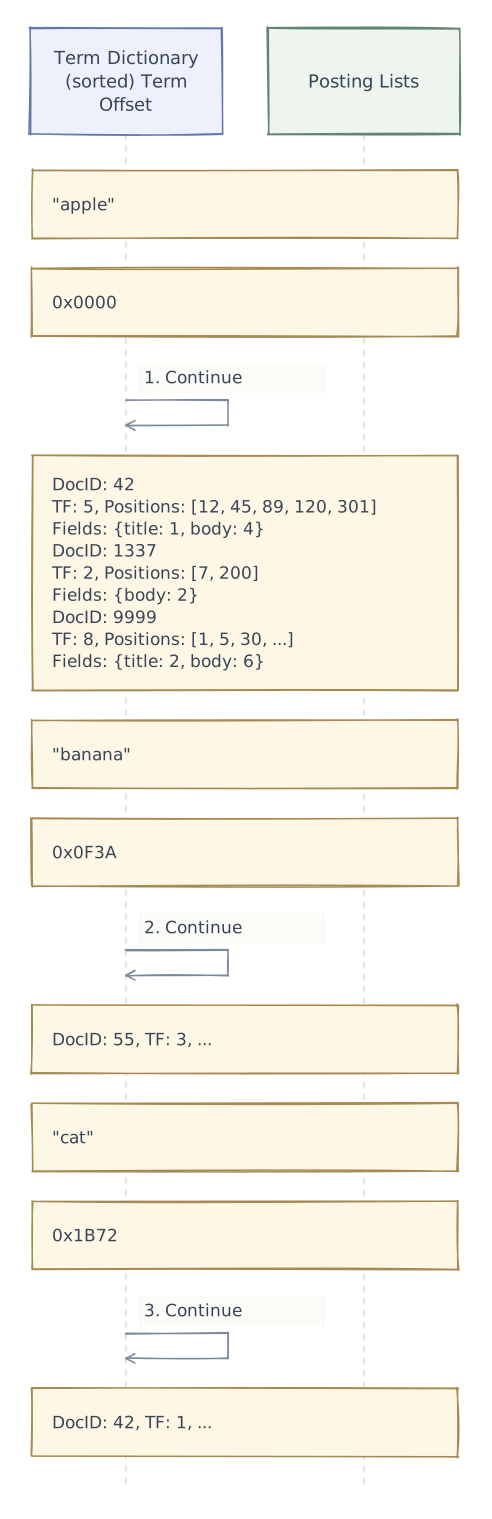
Posting list encoding (compression):
- DocID gaps: Store delta-encoded DocIDs (42, +1295, +8662) instead of absolute
- Variable byte encoding (VByte): Small gaps = 1 byte, large gaps = 2-4 bytes
- Block-based compression: Group 128 DocIDs per block, compress with PForDelta
- Skip pointers: Every 128 docs, store a skip pointer for fast intersection
Index size math:
- 100B documents x 500 unique terms/doc = 50 trillion postings
- Average posting size (compressed): ~8 bytes (docID gap + TF + positions compressed)
- Total: ~400 TB raw, ~500 TB with skip pointers + term dictionary
Index Sharding Strategy
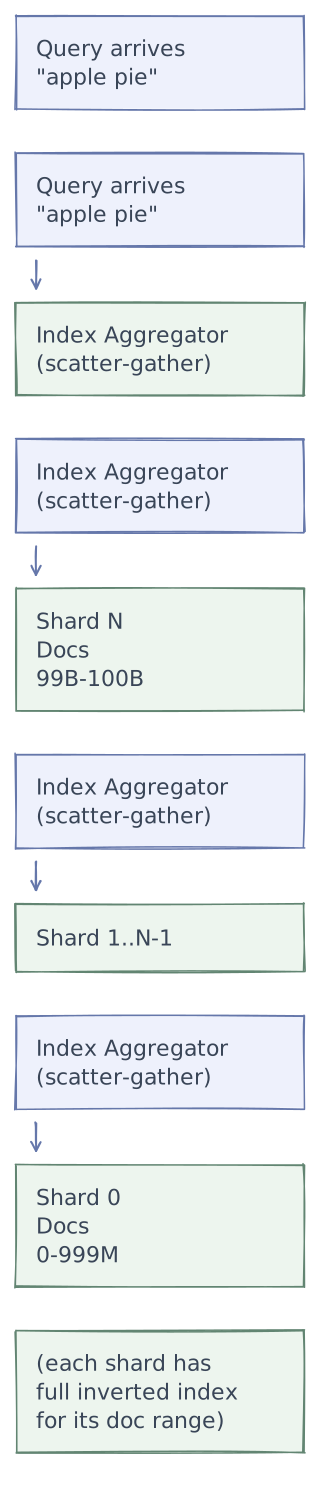
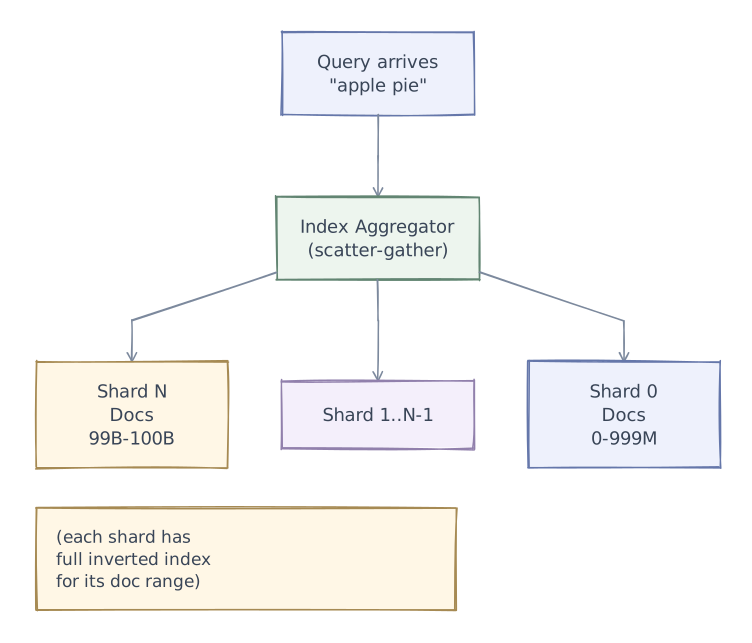
Two sharding approaches:
| Approach | Document-Partitioned | Term-Partitioned |
|---|---|---|
| Strategy | Each shard holds ALL terms for a subset of docs | Each shard holds ALL docs for a subset of terms |
| Query routing | Broadcast to ALL shards (scatter-gather) | Route to specific shards based on query terms |
| Pros | Balanced load; easy to add docs | Less fan-out per query |
| Cons | Every query hits every shard | Skewed load (popular terms); multi-term queries still hit multiple shards |
| Used by Google? | Yes (document-partitioned) | No (too imbalanced) |
Google's choice: Document-partitioned indexing
- ~10,000-100,000 shards, each holding ~1M-10M documents
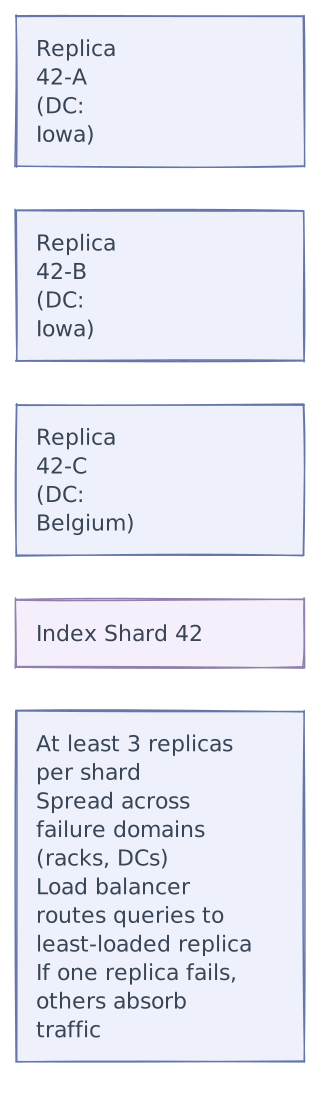
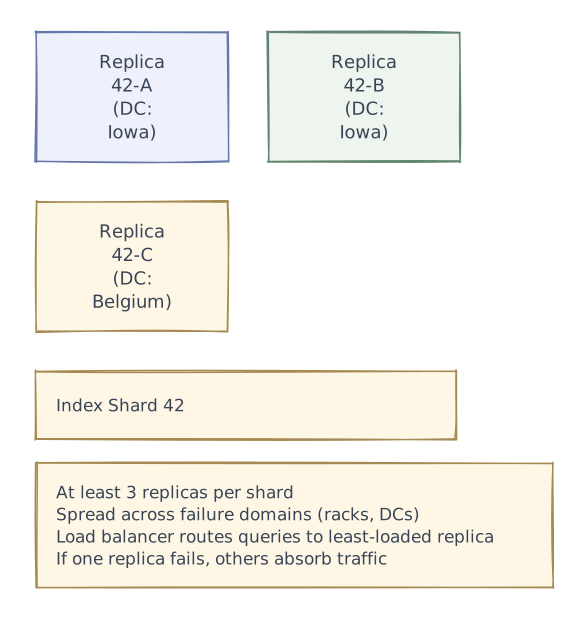
- Each shard is replicated 3-5 times for availability + load balancing
- Query is broadcast to all shards; each returns top-K results; aggregator merges
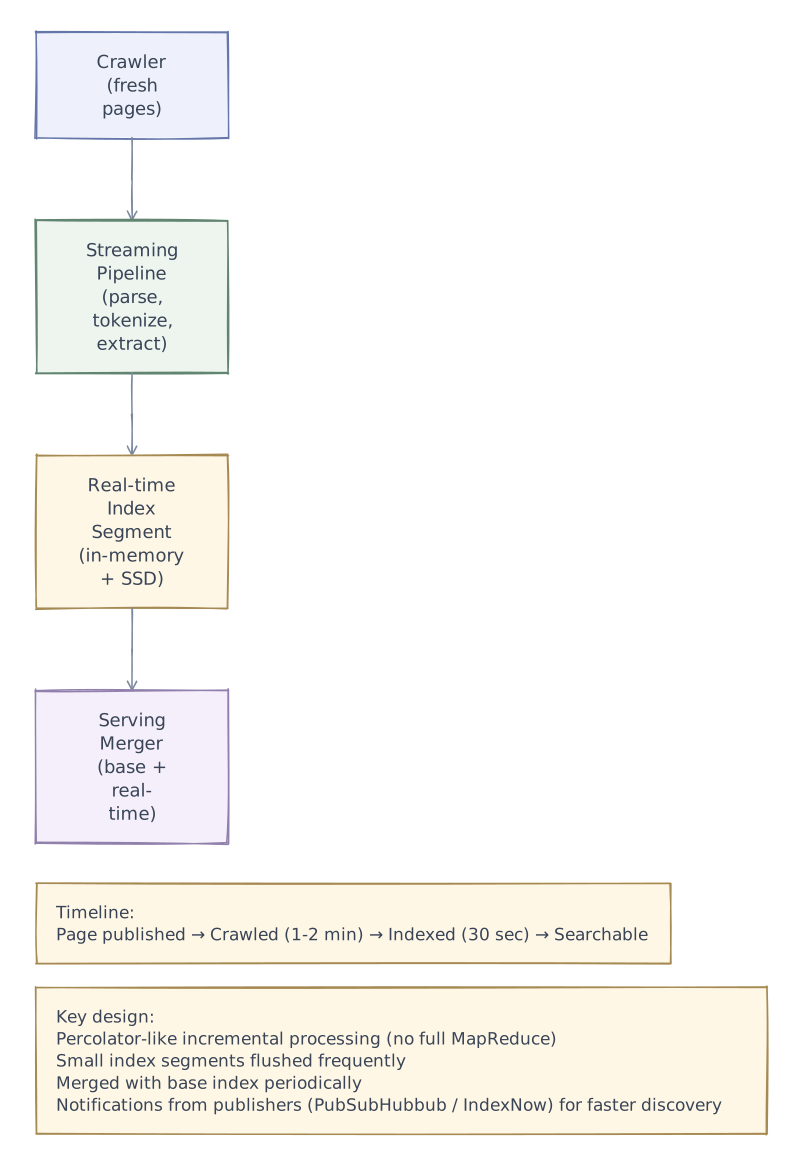
Incremental Indexing

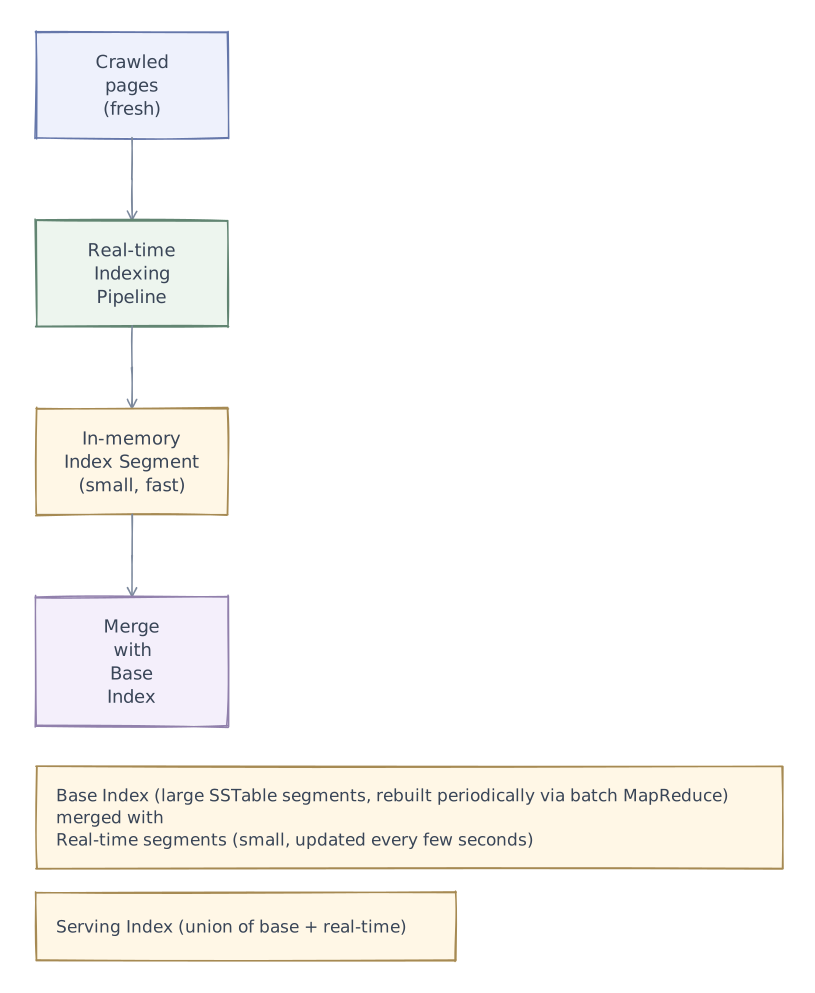
- Base index: Rebuilt every few days via MapReduce over entire corpus
- Real-time index: Streaming pipeline (like Percolator) for fresh content
- Merge: At query time, results from both are unioned and ranked together
- Freshness target: Breaking news pages indexed in < 2 minutes
Query Processing Pipeline
End-to-End Query Flow

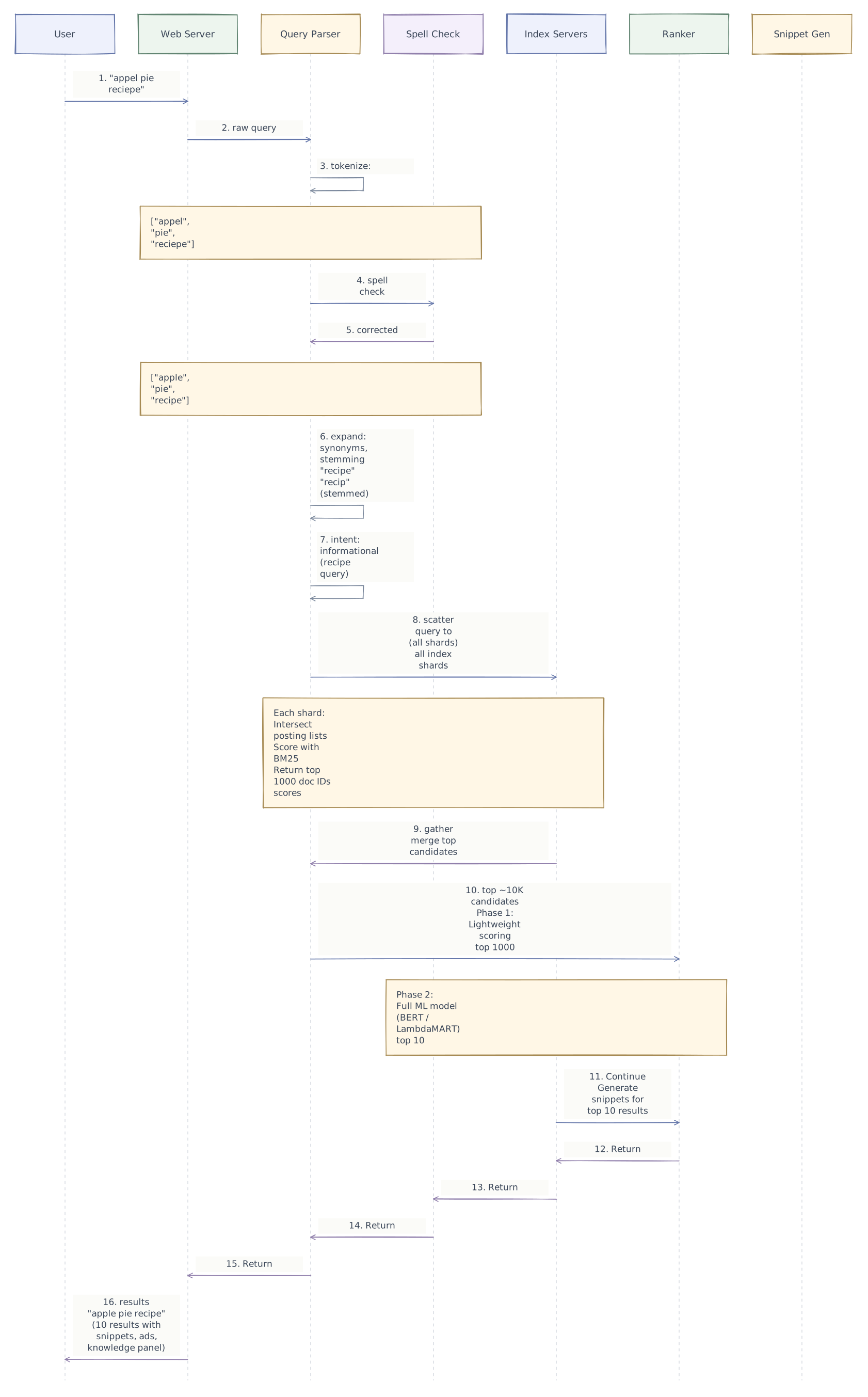
Query Understanding Details
Spell correction:
- Edit distance (Levenshtein) against dictionary of known terms
- Noisy channel model: P(correct | misspelled) ∝ P(misspelled | correct) × P(correct)
- Training data: query logs with user reformulations ("appel pie" → user clicked "apple pie" results)
Query expansion:
- Synonym expansion: "car" → also search "automobile", "vehicle"
- Stemming: "running" → "run" (Porter stemmer or language-specific)
- Phrase detection: "New York" treated as single token, not "New" AND "York"
Intent classification:
| Intent | Example | Action |
|---|---|---|
| Navigational | "facebook login" | Boost facebook.com to #1 |
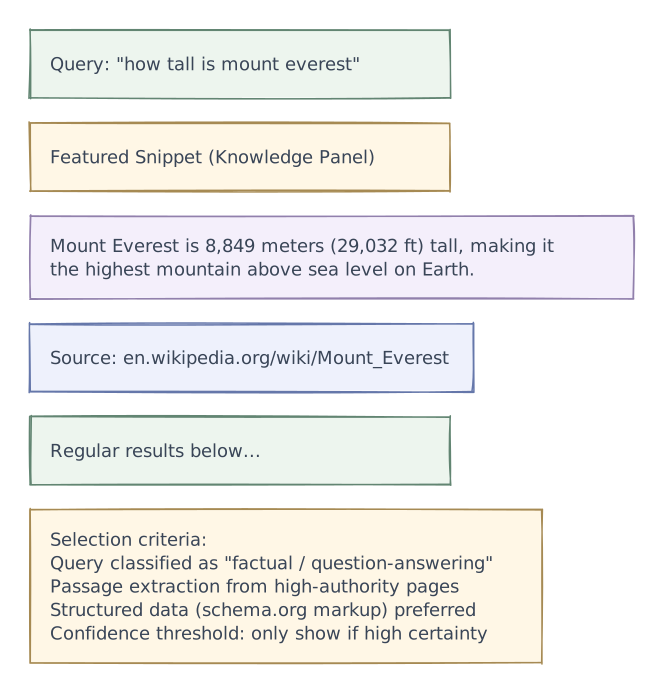
| Informational | "how to bake bread" | Show featured snippet, recipes |
| Transactional | "buy iPhone 16" | Show shopping results, ads |
| Local | "pizza near me" | Show map pack, local results |
Posting List Intersection (Core Algorithm)
For query "apple pie recipe", we intersect 3 posting lists:
apple:   [2, 5, 12, 42, 55, 100, 1337, ...]      (1M docs)
pie:     [5, 12, 20, 42, 88, 1337, ...]            (500K docs)
recipe:  [12, 42, 67, 1337, 5000, ...]              (2M docs)

Algorithm: Two-pointer intersection with skip pointers

Step 1: Start with shortest list (pie: 500K docs)
Step 2: For each docID in pie, binary search / skip in apple and recipe
Step 3: If found in all three → candidate

Result: [12, 42, 1337, ...]    (intersection)

Optimization: WAND (Weighted AND) algorithm
- Don't require ALL terms to match
- Score threshold: skip docs that can't beat current top-K score
- Upper bound per term: max contribution any doc can get from that term
- Skip entire blocks of posting list when upper bound sum < threshold
WAND Algorithm (Weak AND):
For each term t in query:
    upper_bound[t] = max TF-IDF score any doc can get for t

sorted_terms = sort terms by current posting list pointer (ascending docID)

while not done:
    // Find pivot: first term where cumulative upper bounds >= threshold
    cumulative = 0
    for i, term in sorted_terms:
        cumulative += upper_bound[term]
        if cumulative >= threshold:
            pivot_doc = posting_ptr[term].current_doc
            break

    // Advance all terms before pivot to pivot_doc
    // If all terms reach pivot_doc, fully score it
// If score > threshold, add to top-K heap, update thresholdPerformance & caching
Cache popular queries only with the context that changes their answer: language, filters, permissions, and index version where needed. Shards can keep frequently accessed index blocks warm. Bound candidate counts before expensive reranking so an unusually broad query cannot consume an unbounded share of serving capacity.
Advanced design
Web Crawling Subsystem
URL Frontier (Priority Queue)
The URL frontier determines what to crawl next. It must balance freshness, importance, and politeness.
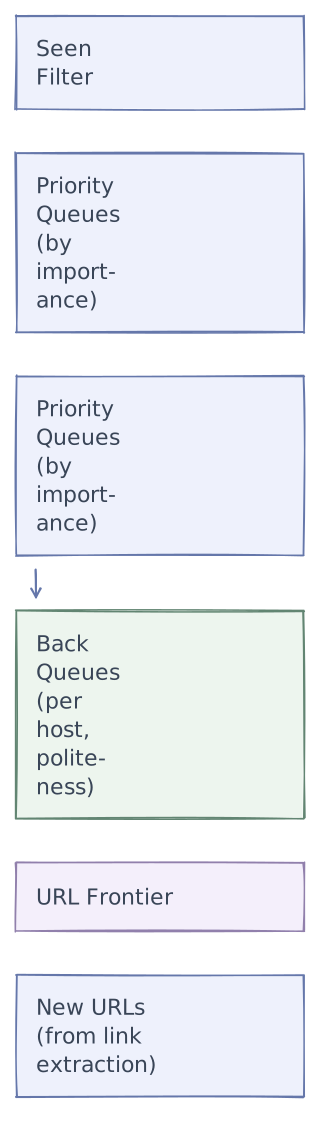
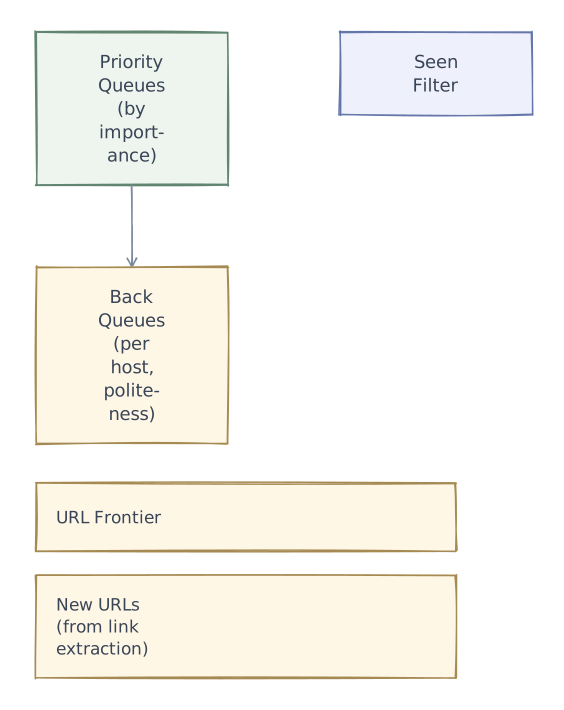
Priority assignment:
- P0 (minutes): Major news sites, trending topics, high-PageRank pages
- P1 (hours): Popular sites, frequently updated content
- P2 (days): Medium-traffic sites, blogs
- P3 (weeks-months): Long-tail pages, rarely changing content
Politeness policy:
- Respect
robots.txt-- fetch and cache per domain - Max 1 request per domain per second (configurable)
- Back-queue per host ensures sequential per-host fetching
- Exponential backoff on errors (429, 503)
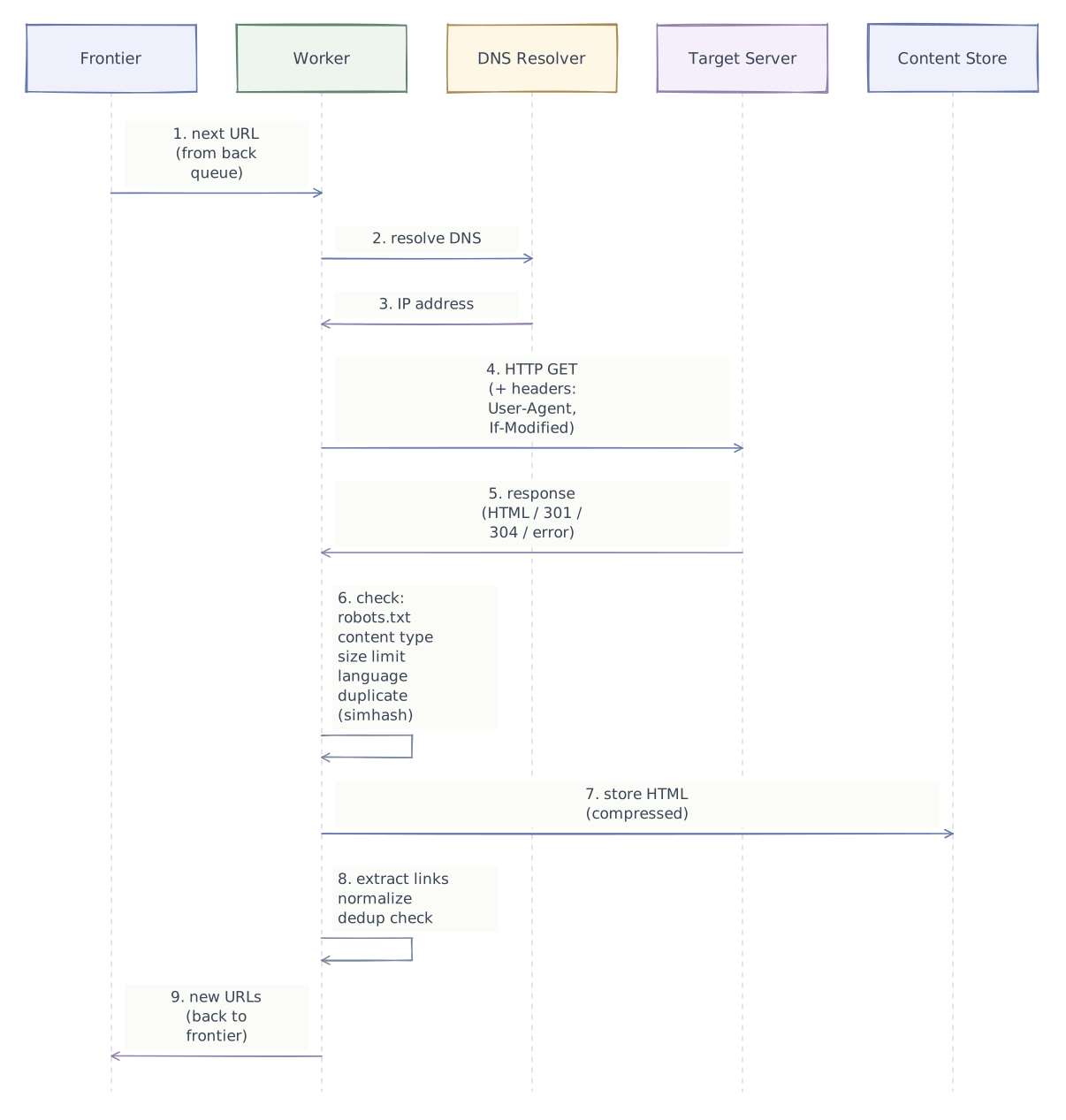
Crawler Worker Flow

Deduplication Strategy
| Level | Technique | Purpose |
|---|---|---|
| URL-level | Normalize URLs + Bloom filter (100B entries, ~120 GB) | Avoid re-fetching same URL |
| Content-level | SimHash / MinHash fingerprint | Detect near-duplicate pages |
| Document-level | Exact content hash (SHA-256) | Detect exact duplicates |
SimHash for near-duplicate detection:
- Tokenize page into shingles (3-grams of words)
- Hash each shingle to 64-bit value
- Compute weighted sum -> 64-bit fingerprint
- Two pages with Hamming distance ≤ 3 are near-duplicates
- Use multi-probe lookup table for efficient comparison
PageRank & Link Graph
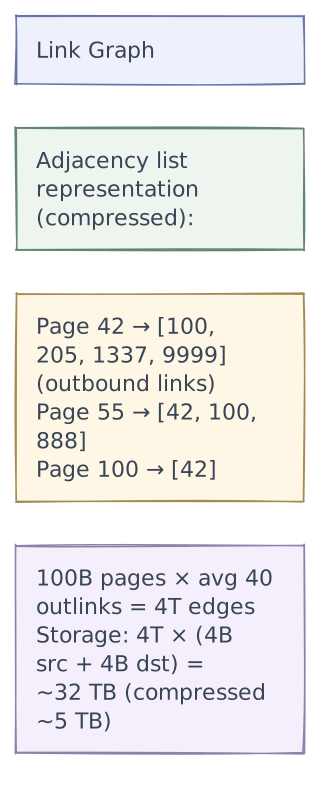
Link Graph Storage
PageRank Convergence
Iteration   Max ΔPageRank    Time per iteration
    1          0.50              ~2 hours
    5          0.10              ~2 hours
   10          0.02              ~2 hours
   20          0.005             ~2 hours
   40          0.0001            ~2 hours
   50          < 0.00001         CONVERGED

Total compute: ~100 hours on 10,000 machines
Frequency: Recomputed weekly (or continuously with incremental updates)
Beyond Basic PageRank
| Variant | Purpose | How |
|---|---|---|
| TrustRank | Combat spam | Propagate trust from curated seed set of high-quality pages |
| Topic PageRank | Topical relevance | Compute separate PageRank per topic (bias random surfer toward topic pages) |
| HITS | Authority vs Hub | Authorities = pages pointed to by hubs; Hubs = pages pointing to authorities |
| Personalized PageRank | User-specific | Bias random surfer toward user's interests (expensive; precompute for segments) |
Snippet Generation
Snippet Selection Algorithm
For each result document (top 10):

1. Fetch cached page content (from content store or cache)

2. Split page into sentences / passages

3. For each passage, compute relevance score:
   - Term overlap with query (weighted by IDF)
   - Position in document (earlier = higher weight)
   - Proximity of query terms to each other
   - Is passage in a heading, list, or structured element?
   - Does passage form a complete thought?

4. Select best passage (highest score)

5. Truncate to ~160 characters, respecting word boundaries

6. Bold query terms in snippet:
   "The best <b>apple pie recipe</b> uses Granny Smith <b>apples</b>
    with a flaky butter crust..."

7. Cache snippet for this (query, docID) pair
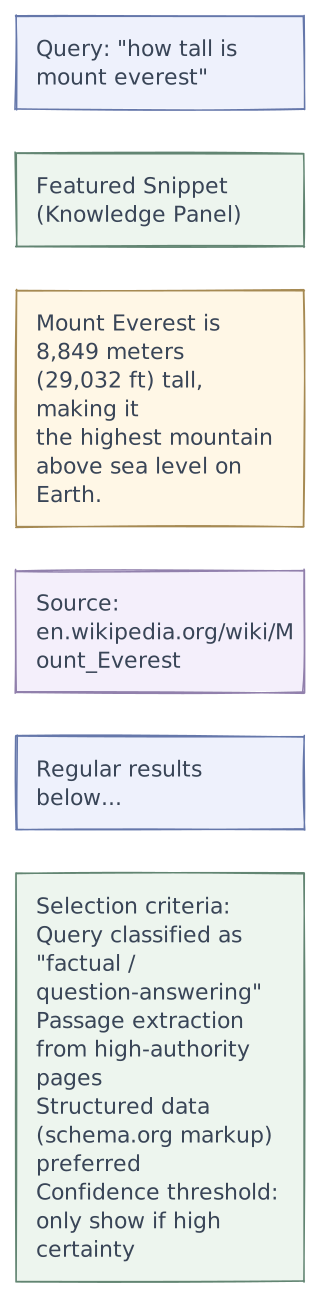
Featured Snippets (Position Zero)
Ads Integration
Ad Serving in Search Results

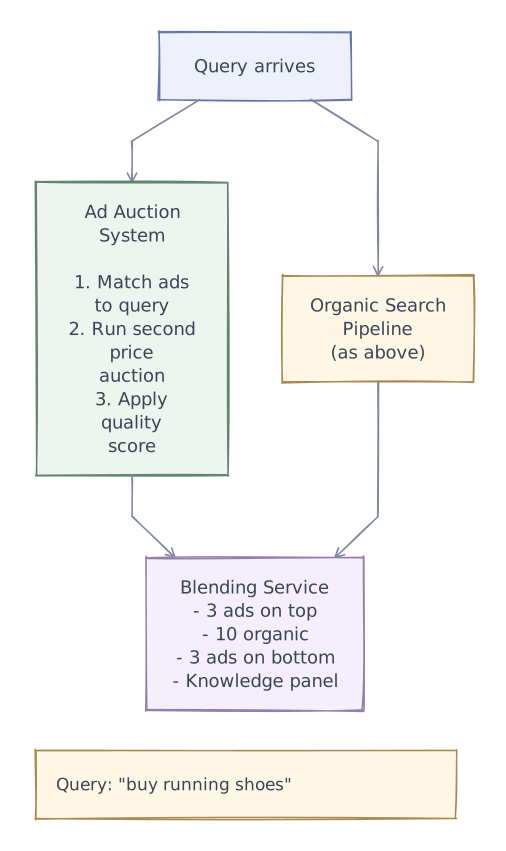
Ad Rank = Bid × Quality Score
- Quality Score = f(expected CTR, ad relevance, landing page experience)
- Winner pays: (next ad rank / winner's quality score) + $0.01
Advanced Topics
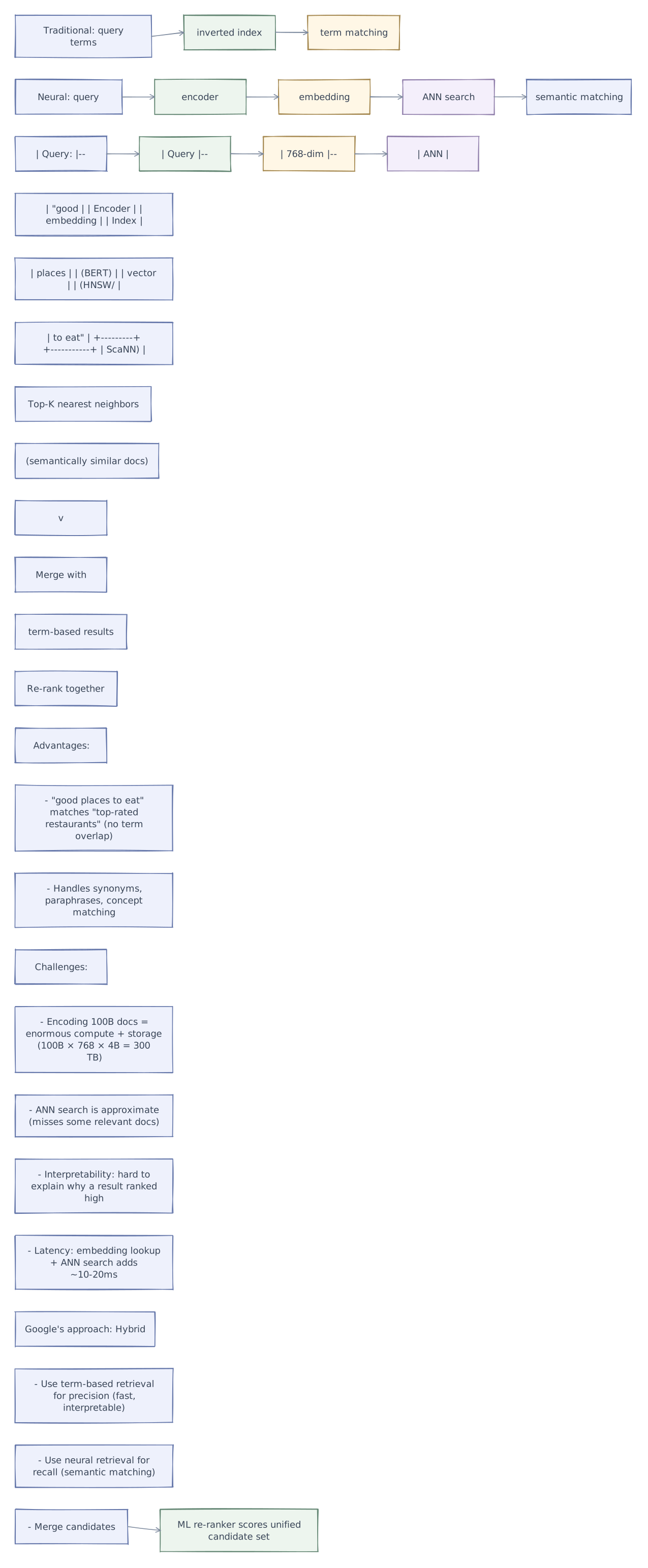
Semantic Search (Neural Retrieval)

Real-Time Indexing Pipeline (Google Caffeine)

Handling Scale: Tiered Index
Tier 1: "Hot" index (top 10B pages by PageRank)
  - Fully in-memory posting lists
  - Serves 80% of queries (popular terms + high-quality pages)
  - Fastest response time

Tier 2: "Warm" index (next 40B pages)
  - SSD-backed posting lists, cached in memory when hot
  - Queried only if Tier 1 doesn't return enough results
  - Slightly slower

Tier 3: "Cold" index (remaining 50B pages)
  - SSD/HDD-backed
  - Only queried for rare/long-tail queries
  - Slowest but most comprehensive

Query flow:
  1. Always query Tier 1
  2. If < 10 good results, also query Tier 2
  3. If still < 10, query Tier 3
4. Merge and re-rank across tiersEdge cases
A document can change after retrieval but before the reader opens it. Preserve a version or crawl timestamp so snippets are explainable. Deleted or access-restricted documents need prompt filtering, and a slow shard needs an explicit timeout policy rather than holding every other shard’s results indefinitely.
Tradeoffs
Key Tradeoffs
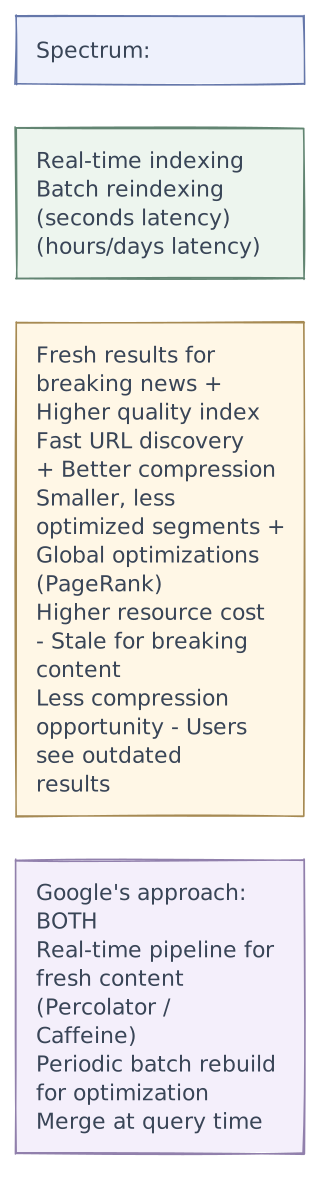
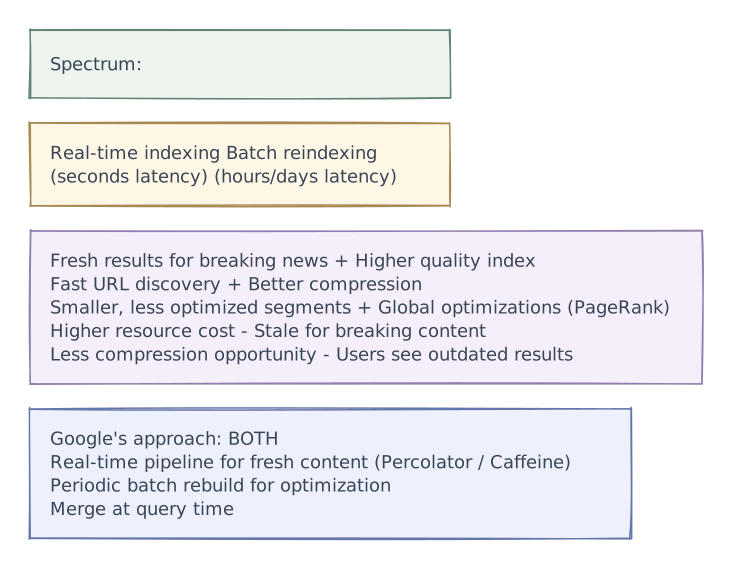
Freshness vs. Index Quality
Precision vs. Recall
| Approach | Precision | Recall | Latency | Use Case |
|---|---|---|---|---|
| Strict AND (all terms must match) | High | Low | Fast | Short queries, navigational |
| WAND (soft matching) | Medium-High | High | Medium | Most queries |
| Neural retrieval (embedding similarity) | Medium | Very High | Slow | Ambiguous / semantic queries |
| Hybrid (WAND + neural) | High | Very High | Medium | Best quality, Google's direction |
Document-Partitioned vs. Term-Partitioned Index
| Criterion | Document-Partitioned | Term-Partitioned |
|---|---|---|
| Fan-out per query | High (all shards) | Low (few shards) |
| Load balance | Even | Skewed (popular terms) |
| Adding documents | Easy (add to one shard) | Hard (update many shards) |
| Multi-term queries | Natural (local intersection) | Complex (distributed join) |
| Failure impact | Graceful (partial results) | Total (missing term = broken) |
| Winner | Google uses this | Not used at scale |
Pre-computation vs. On-the-fly
| Component | Pre-computed | On-the-fly | Google's Approach |
|---|---|---|---|
| PageRank | Weekly batch | N/A | Pre-computed |
| Inverted index | Batch + real-time | N/A | Hybrid |
| Snippets | N/A | At query time | On-the-fly (cached) |
| Spell correction | Model trained offline | Applied at query time | Hybrid |
| Personalization | User profile prebuilt | Applied at ranking time | Hybrid |
| ML ranking model | Trained offline | Inference at query time | Hybrid |
Latency vs. Quality
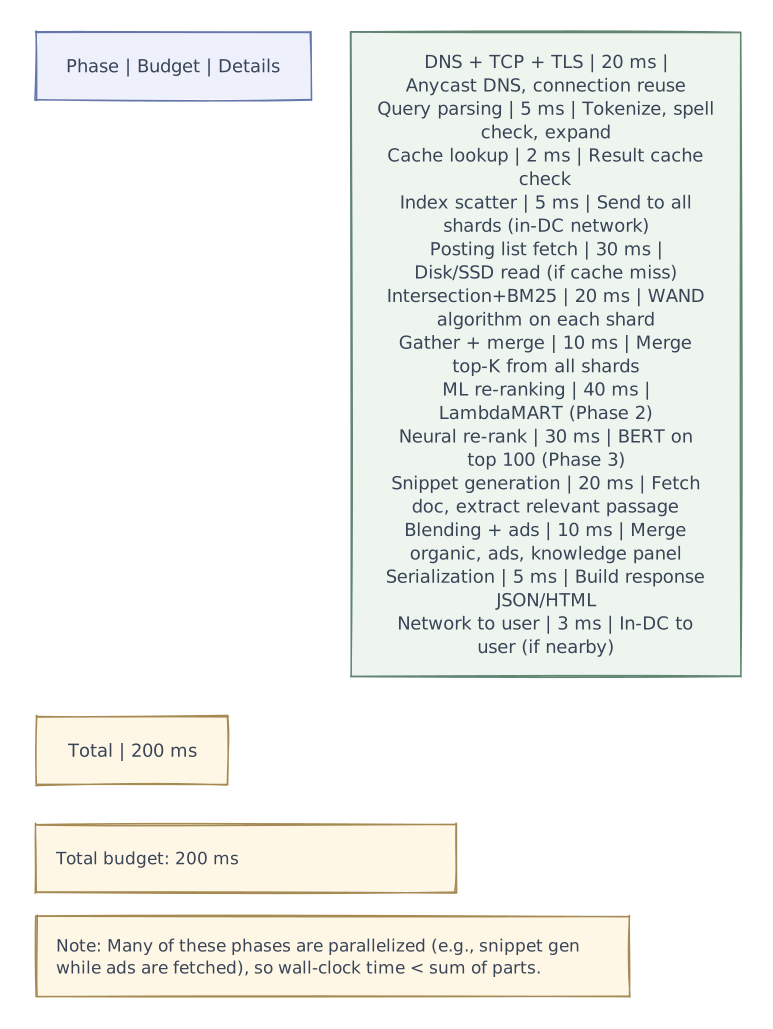
Budget: 200 ms total

If we spend MORE time on ranking:
  + Better result quality (more features, deeper models)
  - Higher latency → users leave (Google data: +200ms = -0.6% searches)
  - More compute cost

If we spend LESS time on ranking:
  + Faster results → happier users
  + Lower compute cost
  - Worse relevance → users reformulate / leave

Solution: Multi-phase ranking
  - Cheap phases process many candidates quickly
  - Expensive phases only run on small candidate set
- Strict timeout per phase with fallback to simpler modelReliability & fault tolerance
Phase 4 of 4 · Operations & resilience
Add operational safeguards
With the request paths and tradeoffs established, add the controls that help detect trouble and keep the system operating. The final diagram retains every layer introduced so far.
- Operations
- Track index lag and slow shards; return partial results rather than waiting indefinitely.
Fault Tolerance & Reliability
Replication Strategy
Failure Scenarios & Handling
| Failure | Impact | Mitigation |
|---|---|---|
| Single index server dies | 1 shard's replica unavailable | Other replicas serve; re-replicate from peers |
| Entire rack fails | Multiple shards affected | Cross-rack replicas; partial results from remaining shards |
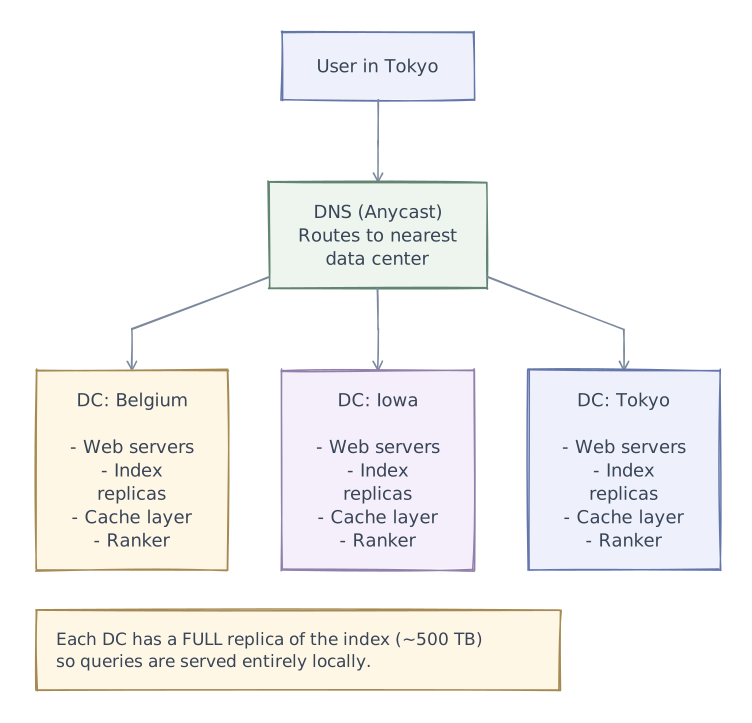
| Entire DC fails | Need other DC to serve | Full index copy in each DC; DNS failover |
| Index corruption | Wrong results | Checksum validation; rollback to previous index version |
| Crawler overloads target | Site goes down | Politeness policies, adaptive rate limiting |
| Query of death (pathological query) | Server OOM/timeout | Query complexity limits, timeout per phase, circuit breaker |
Graceful Degradation
When the system is under stress:
- Drop neural re-ranking (Phase 3) -- fall back to ML tree model (saves ~30ms)
- Reduce shard fan-out -- query subset of shards (partial results, still useful)
- Increase cache TTL -- serve slightly stale results
- Shed low-priority queries -- deprioritize bot traffic, prefetch requests
- Disable personalization -- serve generic results (cheaper to compute)
Monitoring & Operational Concerns
Key Metrics to Monitor
| Category | Metric | Alert Threshold |
|---|---|---|
| Latency | P50 query latency | > 100 ms |
| Latency | P99 query latency | > 500 ms |
| Availability | Shard availability | < 99.9% |
| Quality | Click-through rate (CTR) on #1 result | Drop > 5% |
| Quality | Queries with no results | > 0.1% |
| Freshness | Time from page publish to indexing | > 5 min for P0 pages |
| Crawling | Crawl error rate | > 5% |
| Crawling | Pages crawled per second | Drop > 20% |
| Index | Index staleness (oldest segment age) | > 7 days |
| Capacity | Index server CPU utilization | > 70% sustained |
| Capacity | Memory utilization per index server | > 85% |
Operational Runbook Scenarios
| Scenario | Response |
|---|---|
| Query latency spike | Check for hot shards; shed neural re-ranking; increase cache TTL |
| Index corruption detected | Rollback shard to last known-good checkpoint; alert indexing team |
| Crawl rate drop | Check DNS resolution; check for widespread 429s; verify frontier health |
| Quality regression | Roll back ranking model; check for data pipeline issues |
| DC failover needed | DNS reroute traffic; verify receiving DC has capacity headroom |
Production architecture
High-Level Architecture

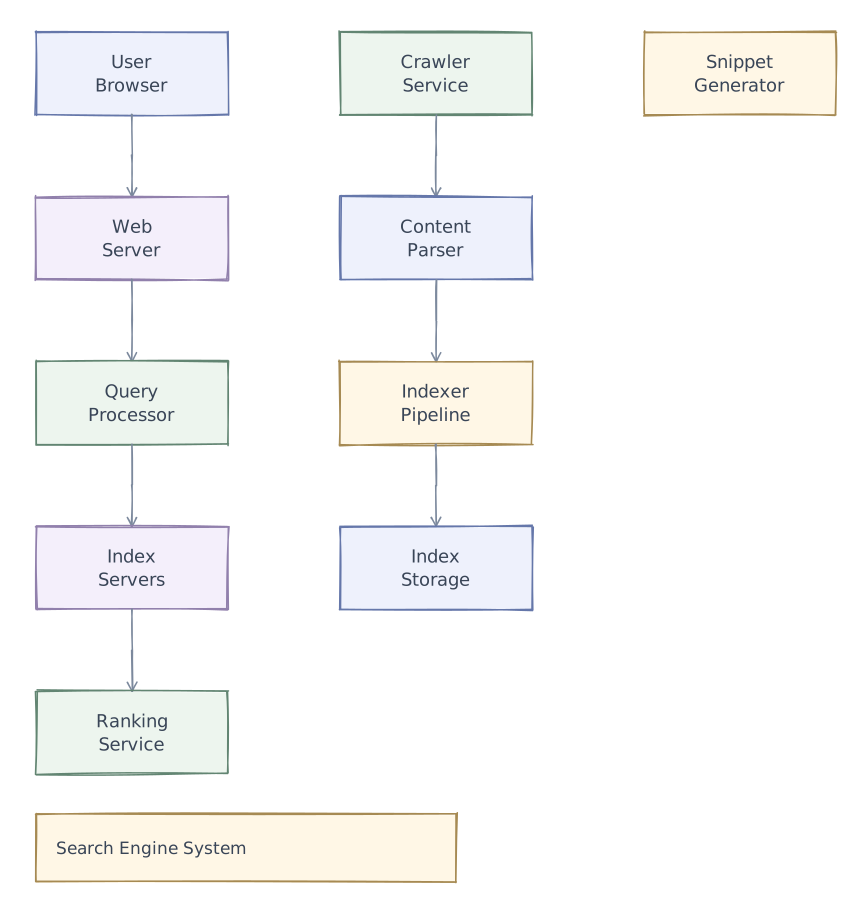
Detailed Architecture

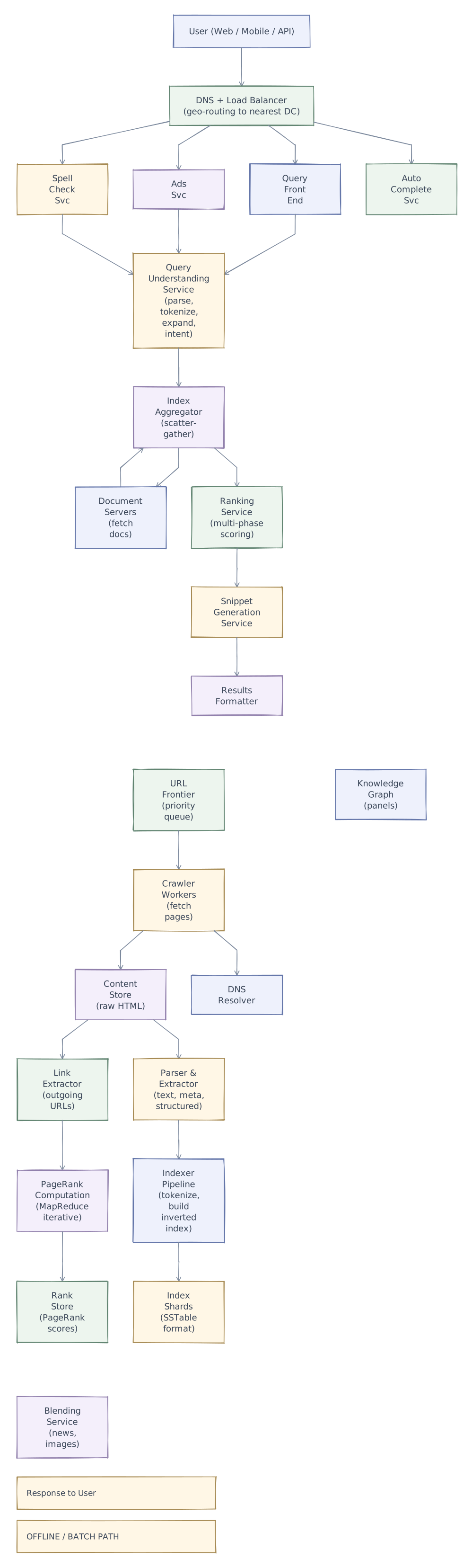
Serving Infrastructure
Global Distribution

Caching Layers
Layer 1: Result Cache (in-memory, per DC)
  Key: normalized_query + locale + page
  Value: serialized search results (top 10 + snippets)
  TTL: 5-15 minutes
  Hit rate: ~30% (head queries)
  Size: ~100 GB per DC

Layer 2: Posting List Cache (in-memory, per index server)
  Key: term
  Value: compressed posting list (or partial)
  Policy: LRU, prioritize high-IDF terms
  Hit rate: ~80% for popular terms
  Size: ~64 GB per machine

Layer 3: Document Cache (in-memory)
  Key: doc_id
  Value: title, URL, cached snippet, metadata
  Size: ~32 GB per machine

Layer 4: DNS Cache
  Resolved hostnames cached for crawlers
  TTL: follow DNS TTL headers
Latency Budget Breakdown

Tail Latency Management
| Strategy | Description |
|---|---|
| Hedged requests | Send query to 2 replicas of each shard; use first response |
| Canary requests | Send to 1 shard first; if slow, don't fan out to rest |
| Backup requests | If primary shard doesn't respond in P50 time, send to backup |
| Graceful degradation | If some shards timeout, return partial results from responding shards |
| Tiered timeout | Phase 3 (neural) skipped if time budget exhausted; fall back to Phase 2 |
Further exploration
Search for a breaking news event a minute after it starts. Compare a fresh but noisy incremental index with yesterday’s more thoroughly processed index. Work through how they merge, how duplicates disappear, and how ranking avoids treating freshness as a universal substitute for relevance.
Interview playbook
System Design Interview Tips
What interviewers are looking for
- Crawling at scale -- URL frontier design, politeness, deduplication
- Inverted index internals -- posting lists, compression, skip pointers
- Ranking pipeline -- multi-phase architecture, key signals, BM25 + PageRank
- Serving at scale -- sharding, replication, caching, latency budgets
- Tradeoff reasoning -- freshness vs quality, precision vs recall, cost vs latency
Common follow-up questions
| Question | Key Points |
|---|---|
| "How do you handle a query that matches 1B documents?" | WAND pruning, tiered index, early termination with top-K heap |
| "How do you keep the index fresh?" | Real-time pipeline (Caffeine), incremental indexing, merge with base |
| "How would you handle a celebrity name query?" | Intent classification, knowledge panel, blend web + news + images |
| "What happens if a data center goes down?" | Full index replica per DC, DNS failover, hedged requests |
| "How does PageRank handle spam?" | TrustRank from seed set, link farm detection, manual penalties |
| "How do you evaluate search quality?" | Human raters (E-E-A-T), A/B tests on CTR/dwell time, NDCG metric |
Suggested 45-Minute Interview Structure
0-5 min:   Clarify requirements (web search? scale? real-time?)
5-10 min:  Scale estimations (pages, QPS, storage)
10-20 min: High-level architecture (crawl → index → serve)
20-30 min: Deep dive into ONE area:
           - Option A: Inverted index + query processing
           - Option B: Crawling + URL frontier
           - Option C: Ranking pipeline
30-40 min: Tradeoffs + scaling concerns
40-45 min: Monitoring, failure handling, future extensions