Requirements & scope
Problem Statement & Requirements
Functional Requirements
- Prefix matching -- as the user types each character, return the top suggestions matching the prefix
- Top-K suggestions -- return the K most popular/relevant suggestions (typically K=5-10)
- Real-time updates -- incorporate trending queries into suggestions quickly (minutes, not days)
- Personalization -- blend user's own search history into suggestions
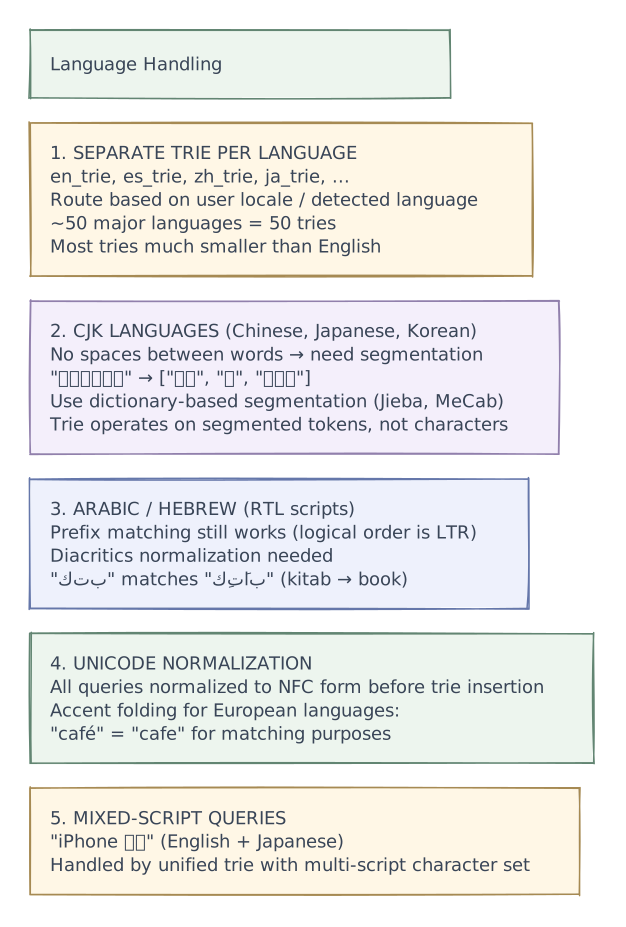
- Multi-language support -- handle queries in multiple languages and scripts
- Spell tolerance -- handle minor typos in prefix (fuzzy matching)
- Phrase completion -- suggest completions for multi-word queries ("how to b" → "how to bake bread")
- Trending queries -- boost currently trending topics (sports events, breaking news)
- Offensive content filtering -- suppress suggestions for hateful, explicit, or harmful content
- Entity-aware suggestions -- recognize and boost entities (people, places, brands)
Non-Functional Requirements
- Ultra-low latency -- suggestions must appear in < 100 ms (ideally < 50 ms)
- High availability -- 99.99% uptime; degraded suggestions are better than none
- Massive scale -- serve 100K+ suggestion requests per second
- Consistency -- eventual consistency is acceptable (different users may see slightly different suggestions)
- Scalability -- handle billions of unique queries in the corpus
- Bandwidth efficiency -- minimize data transfer (users type fast, requests are frequent)
Scope Boundaries
| In Scope | Out of Scope |
|---|---|
| Prefix-based query suggestions | Full search results (covered in Search Engine design) |
| Popularity-based ranking | Complex ML-based ranking (simplified) |
| Real-time trending updates | Ad suggestions in autocomplete |
| Personalization (basic) | Voice-based autocomplete |
| Offensive content filtering | Detailed NLP / LLM suggestions |
| Multi-language support | Cross-language translation suggestions |
Scale estimations
Scale Estimations
Query & Suggestion Corpus
| Metric | Value |
|---|---|
| Unique search queries (all time) | 10B |
| Unique queries with meaningful frequency | 500M |
| Average query length | 20 characters (4 words) |
| New unique queries per day | 50M |
| Trending queries (burst) | 100K at any given time |
Traffic
| Metric | Value |
|---|---|
| Daily Active Users (DAU) | 500M |
| Searches per user per day | 5 |
| Total searches per day | 2.5B |
| Keystrokes per search (avg) | 10 (users type partial, then click suggestion) |
| Autocomplete requests per day | 2.5B × 10 = 25B |
| Requests per second (avg) | ~290K RPS |
| Requests per second (peak) | ~600K RPS |
Storage
| Metric | Value |
|---|---|
| Suggestion corpus (500M queries × 20 bytes avg) | ~10 GB |
| Trie structure overhead | ~30 GB (pointers, metadata) |
| Per-user personalization (100M active × 1 KB) | ~100 GB |
| Frequency/popularity scores | ~4 GB |
| Total in-memory dataset | ~50 GB per replica |
Bandwidth
| Metric | Value |
|---|---|
| Average response size (10 suggestions × 30 chars) | ~500 bytes |
| Outbound bandwidth | 290K × 500 bytes = ~145 MB/s |
| Inbound bandwidth (prefix queries) | 290K × 50 bytes = ~15 MB/s |
Layered architecture
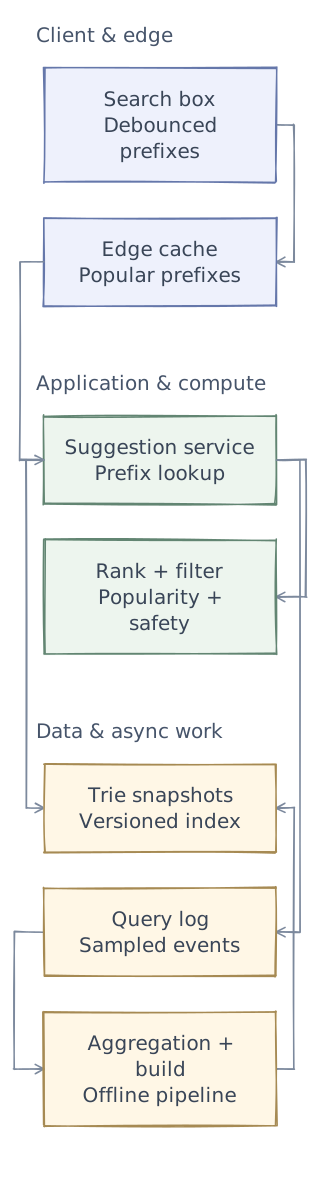
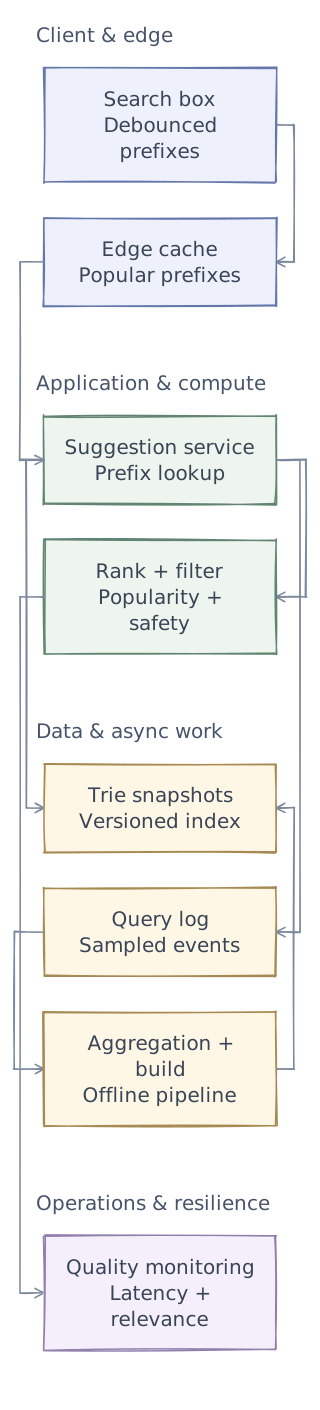
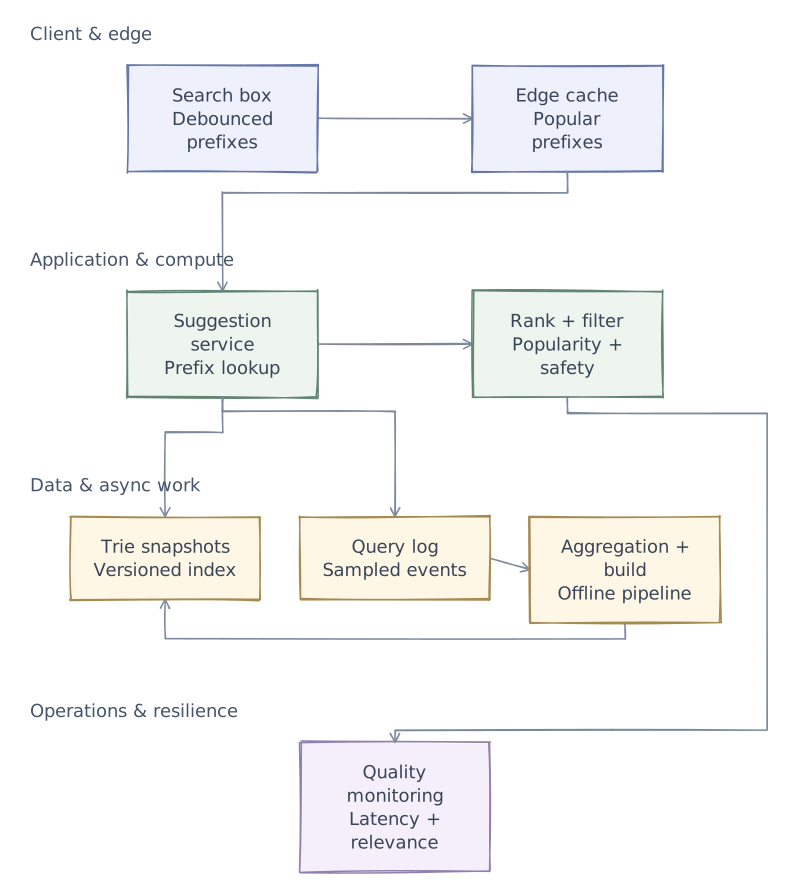
Phase 1 of 4 · Client & edge
Start with the entry points
First, define who uses the system and where requests enter. This is the boundary of the design, not yet a complete request path.
- Search box
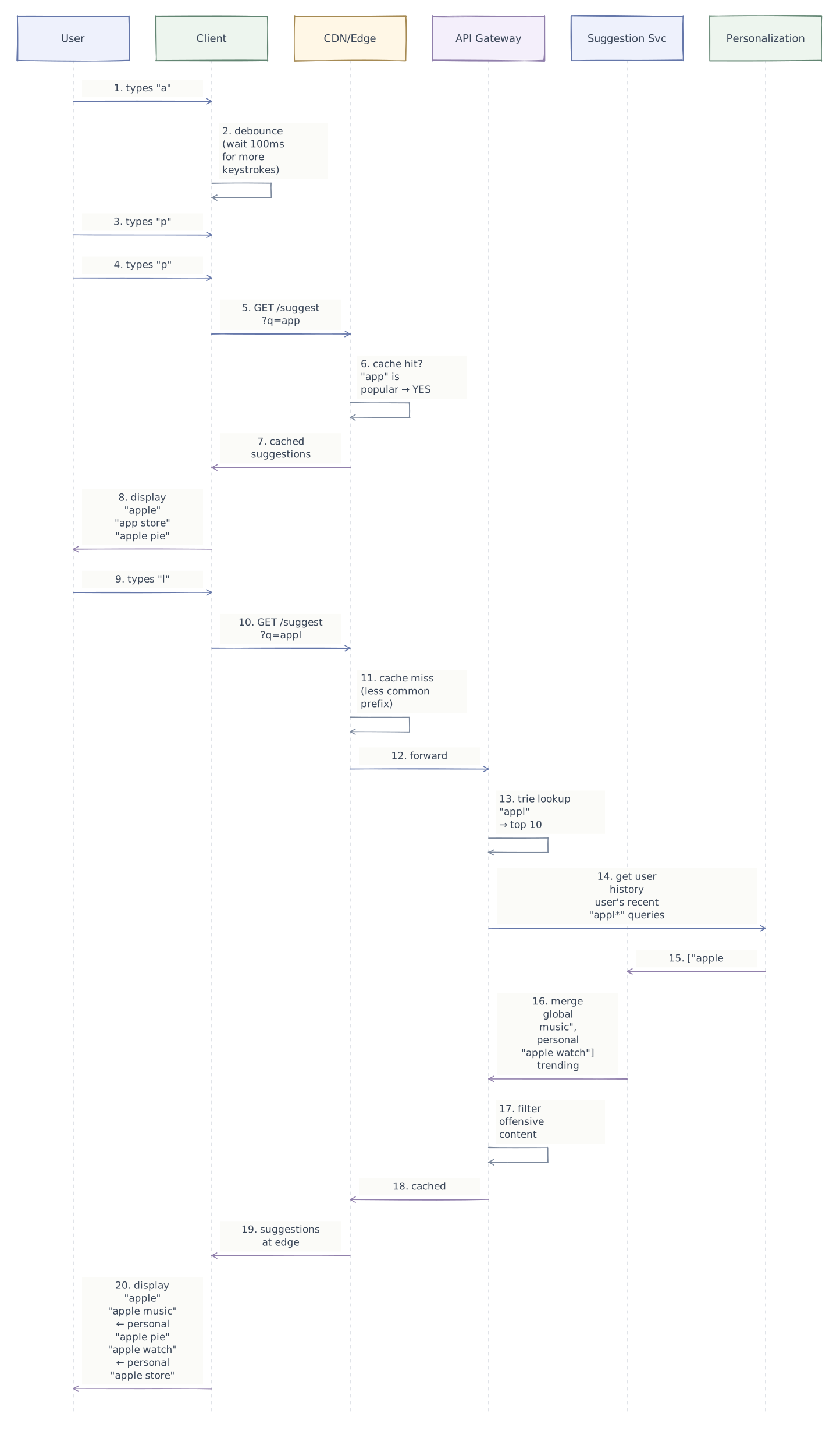
- Debounce keystrokes and discard stale responses using the current query sequence.
- Edge cache
- Serve safe, non-personalized common prefixes close to users.
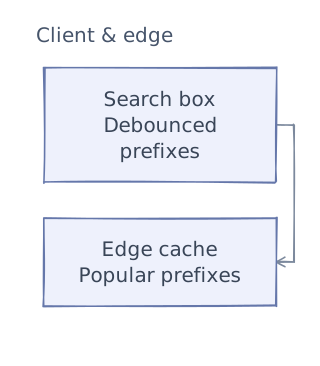
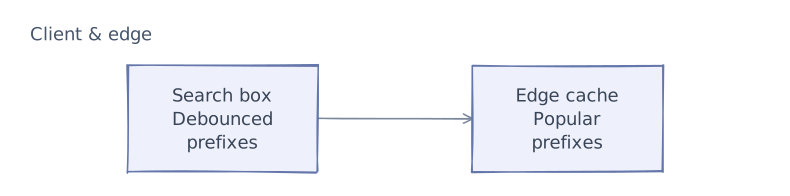
This first layer defines the system boundary. The next chapters add application logic and data dependencies. After examining the request paths and tradeoffs, we will add operational safeguards and bring the complete architecture together.
API & contracts
Phase 2 of 4 · Application & compute
Add the application logic
Keep the entry points and add the services that do the work. Give each service a clear responsibility before defining its contracts. Storage and background dependencies come next.
- Suggestion service
- Query an in-memory trie or compressed alternative for a small top-k candidate set.
- Rank + filter
- Blend global, trending, and personal signals, then remove prohibited suggestions.
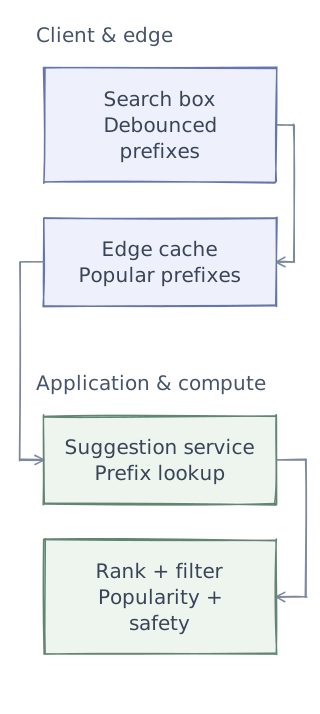
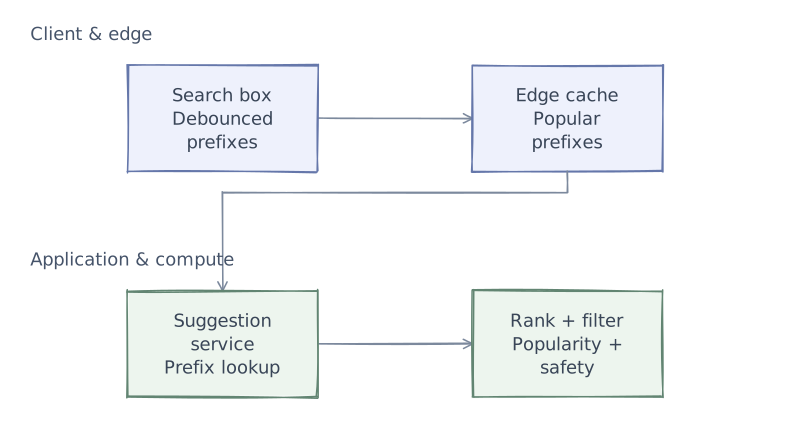
Send the prefix with language and any allowed personalization context, and return a short ranked list. The client should associate each reply with the prefix that requested it and ignore stale replies. Cancellation saves work, but correctness must not depend on the server receiving a cancellation in time.
Data model
Phase 3 of 4 · Data & async work
Connect data and background work
The services now need their dependencies: durable state, fast lookups, or work that continues outside a request. Separate these responsibilities rather than treating every component as a database.
- Trie snapshots
- Publish immutable snapshots and atomically switch readers to a validated version.
- Query log
- Collect privacy-aware query signals for aggregate popularity rather than storing unnecessary identity.
- Aggregation + build
- Aggregate prefix counts and periodically rebuild the serving index.
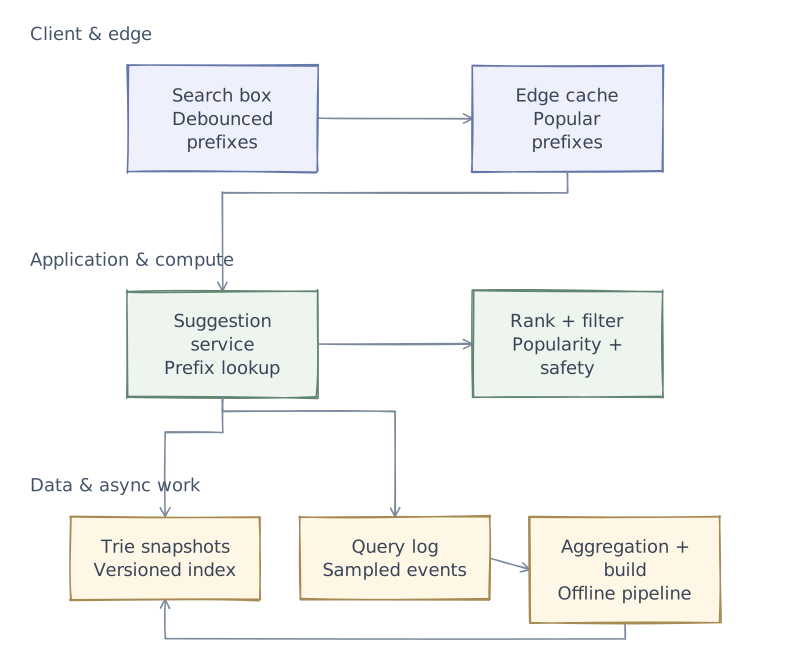
Store normalized query candidates, display text, scores, and eligibility metadata separately from the serving index. A prefix index or trie is a derived structure that can be rebuilt. Version its snapshots so a server does not mix nodes and ranking data from different rebuilds.
Core design decisions
Trie Data Structure (Core)
Basic Trie Structure
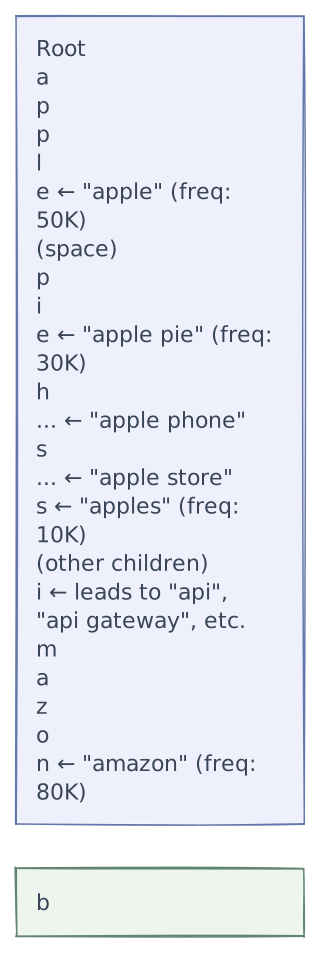
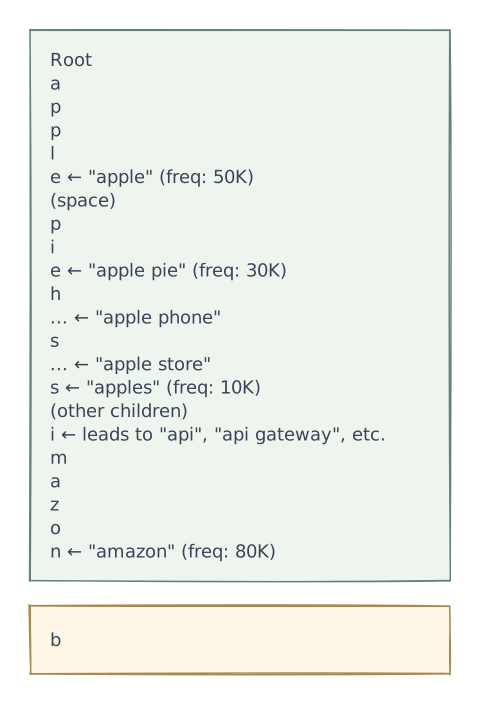
Trie Node Structure
struct TrieNode {
    children: HashMap<char, TrieNode>,   // or array[128] for ASCII
    is_end_of_query: bool,               // marks complete query
    frequency: u64,                       // search frequency count
    top_k: Vec<(String, u64)>,           // precomputed top-K suggestions
                                          // for prefix ending at this node
}

Memory per node:
  - children pointers:  ~256 bytes (hash map) or 1 KB (array)
  - is_end + freq:      9 bytes
  - top_k (10 entries): ~400 bytes (query strings + scores)
  Total: ~700 bytes - 1.5 KB per node

For 500M unique queries × avg 20 chars:
  - Upper bound nodes: 10B (but massive sharing of prefixes)
  - Actual nodes (shared prefixes): ~2-3B
  - Memory: 2B × 1 KB = ~2 TB  ← TOO MUCH for naive trie
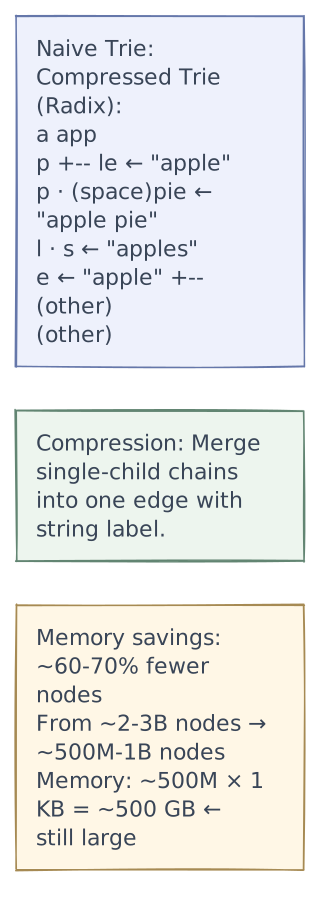
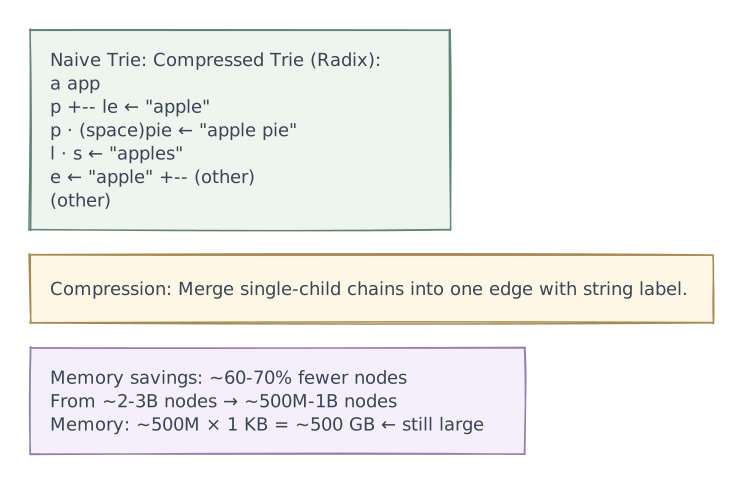
Optimized Trie: Compressed Trie (Patricia / Radix Tree)
Further Optimization: Top-K Precomputation
Instead of storing full queries at each node, store only the top-K suggestion IDs:
struct CompactTrieNode {
    children: Vec<(char, u32)>,     // (char, child_offset) - sparse
    top_k_ids: [u32; 10],           // indices into suggestion string pool
    flags: u8,                       // is_terminal, has_children, etc.
}

Separate string pool:
  suggestions: Vec<String>          // all 500M suggestion strings
  scores:      Vec<u32>             // corresponding popularity scores

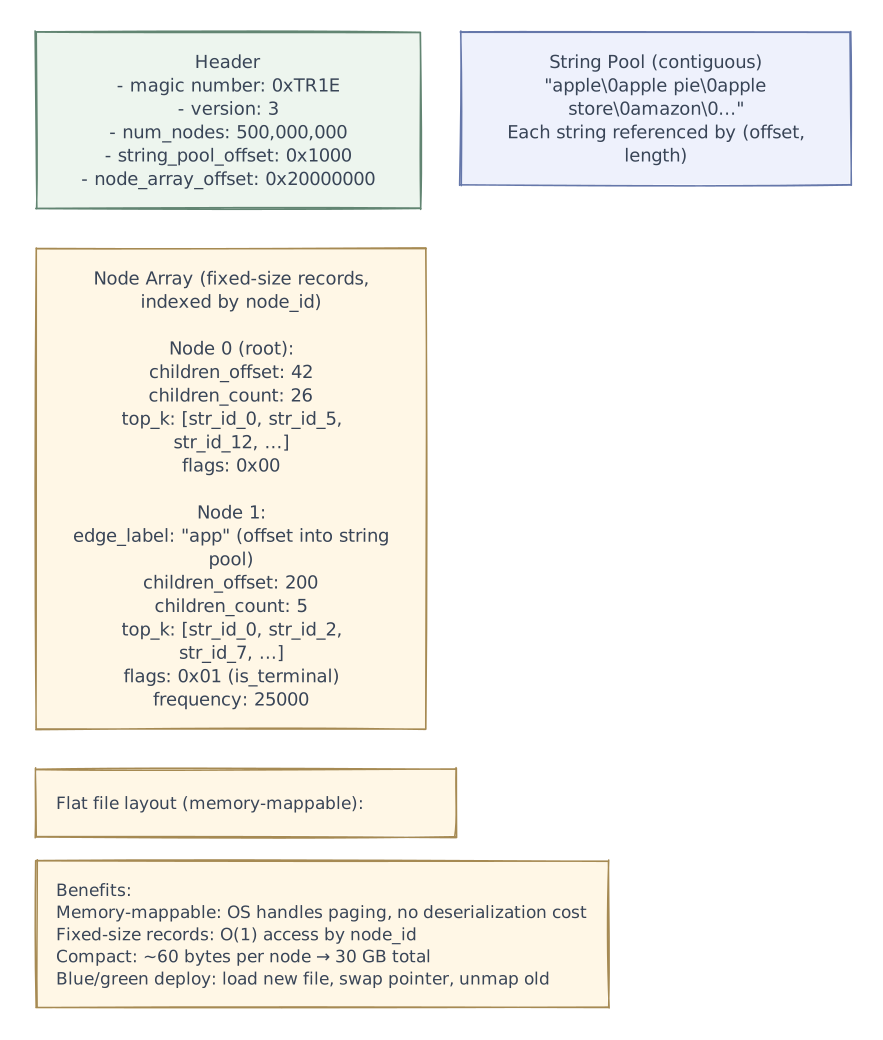
Memory per node: ~60 bytes
Total nodes: ~500M
Total trie structure: ~30 GB  ← fits in memory!
String pool: ~10 GB
Total: ~40-50 GB per replica
Top-K Propagation Algorithm
Building the trie with top-K at each node:

1. Insert all (query, frequency) pairs into the trie
2. Bottom-up traversal:

   For each node N:
     candidates = []
     if N.is_terminal:
       candidates.append((N.query, N.frequency))
     for child in N.children:
       candidates.extend(child.top_k)
     N.top_k = heapq.nlargest(K, candidates, key=frequency)

Example:
  Node "app" has top_k:
    [("apple", 50K), ("apple pie", 30K), ("app store", 25K),
     ("apple music", 20K), ("application", 15K), ...]

Query time: O(L) where L = prefix length
  - Walk the trie character by character: O(L)
  - Return precomputed top_k: O(1)
- Total: O(L) ← typically L < 20, essentially O(1)Request flows
Query Flow (Online Serving)
Keystroke-to-Suggestion Flow

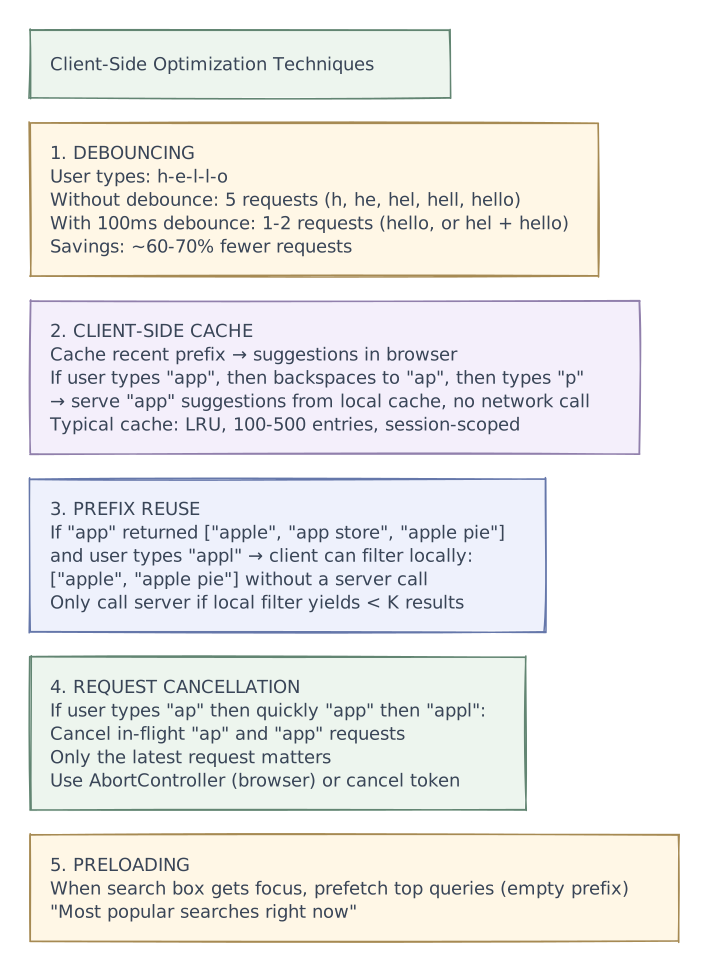
Client-Side Optimizations

Data Collection & Aggregation Pipeline
Query Log Collection

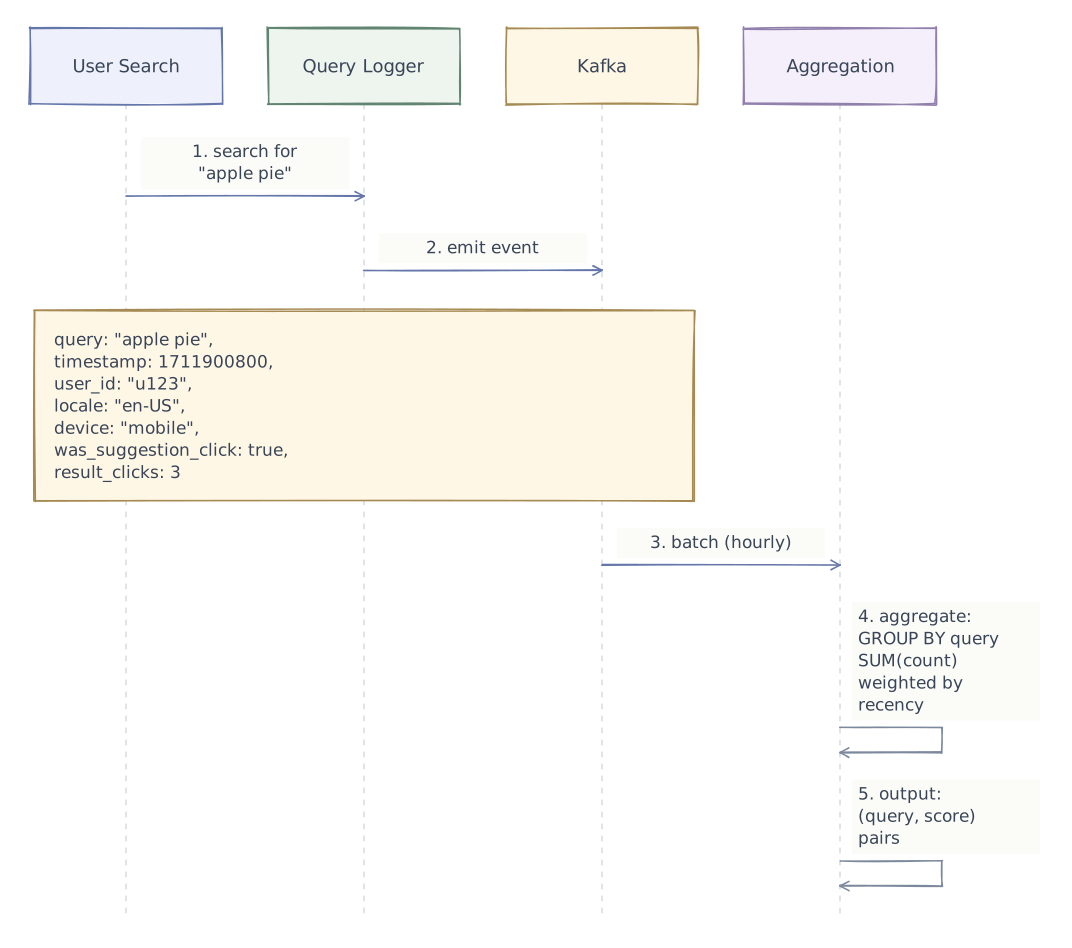
Frequency Scoring Formula
Score(query) = Σ  count(query, day_i) × decay(day_i)
              i=1..30

Where:
  decay(day_i) = e^(-λ × age_in_days)
  λ = 0.1 (tunable decay rate)

Example for "apple pie":
  Day 0 (today):  5000 searches × e^(0)    = 5000
  Day 1:          4800 searches × e^(-0.1) = 4342
  Day 7:          3000 searches × e^(-0.7) = 1489
  Day 30:         2000 searches × e^(-3.0) = 100
  Total score: 5000 + 4342 + ... + 100 = weighted sum

Why exponential decay?
  - Recent popularity matters more than historical
  - Trending queries rise fast, old fads decay
  - Tuning λ controls memory of the system
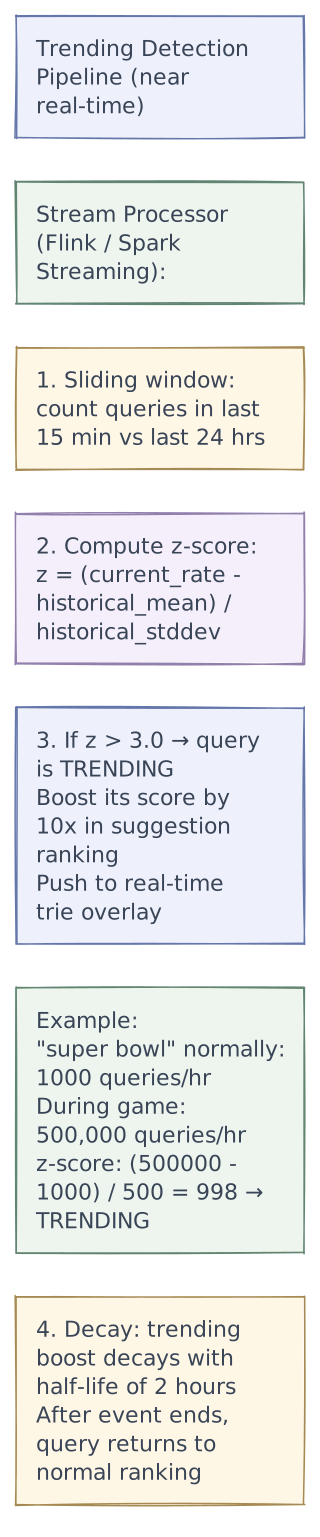
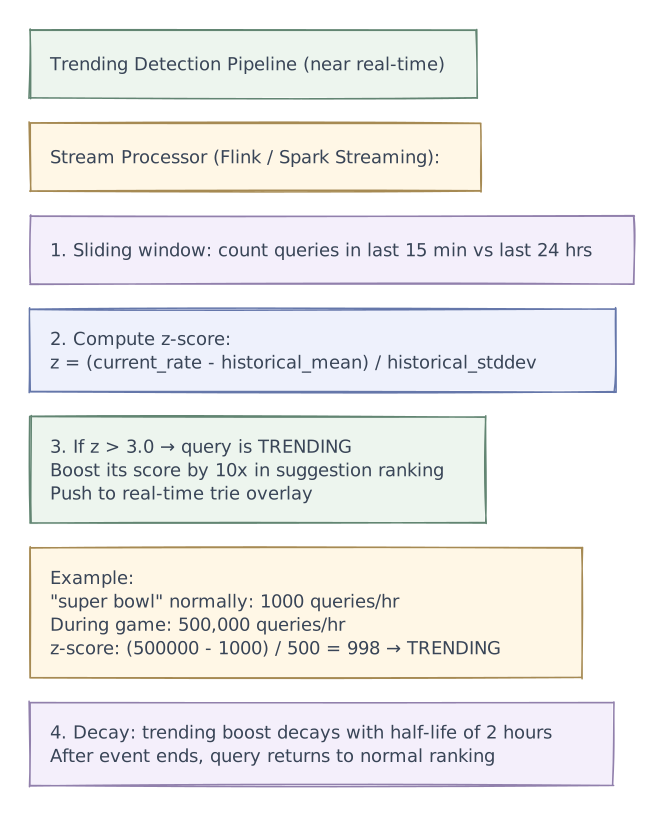
Trending Query Detection
Trie Building Pipeline (Offline)
Batch Trie Construction

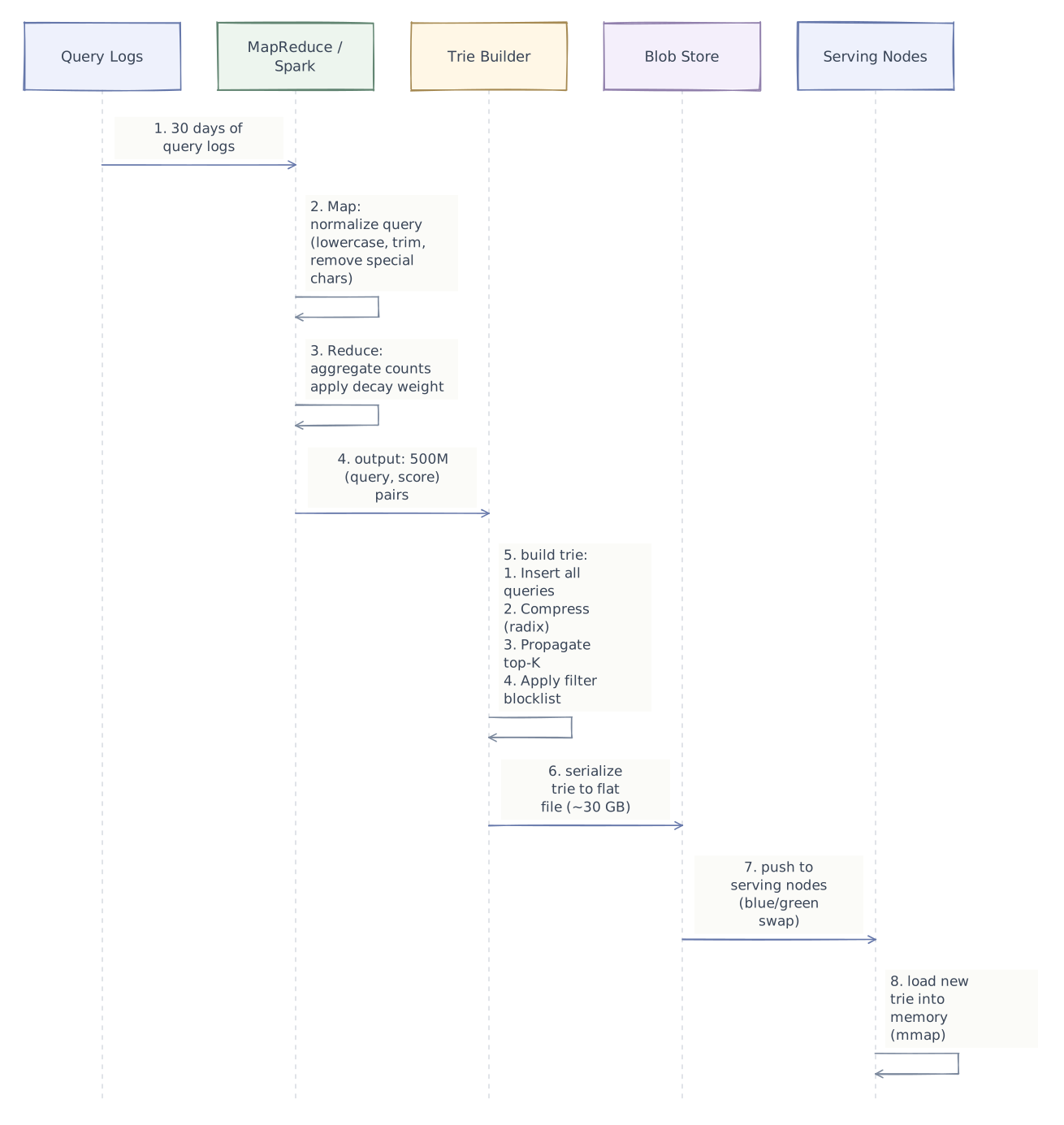
Trie Serialization Format

Performance & caching
Caching Strategy
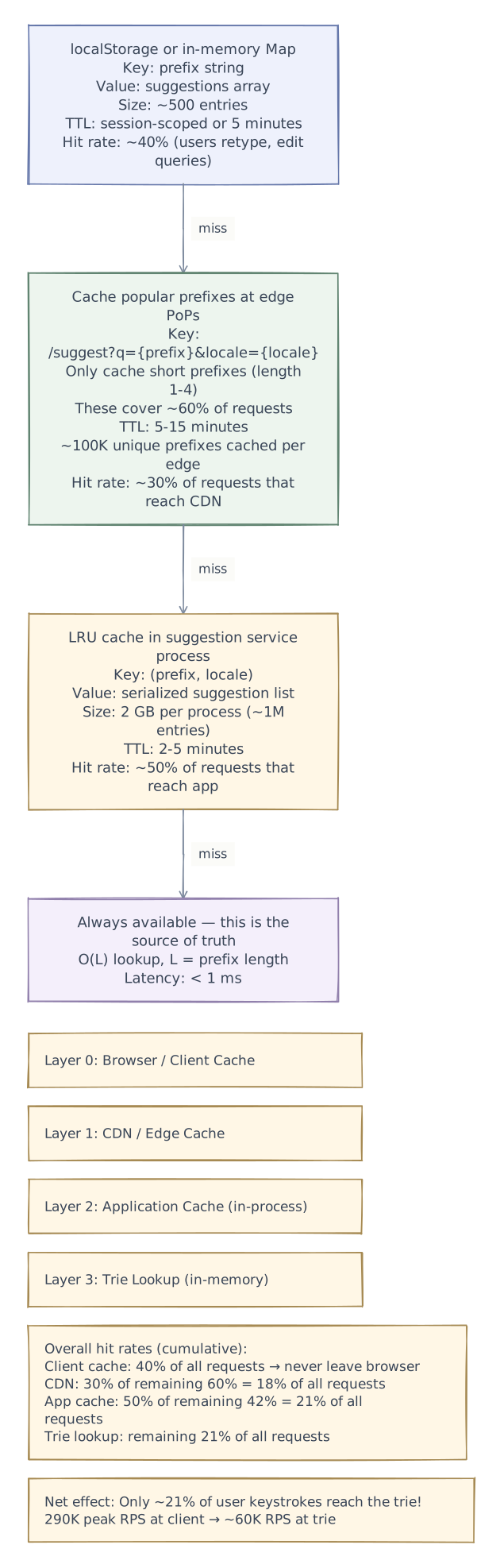
Multi-Layer Cache Architecture

Cache Invalidation
Problem: When trie is updated, cached suggestions become stale.

Strategy: TTL-based expiration (no active invalidation)

  Justification:
  - Suggestions change slowly (hourly trie rebuilds)
  - Slightly stale suggestions are acceptable
  - Active invalidation at CDN scale is expensive and complex
  - 5-15 minute TTL = max staleness of 15 minutes

  Exception: TRENDING queries
  - Bypass CDN cache for trending prefixes
  - Set Cache-Control: no-cache for trending-eligible short prefixes
- Or: use websocket push to update client cache for trendingAdvanced design
Sharding & Replication
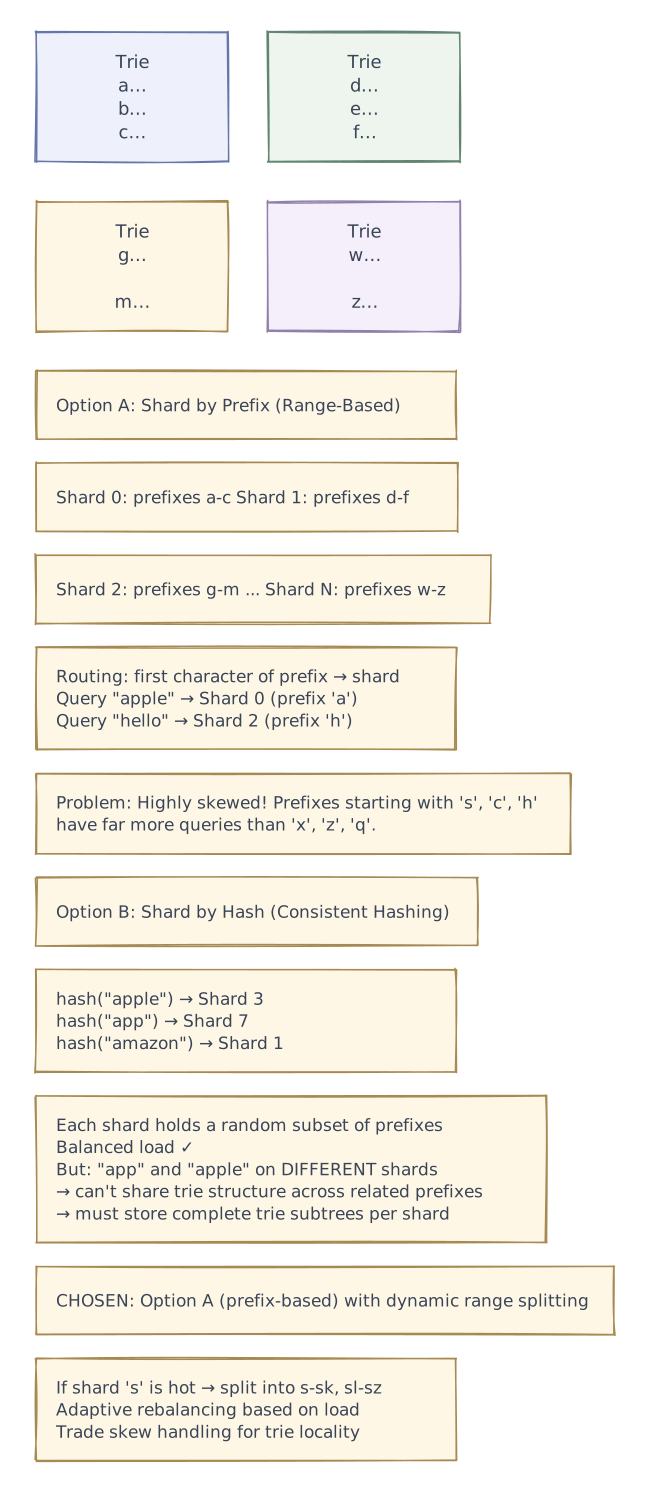
Sharding Strategy

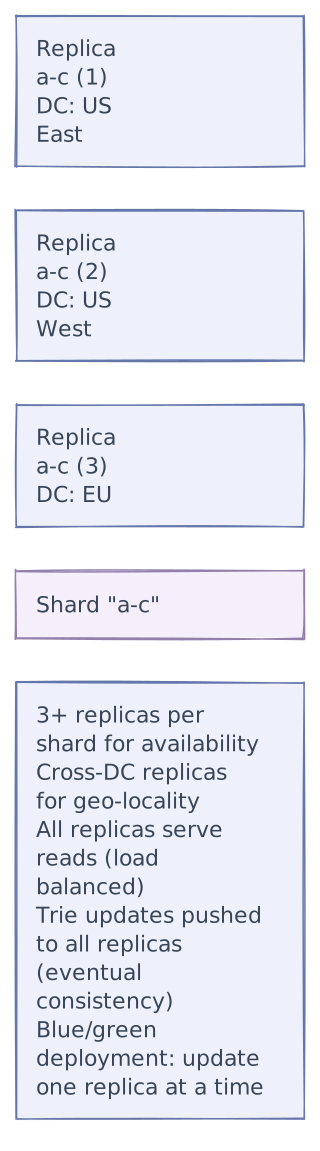
Replication
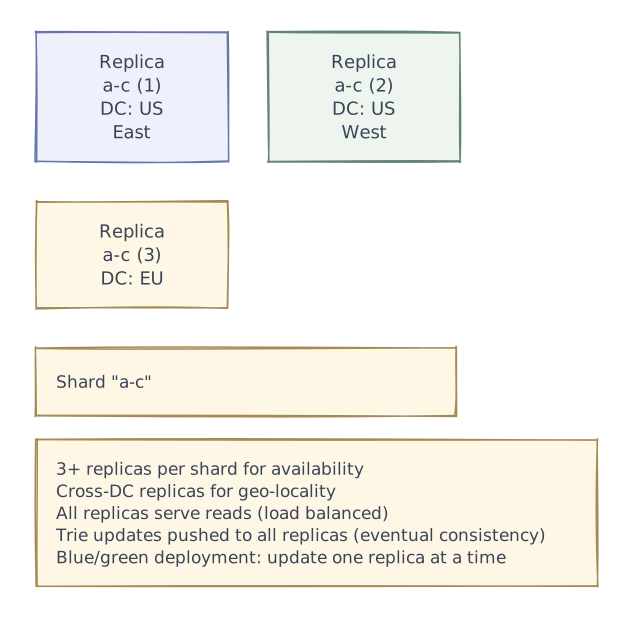
Full Serving Topology
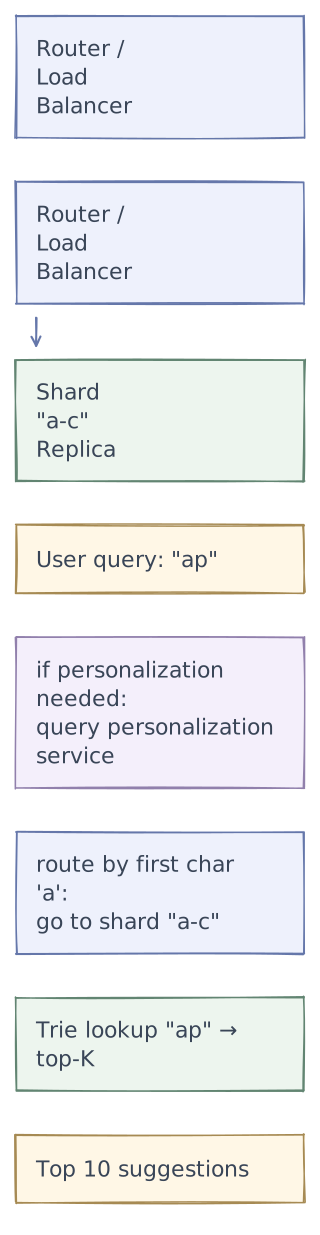
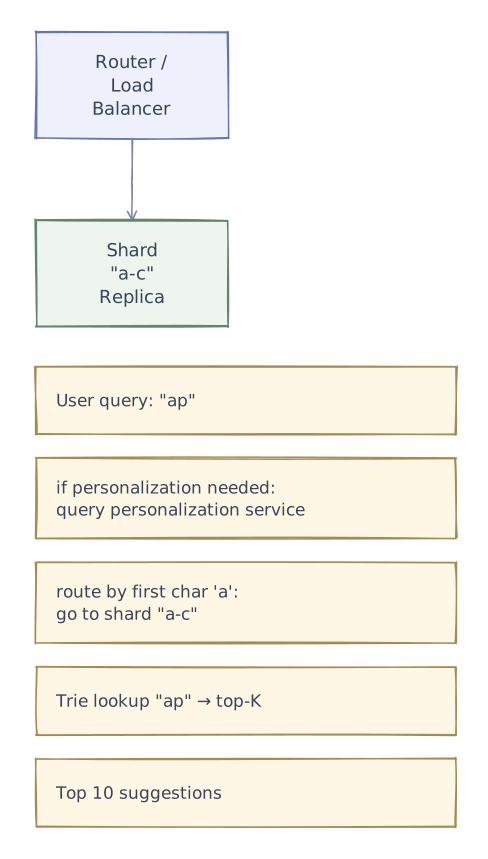
Personalization
User History Blending

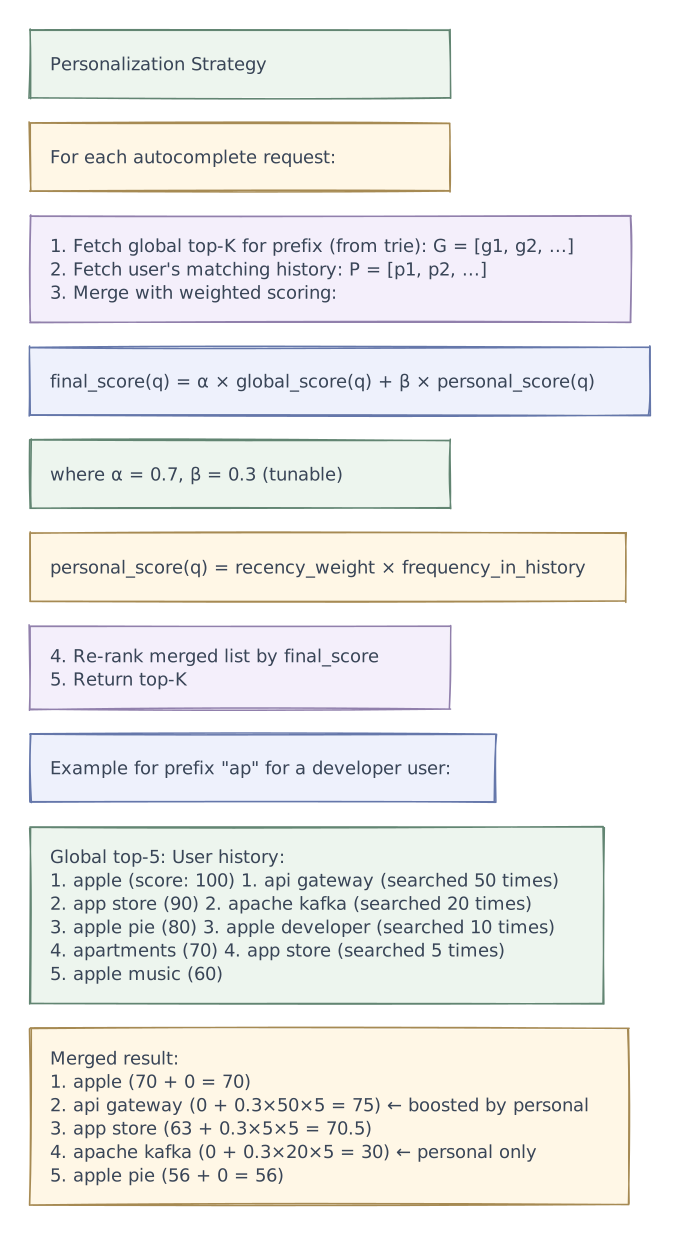
User History Storage

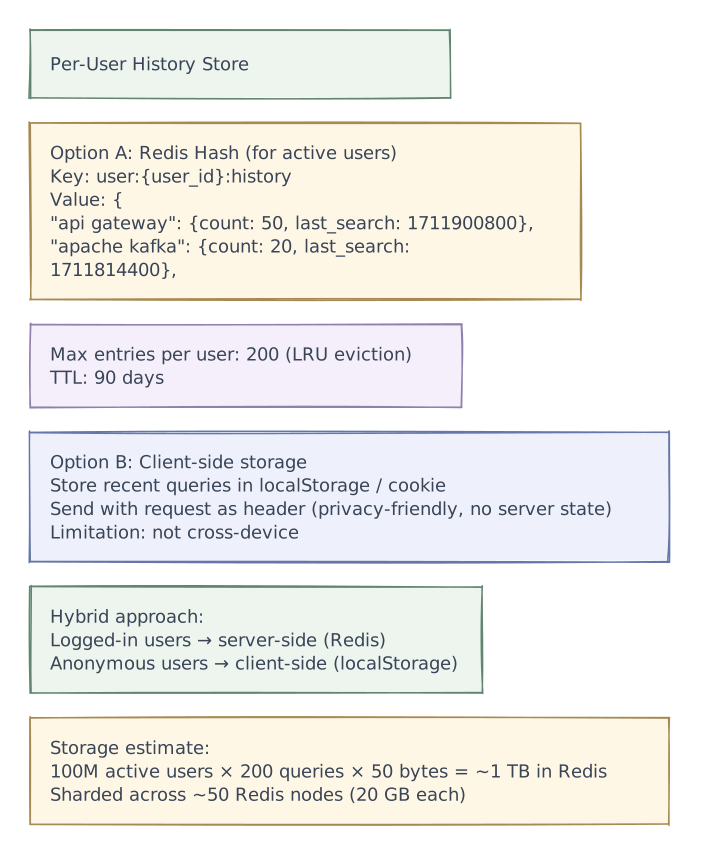
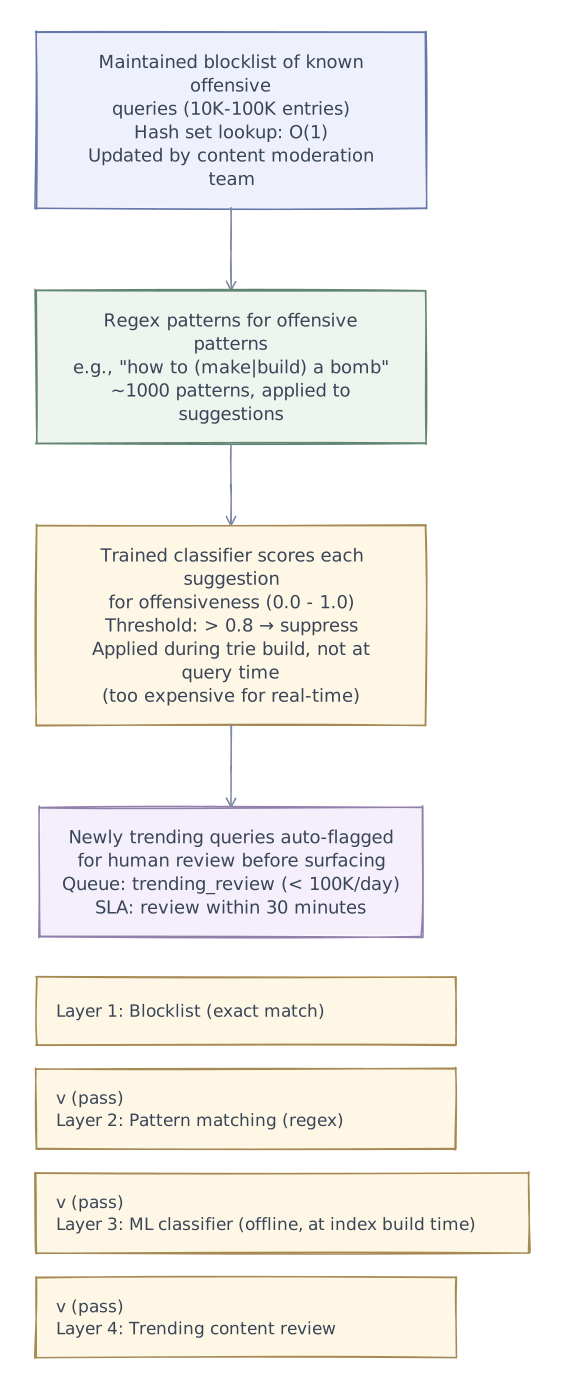
Offensive Content Filtering
Multi-Layer Filtering

Multi-Language Support
Language-Specific Challenges

Alternative Data Structures
Trie vs. Alternatives Comparison
| Data Structure | Prefix Lookup | Memory | Build Time | Update | Best For |
|---|---|---|---|---|---|
| Trie (compressed) | O(L) | Medium (30 GB) | Hours | Hard (rebuild) | Standard choice |
| Sorted array + binary search | O(L × log N) | Low (10 GB) | Fast | Hard | Small corpus |
| Hash map (prefix → suggestions) | O(1) amortized | High (100 GB+) | Fast | Easy | High QPS, small corpus |
| Ternary search tree | O(L) | Low (20 GB) | Hours | Medium | Memory-constrained |
| DAWG (directed acyclic word graph) | O(L) | Very low (5 GB) | Very slow | Very hard | Read-heavy, static corpus |
| Inverted index (prefix → docs) | O(1) | Medium | Fast | Easy | When mixing with search |
Approach: Precomputed Hash Map (for high-QPS systems)
Alternative to trie for extreme QPS requirements:

Precompute ALL possible prefixes → top-K map:

  "a"     → [apple, amazon, apple pie, ...]
  "ap"    → [apple, app store, apple pie, ...]
  "app"   → [apple, app store, apple pie, ...]
  "appl"  → [apple, apple pie, apple music, ...]
  "apple" → [apple, apple pie, apple music, ...]
  ...

Storage: 500M queries × avg 20 chars = 10B prefix entries
         10B × (key + 10 suggestion IDs) = ~200 GB

  TOO MUCH for in-memory!

Optimization: Only precompute prefixes of length 1-6
  (covers ~95% of user typing before they click a suggestion)

  26^1 + 26^2 + ... + 26^6 ≈ 300M prefix entries
  But with actual query distribution: ~50M meaningful prefixes
  50M × 500 bytes = ~25 GB ← feasible!

  For prefixes > 6 chars: fall back to trie lookup
Approach: Inverted Index Style (Elasticsearch)
Instead of a trie, use an inverted index with edge n-grams:

Document: "apple pie recipe"
Index terms (edge n-grams):
  "a", "ap", "app", "appl", "apple"
  "p", "pi", "pie"
  "r", "re", "rec", "reci", "recip", "recipe"

Query: prefix "app" → lookup posting list for "app"
  → returns all suggestions containing a word starting with "app"

Advantages:
  - Leverages existing search infrastructure (Elasticsearch)
  - Easy updates (just index new documents)
  - Built-in relevance scoring, filtering, aggregations

Disadvantages:
  - Higher latency than in-memory trie (~5-10ms vs ~1ms)
  - More complex query for phrase completion
  - Overkill for simple prefix matching

Best for: Medium-scale systems (< 10K QPS) that already use Elasticsearch
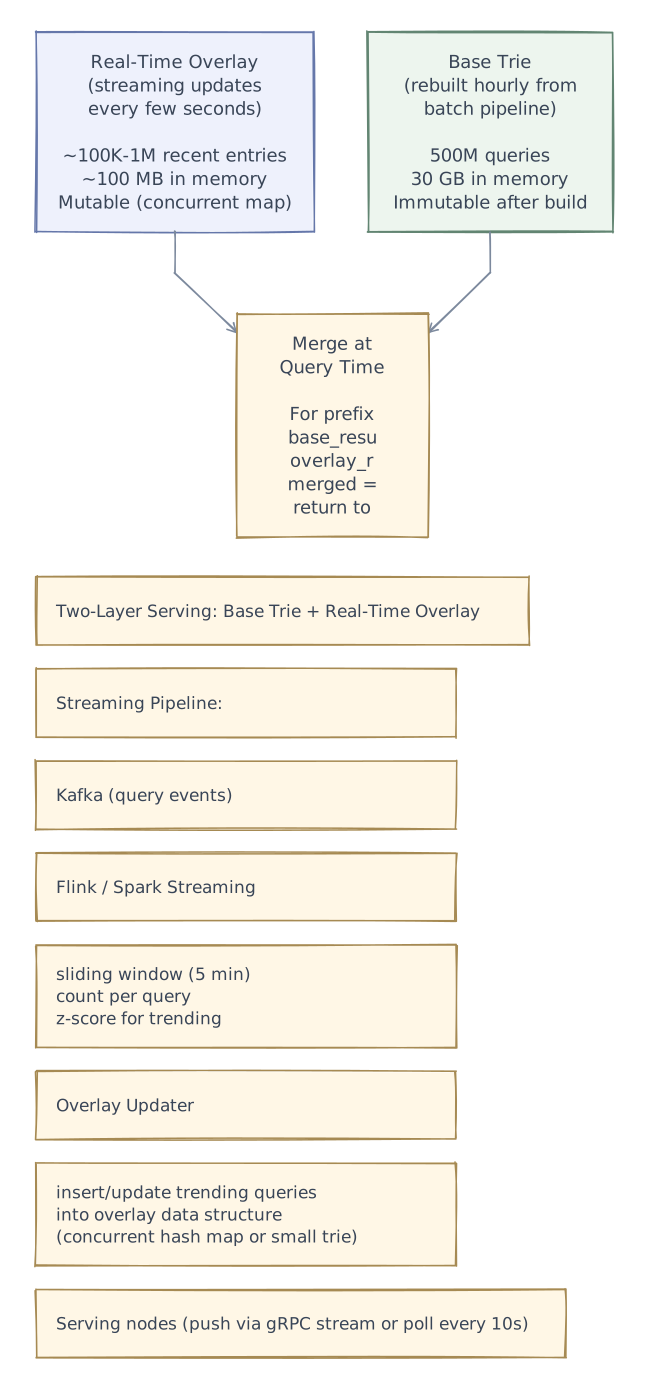
Real-Time Updates (Streaming Path)
Near Real-Time Trie Update Architecture

Advanced Topics
Fuzzy Matching (Typo Tolerance)
Problem: User types "aple" but means "apple"

Approach 1: Edit Distance at Query Time
  For prefix "aple", find all trie nodes within edit distance 1:
    "aple" → "apple" (insert 'p')
    "aple" → "able"  (substitute p→b)
    "aple" → "ape"   (delete l)

  Cost: Expensive! For each prefix, explore O(26^d) branches
        where d = max edit distance

  Optimization: BK-tree or Levenshtein automaton
    - Precompute finite automaton for edit distance ≤ 2
    - Intersect automaton with trie in single traversal
    - O(L) time regardless of edit distance

Approach 2: Phonetic Matching
  Soundex / Metaphone encoding:
    "aple"  → A140
    "apple" → A140  (same code!)
  Store phonetic codes in separate index
  Match phonetically, then boost exact prefix matches

Approach 3: Query Log Corrections (most practical)
  When user types "aple" and then reformulates to "apple":
    Store mapping: "aple" → "apple" with confidence score
  At query time: lookup "aple" in correction map
    If found: also search for "apple" and merge results
  Low latency: O(1) hash map lookup
  High quality: based on actual user behavior
Context-Aware Suggestions
Beyond prefix matching — use context for better suggestions:

1. Previous query context:
   Query 1: "python"
   Query 2: "for" → suggest "for loop python", not "ford trucks"

2. Page context:
   User is on a cooking website
   Types "ch" → suggest "chicken recipe", not "chrome download"

3. Time context:
   During NFL season: "sup" → "super bowl" boosted
   Tax season: "h" → "h&r block", "how to file taxes" boosted

4. Device context:
   Mobile: shorter suggestions (screen space limited)
   Desktop: longer, more detailed suggestions

Implementation:
   Context vector + suggestion scoring:
   score(suggestion) = base_score
                     × context_boost(query_history)
                     × time_boost(current_events)
                     × device_factor(screen_size)
Zero-Prefix Suggestions
When user clicks search box but hasn't typed anything:

Show:
  1. User's recent searches (from personalization store)
  2. Currently trending queries
  3. Seasonal / contextual suggestions

Implementation:
  - No trie lookup needed
  - Precomputed list per user segment
  - Cached aggressively (one request per search session)
  - Updated every 15 minutes

This is the "prefetch" request — sent on search box focusEdge cases
Typing, deleting, and retyping can leave several requests in flight. Display only the response that matches the current input state. Empty prefixes, composed characters, and language-specific normalization also need deliberate handling; a byte prefix is not always the same thing as the characters a person thinks they typed.
Tradeoffs
Key Tradeoffs
Pre-computed Top-K vs. On-the-Fly Ranking
Pre-computed (chosen for global suggestions):
  + O(L) lookup — walk trie, read pre-stored top-K
  + Extremely fast (< 1 ms)
  + Simple serving logic
  - Stale until trie rebuild (hourly)
  - Can't easily incorporate real-time personalization into top-K
  - Rebuild cost: hours of compute for 500M queries

On-the-fly ranking:
  + Always fresh
  + Easy to blend personalization, trending, context
  - Slower: must traverse subtree, score, sort at query time
  - For popular short prefixes, subtree can have millions of entries
  - Latency unpredictable (depends on subtree size)

Hybrid approach (Google's / production systems):
  Pre-compute top-K for global suggestions → fast base
  Merge with personalization + trending at query time → fresh blend
  Total cost: O(L) trie walk + O(K) merge = still very fast
Trie Rebuild Frequency
Frequent rebuilds (every 15 min):
  + Fresher suggestions
  + Trending queries appear faster
  - Higher compute cost
  - More deployment risk (more frequent swaps)
  - Diminishing returns (most queries don't change in 15 min)

Infrequent rebuilds (daily):
  + Lower compute cost
  + Stable, well-tested suggestions
  - Stale: trending topics delayed by hours
  - New queries don't appear until next rebuild

Chosen: Hourly batch rebuild + real-time overlay
  - Best of both: stable base + fresh trending
  - Overlay is small (100K-1M entries) — cheap to update
  - Merge at query time is O(K) — negligible cost
Global vs. Regional Tries
Single global trie:
  + Simpler architecture
  + One build pipeline
  + Global trends visible everywhere
  - "pizza near me" suggestions are same in Tokyo and New York
  - Wastes memory on irrelevant suggestions per region

Per-region/locale trie:
  + Region-specific suggestions ("weather tokyo" boosted in Japan)
  + Smaller per-region trie (less memory)
  + Better relevance for location-dependent queries
  - More complex build pipeline (one per locale)
  - ~50 languages × ~10 regions = 500 tries to maintain
  - Trending detection harder (smaller per-region signal)

Hybrid:
  - Global trie for universal queries (brands, tech terms)
  - Regional overlay for location-specific queries
  - Merge at query time based on user's locale/location
Memory vs. Disk for Trie Storage
| Factor | In-Memory Trie | Disk-Backed (mmap) |
|---|---|---|
| Lookup latency | < 0.1 ms | 0.1-1 ms (cold), < 0.1 ms (warm) |
| Memory required | 50 GB per server | 4-8 GB (OS page cache) |
| Server cost | Higher (need large RAM) | Lower (smaller instances) |
| Cold start time | Slow (load 50 GB) | Fast (mmap, load on demand) |
| Suitable for | High QPS (> 10K/server) | Moderate QPS (< 5K/server) |
Chosen: Memory-mapped (mmap) trie file
- OS handles paging — hot paths stay in RAM
- Cold paths (rare prefixes) loaded on demand from SSD
- Best cost/performance ratio at scale
- Cold start: instant (just mmap the file, no deserialization)
Precision vs. Recall in Suggestions
High precision (fewer, more relevant suggestions):
  + Users trust suggestions more
  + Less visual noise
  + Lower risk of offensive/irrelevant suggestions
  - May miss niche queries user actually wants
  - Less "discovery" of new queries

High recall (more diverse suggestions):
  + Users discover queries they didn't think of
  + Better for exploratory search
  - More irrelevant suggestions → user ignores autocomplete
  - Higher risk of showing offensive content
  - More visual noise

Chosen: High precision (K=5-8 suggestions)
  - Quality over quantity
  - Users want THE suggestion they're looking for
  - Offensive content risk minimized with fewer suggestions
- Can show "more suggestions" button for users who want recallReliability & fault tolerance
Phase 4 of 4 · Operations & resilience
Add operational safeguards
With the request paths and tradeoffs established, add the controls that help detect trouble and keep the system operating. The final diagram retains every layer introduced so far.
- Quality monitoring
- Measure p99 response time, empty suggestions, and freshness after each index release.
Fault Tolerance & Reliability
Failure Scenarios & Handling
| Failure | Impact | Mitigation |
|---|---|---|
| Single suggestion server dies | One replica unavailable | Load balancer routes to other replicas; auto-restart |
| Trie build pipeline fails | Stale trie (hours old) | Serve previous trie version; alert on build failure |
| Trending pipeline lag | Missing trending suggestions | Gracefully degrade: serve without trending boost |
| Personalization (Redis) down | No personalized suggestions | Serve global-only suggestions; no user-visible error |
| CDN outage | Higher load on origin | Origin servers absorb load; scale up if needed |
| All replicas of a shard down | Prefix range unavailable | Return empty suggestions for that range; partial degradation |
| Kafka lag (query log delay) | Delayed frequency updates | Trie still serves from last build; trending may lag |
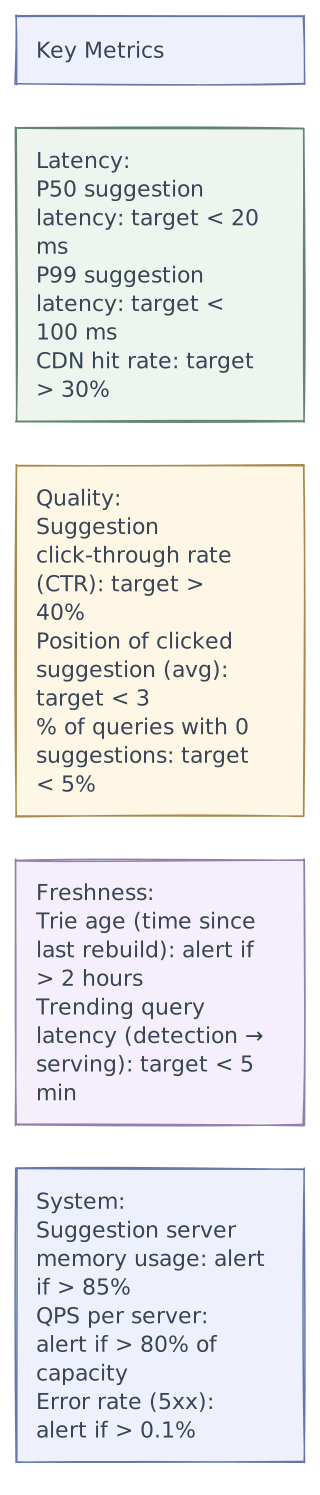
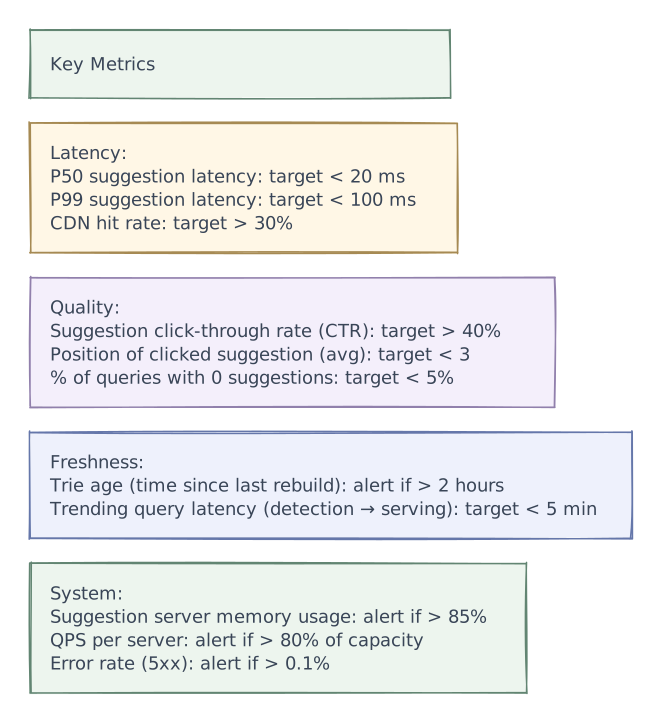
Health Checking & Monitoring
Production architecture
High-Level Architecture

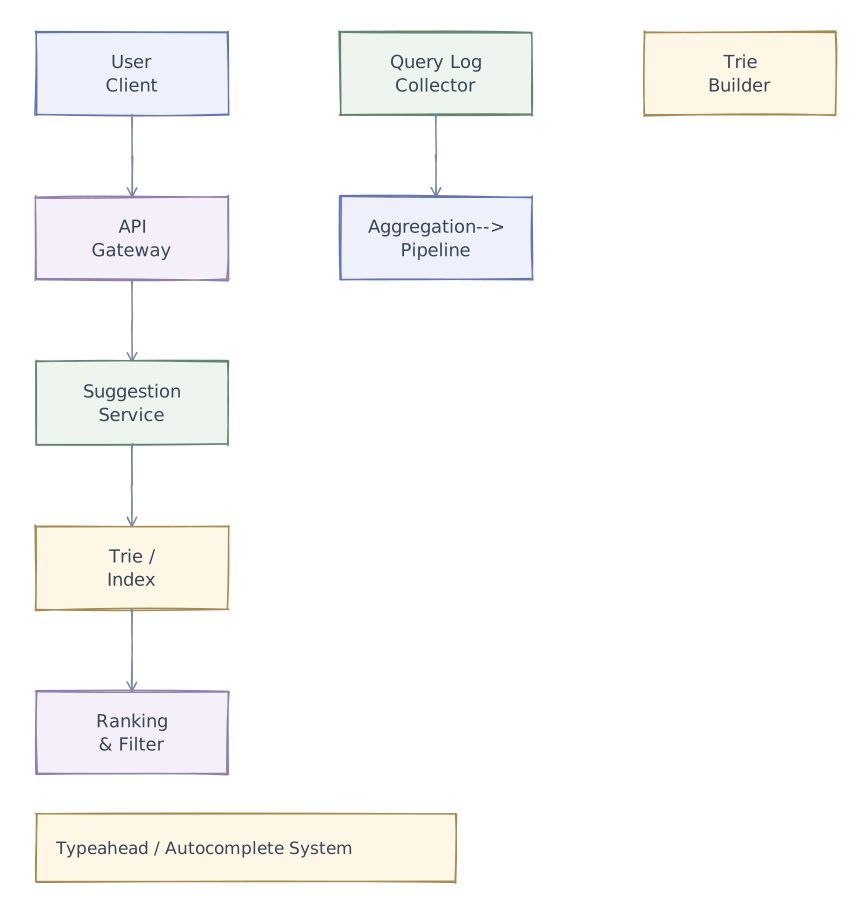
Detailed Architecture

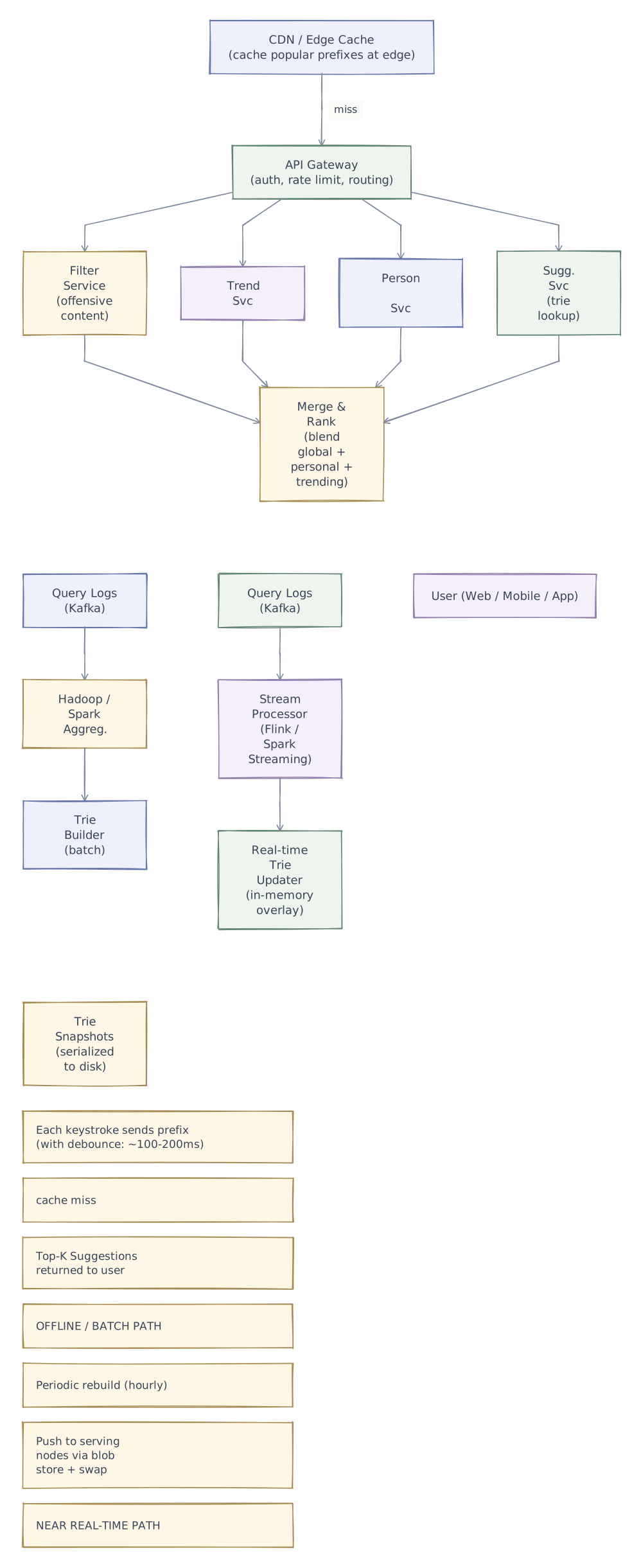
Serving Infrastructure
Global Deployment

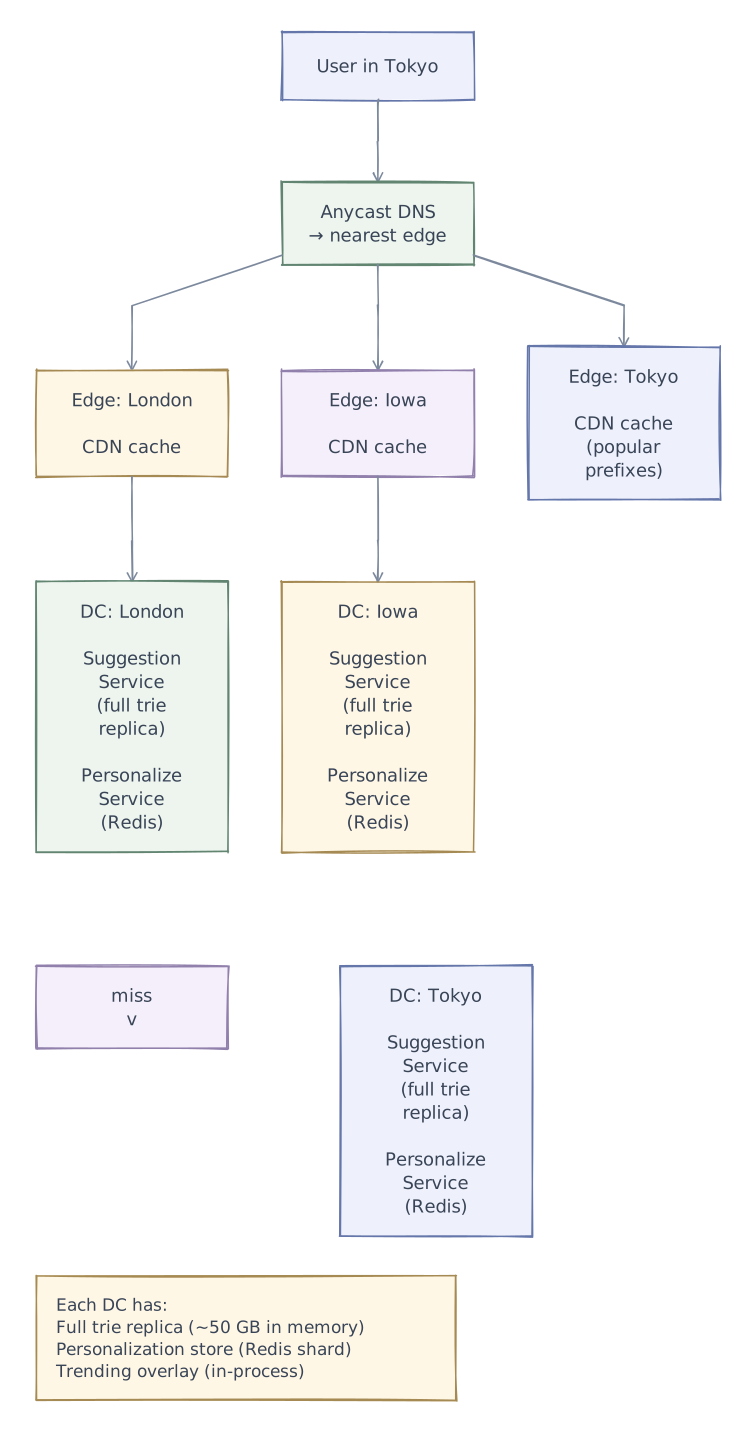
Latency Budget

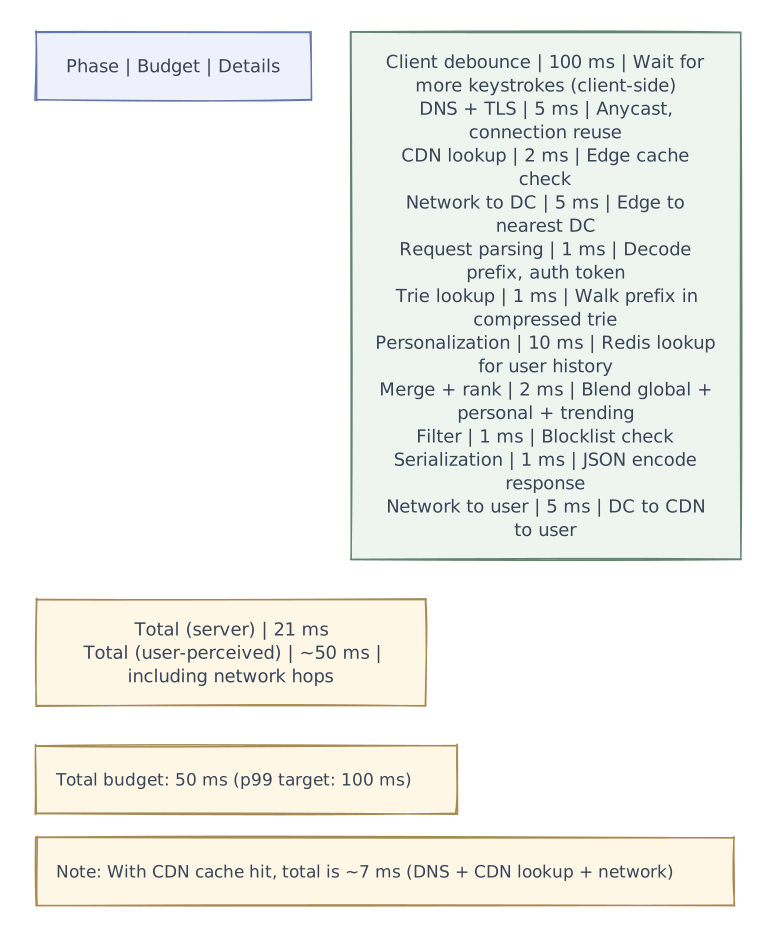
Further exploration
Add a new phrase that becomes popular in an hour. Decide how it enters suggestions without rebuilding the entire index, and how it later fades. Then add a removal request: safety and privacy corrections should not have to wait for the normal popularity-decay schedule.
Interview playbook
System Design Interview Tips
What Interviewers Look For
- Trie fundamentals — can you explain how a trie works and why it's the right data structure?
- Scale reasoning — how much data, how many requests, how much memory?
- Top-K at each node — this is the key insight that makes prefix lookup O(L)
- Data pipeline — how do you collect query frequencies and build the trie?
- Caching strategy — multi-layer caching is critical for 100K+ QPS
- Real-time trending — how do you surface breaking news quickly?
- Tradeoff reasoning — rebuild frequency, precision vs recall, global vs regional
Common Follow-Up Questions
| Question | Key Points |
|---|---|
| "How do you handle a new trending query?" | Real-time overlay via streaming pipeline; merge with base trie at query time |
| "What if the trie doesn't fit in memory?" | Shard by prefix range; mmap for disk-backed; keep only top-N queries |
| "How do you personalize without storing user data?" | Client-side history in localStorage; send with request; no server storage |
| "How do you prevent offensive suggestions?" | Multi-layer: blocklist → regex → ML classifier → human review for trending |
| "What happens if a user types very fast?" | Client-side debouncing + request cancellation; prefix reuse for local filtering |
| "How do you update the trie without downtime?" | Blue/green deployment: build new trie → load into standby → swap pointer |
Suggested 45-Minute Interview Structure
 0-5  min:  Clarify requirements (search suggestions? K=? latency?)
 5-10 min:  Scale estimations (QPS, corpus size, memory)
10-18 min:  Core data structure (trie, compressed trie, top-K precomputation)
18-28 min:  System architecture (serving path, data pipeline, caching)
28-35 min:  Deep dive: pick ONE
            - Option A: Real-time trending pipeline
            - Option B: Sharding & replication
            - Option C: Personalization strategy
35-42 min:  Tradeoffs (rebuild frequency, trie vs alternatives, global vs regional)
42-45 min:  Monitoring, failure handling, fuzzy matching